
 Pakistan’s leaders hail first astronaut aboard Chinese craft: ‘Proud one of us has gone into space’
 British tourist travels 29 hours from Mumbai to Amritsar for ₹5,461, rates Indian Railways 10/10 | Viral video
 The Supreme Court will decide whether assault weapons bans violate the Second Amendment
 A Critic of Beijing Falls Short in Taiwan’s Key Mayoral Election
 EPA says no rise in contamination after Army detonates lead azide stockpile in Iowa
China launches media campaign depicting Japan as revanchist power
**
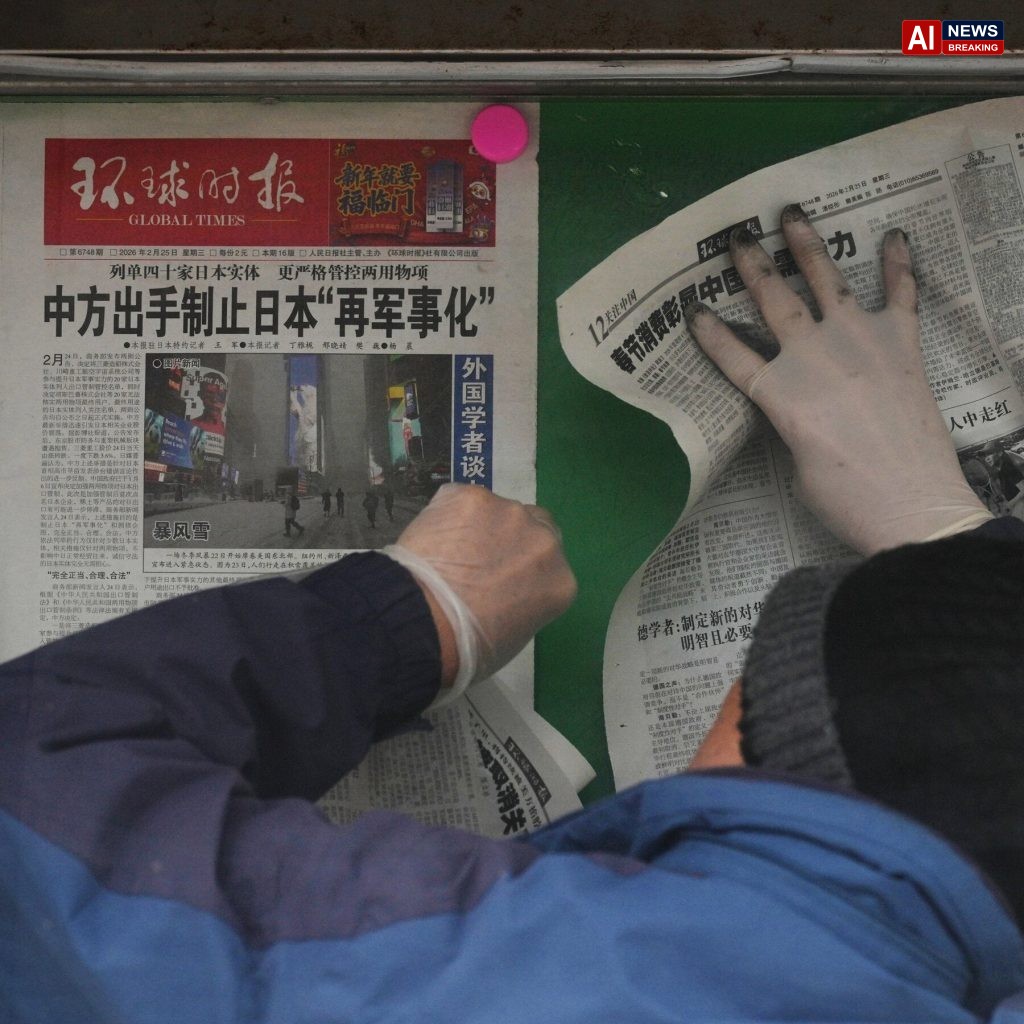
China launches media campaign depicting Japan as revanchist power - AI News Breaking
Tracking China’s Intensifying War of Words Against Japan Beijing has launched a coordinated media offensive that seeks to portray Japan as a revanchist power intent on restoring a militaristic posture. Analysts at the Times note that the campaign draws on historic grievances, recent defence budget expansions and diplomatic disputes to construct a narrative of an emerging threat. This strategy, they argue, serves multiple domestic and international objectives, from rallying nationalist sentiment at home to justifying a more assertive foreign policy in the region..
The effort is evident across state‑run outlets, social media accounts and diplomatic statements. The roots of the narrative stretch back to the legacy of World War II, when Japan’s imperial expansion caused untold suffering across East Asia. Chinese officials regularly invoke the “century of humiliation” to remind citizens of past injustices, and the current push amplifies these memories..
By emphasizing unresolved historical issues such as wartime forced labour and the comfort‑women system, Beijing aims to keep the wounds fresh and to frame any Japanese defence moves as an affront to collective memory. This emotional lever is a cornerstone of the propaganda campaign. In parallel, China highlights Japan’s recent defence spending increases, which have risen to roughly 2 percent of gross domestic product, the highest level since the Cold War..
State media outlets have portrayed these figures as evidence of a “militarisation” agenda, despite Japan’s own justification of a defensive posture amid regional tensions. Headlines frequently link the budget growth to the acquisition of new missile systems and the acquisition of aircraft carriers, casting Japan’s actions as steps toward offensive capability. The narrative omits the context of Japan’s alliance with the United States and its security concerns over North Korea and China’s own military expansion..
The diplomatic arena has become another battleground for the war of words. Chinese foreign ministry spokespeople have repeatedly accused Tokyo of “provoking” regional stability by deepening security ties with Washington and by participating in joint naval exercises. In press briefings, they have warned that such cooperation could “trigger a new arms race” and threaten the “peaceful development” of East Asia..
These statements are often echoed by commentators on Chinese television, reinforcing the message that Japan is moving beyond its post‑war pacifist identity. Social media platforms serve as amplifiers for the campaign, with state‑affiliated accounts sharing articles, memes and video clips that depict Japanese politicians as hawkish and militaristic. Influencers with large followings are encouraged to repost content that aligns with official talking points, and algorithms are tweaked to promote such material..
The result is a steady stream of anti‑Japan sentiment that reaches millions of netizens, shaping public opinion and creating a feedback loop that pressures the government to maintain a hardline stance. The timing of the intensified rhetoric coincides with several key developments. In 2024, Japan announced a new security strategy that expands the scope of its self‑defence forces, allowing for collective self‑defence and greater engagement in overseas operations..
At the same time, Chinese Premier Li Qiang’s visit to Moscow underscored a deepening strategic partnership with Russia, prompting Japan to strengthen its own ties with the United States and regional partners such as Australia and India. The convergence of these moves provides fertile ground for Beijing to frame Japan as a destabilising actor in a shifting geopolitical landscape. Critics argue that the campaign is less about genuine security concerns and more about diverting attention from China’s own military buildup..
Over the past decade, the People’s Liberation Army has expanded its navy, modernised its missile forces and increased its presence in the East China Sea, particularly around the disputed Senkaku/Diaoyu islands. By casting Japan as the aggressor, Beijing can rationalise its own deployments and shore up domestic support for continued defence spending, all while portraying itself as a victim of external hostility. International observers note that the rhetoric may have unintended consequences for regional diplomacy..
Japan’s government has responded by reaffirming its commitment to a “peaceful, stable and prosperous” Indo‑Pacific, while warning that attempts to weaponise history could erode trust. In recent statements, Japanese officials have called for “objective historical dialogue” and urged China to cease “political manipulation” of wartime issues. The exchange has heightened diplomatic sensitivities, making it more difficult for both sides to find common ground on issues such as fisheries management and disaster relief cooperation..
The United States, a key ally of Japan, has taken note of the escalating verbal confrontation. In a congressional hearing, U.S. officials warned that Chinese disinformation campaigns targeting Japan could undermine collective security arrangements in the region..
Washington has pledged to support Japan’s capacity to respond to “information operations” and to work with allies on counter‑propaganda initiatives. This development adds another layer to the strategic contest, as both Beijing and Washington vie for influence over public narratives. Academic researchers studying the phenomenon point to a sophisticated coordination mechanism within China’s propaganda apparatus..
The Central Propaganda Department, the Ministry of Foreign Affairs and the People’s Liberation Army’s political work units reportedly share talking points and synchronize releases across platforms. This integrated approach ensures that messages about Japan’s “aggressive” posture appear consistently in newspapers, television broadcasts, official statements and online forums, reinforcing the perception of a unified stance. While the war of words intensifies, there are signs of resistance within Chinese civil society..
Some scholars and journalists have called for a more balanced discourse, warning that hyper‑nationalist narratives risk destabilising the very region they claim to protect..
Updated: November 18, 2026
Insight: China’s media blitz against Japan isn’t just a historical gripe; it’s a calculated smokescreen that lets Beijing justify its own naval surge while keeping domestic outrage high. By framing Japan as a revanchist threat, Beijing diverts scrutiny from its expanding military footprint and fuels a nationalist rally‑round‑the‑flag





