
 Pakistan’s leaders hail first astronaut aboard Chinese craft: ‘Proud one of us has gone into space’
 British tourist travels 29 hours from Mumbai to Amritsar for ₹5,461, rates Indian Railways 10/10 | Viral video
 The Supreme Court will decide whether assault weapons bans violate the Second Amendment
 A Critic of Beijing Falls Short in Taiwan’s Key Mayoral Election
 EPA says no rise in contamination after Army detonates lead azide stockpile in Iowa
A Village Burned, Its People Killed or Exiled. Was It Genocide?
**
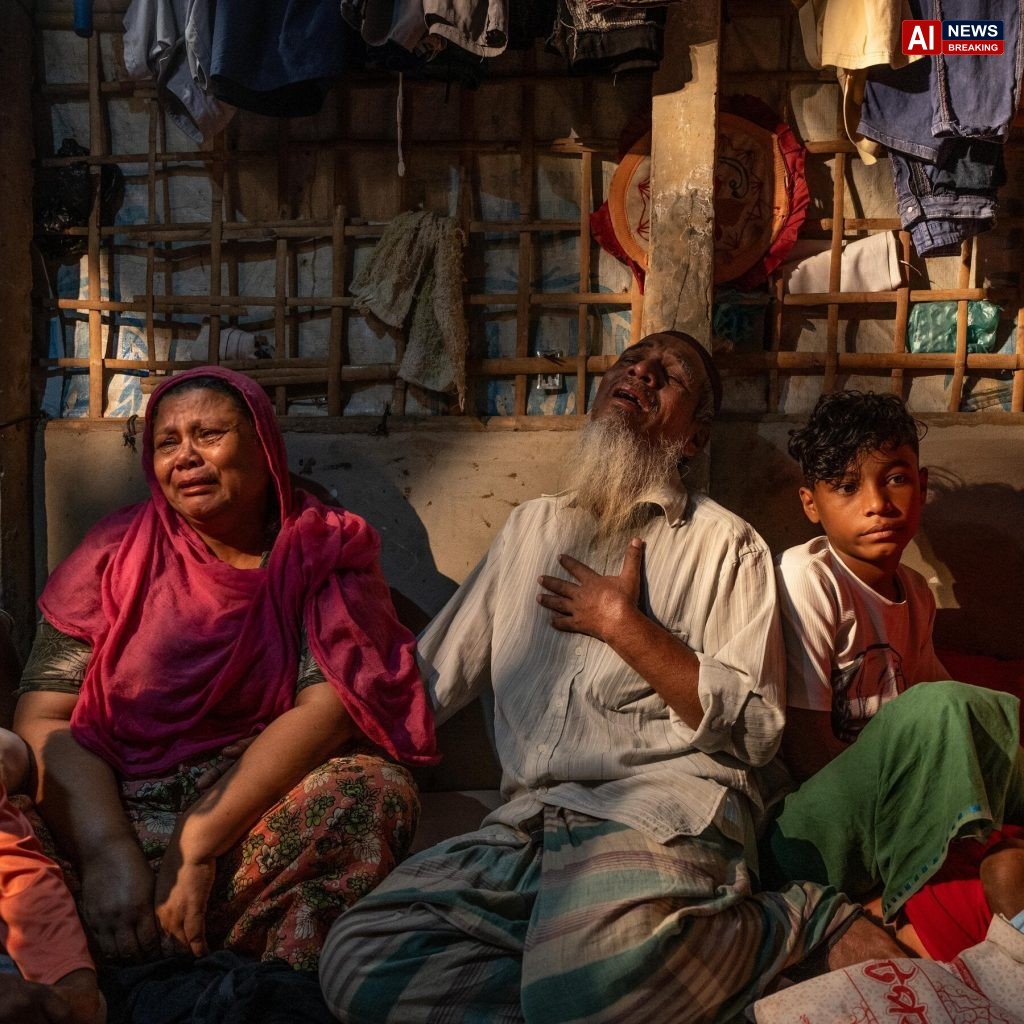
A Village Burned, Its People Killed or Exiled. Was It Genocide? - AI News Breaking
village burned people killed:
The village of Zammona, a small settlement of a few hundred Rohingya families on the banks of the Myitkyina River, was set alight on 23 March 2023. The blaze, which destroyed every building in the community, was witnessed by a handful of refugees who escaped into the surrounding hills. According to eyewitnesses, armed forces of Myanmar’s Tatmadaw entered the village in the early morning, ordered civilians to leave, and then set the houses on fire with a combination of gunfire and incendiary devices..
The village was never rebuilt; its former residents now live scattered across Bangladesh and other parts of the world, and a few have returned to the area to dig the ruins and search for personal belongings that survived the flames.The international legal debate over whether the events that unfolded in Zammona constitute genocide has intensified in the weeks since the incident. The International Criminal Court (ICC), which has jurisdiction over crimes committed in Myanmar since 2019, is preparing to issue a ruling. The court’s decision will hinge on whether the Tatmadaw’s conduct meets the legal definition of genocide under Article 6 of the Rome Statute, which requires that the perpetrators intend to destroy, in whole or in part, a national, ethnical, racial or religious group..
The question of intent is central, and the ICC will examine the chain of orders from military commanders, the pattern of violence across the Rakhine State, and the statements made by officials in the aftermath of the attack.Myanmar’s authorities have denied any genocidal intent. In a press conference on 29 March 2023, the spokesperson for the Ministry of Defence said that the operation in Zammona was a counterinsurgency measure aimed at neutralising “armed elements” suspected of supporting insurgent groups. He added that the troops were “following orders” and that the destruction of the village was an unfortunate consequence of a “highly volatile” situation..
The statement was widely criticised by human rights organisations, who argued that it failed to acknowledge the systematic targeting of Rohingya Muslims by the military and the broader policy of forced displacement.Rohingya activists claim that the Tatmadaw’s campaign in Rakhine State is part of a long-standing policy of ethnic cleansing, which has led to the displacement of more than one million Rohingya since 2017. The United Nations Office on Genocide Prevention has repeatedly warned that the violence in the region could amount to genocide, citing the systematic killing of civilians, the use of chemical weapons, and the denial of basic humanitarian aid. In the months following the attack on Zammona, additional villages were reportedly targeted by the military, and the Rohingya population was forced to flee under armed guard, with many being forced to abandon their homes and livelihoods.The ICC’s preliminary examination will scrutinise the available evidence from a range of sources..
These include satellite imagery that documents the destruction of Zammona’s infrastructure, forensic reports that indicate the presence of gunshot wounds and incendiary devices, and testimonies from survivors who describe the order to evacuate and the subsequent burning of the village. The court will also consider the broader context of Myanmar’s internal security operations, which have been characterised by a high level of violence against civilians, particularly those belonging to the Rohingya community.In addition to the ICC, the United Nations Human Rights Council has called for an independent inquiry into the events in Zammona. The council’s resolution, adopted in July 2023, urges all states to cooperate with the inquiry and to ensure that perpetrators are brought to justice..
The inquiry will examine not only the incident itself but also the systematic nature of the violence against Rohingya Muslims in the region, including forced displacement, sexual violence, and the denial of access to basic services. The findings of the inquiry could inform the ICC’s assessment and potentially lead to further legal action against individuals and institutions implicated in the violence.The question of genocide is not merely academic. The legal classification has significant implications for the international community’s response to the crisis..
If the ICC finds that genocide occurred, Myanmar could be subject to additional sanctions, including travel bans and asset freezes on individuals and entities linked to the violence. Moreover, the ruling could galvanise the international community to take more decisive action to prevent further atrocities and to provide reparations to the Rohingya victims. Conversely, a ruling that does not find genocide could undermine the credibility of international human rights mechanisms and further marginalise the Rohingya community.The international community remains divided over how best to respond to the crisis..
Some governments have called for a comprehensive embargo on Myanmar’s military industry, while others have advocated for diplomatic engagement aimed at negotiating a peaceful resolution. Human rights advocates argue that engagement without accountability would only perpetuate the cycle of violence and allow the military to continue its campaign unchecked. They point to the experiences in other conflict zones where delayed accountability has led to chronic instability and ongoing human rights abuses.The plight of the Rohingya is further complicated by the fact that many survivors have been unable to return to their homes..
The United Nations High Commissioner for Refugees (UNHCR) estimates that more than 600,000 Rohingya refugees remain in Bangladesh, where they face overcrowded camps, limited access to clean water, and insufficient medical care. The refugees’ conditions are compounded by a lack of legal status, making it difficult for them to access employment or education. The international community has pledged to support the refugees, but the scale of the crisis exceeds the capacity of existing humanitarian programmes.In the end, the outcome of the ICC’s ruling on the Zammona incident will likely set a precedent for how international law treats the Rohingya crisis..
The legal arguments put forward by both sides—Myanmar’s defence of a “counterinsurgency” operation and the Rohingya’s claim of systematic targeting—will be weighed against the evidence collected from the ground. While the final decision has yet to be announced, the international community will undoubtedly monitor the process closely, as it bears on the prospects for justice, accountability, and ultimately the future of the Rohingya people..
The ICC’s verdict on Zammona could either reinforce the global rule‑of‑law framework—forcing Myanmar to reckon with sanctions and reparations—or erode faith in international justice, emboldening impunity for future atrocities. This case will dictate whether the Rohingya narrative shifts from victimhood to a precedent for collective accountability, reshaping diplomatic leverage against ethnic cleansing.







