
 The Supreme Court will decide whether assault weapons bans violate the Second Amendment
 A Critic of Beijing Falls Short in Taiwan’s Key Mayoral Election
 EPA says no rise in contamination after Army detonates lead azide stockpile in Iowa
 Israeli Strike Kills 2 Workers at Gaza Clinic, Doctors Without Borders Says
 McQueen Pre-Fall 2027
Rights groups urge sanctions after top UN court finds Myanmar committed genocide against Rohingya
**
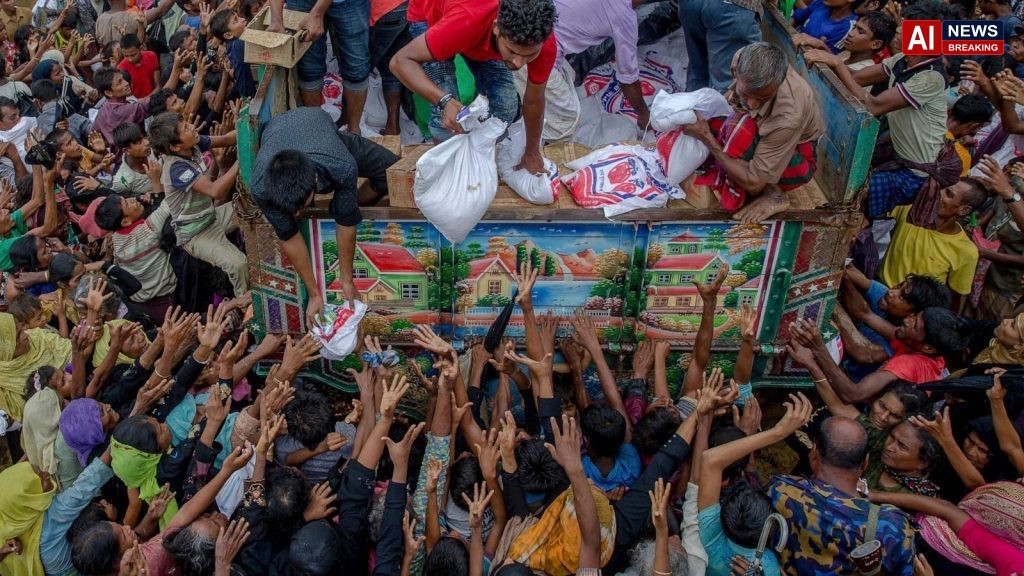
Rights groups urge sanctions after top UN court finds Myanmar committed genocide against Rohingya - AI News Breaking
The United Nations’ International Court of Justice (ICJ) delivered a stark verdict on Tuesday, concluding that Myanmar’s military and civilian authorities were responsible for genocide against the Rohingya, a Muslim minority that has lived for generations in the country’s Rakhine state. In a decision that followed weeks of extensive legal argument, the court found that the Myanmar government had carried out a systematic campaign of violence, forced displacement and mass atrocities that met the legal definition of genocide. The ruling carries both symbolic weight and practical implications, as it obliges the state to take remedial measures to address the harm inflicted..
In the days that followed, a coalition of human rights organisations announced that it would call for comprehensive sanctions against Myanmar’s military leadership and economic elites.The court’s judgment, which is not a punitive measure per se, has nonetheless raised the stakes for the country. The ICJ, the principal judicial arm of the United Nations, has the authority to issue binding orders and recommendations, but it cannot enforce sanctions or compel state behaviour. Nevertheless, the ruling has triggered a chorus of demands from civil society and governments alike..
Rights groups argue that the only viable way to hold Myanmar’s junta accountable is through targeted sanctions that target individuals, companies and financial institutions linked to the regime.The coalition, which includes the International Crisis Group, Amnesty International, Human Rights Watch and a range of smaller NGOs, issued a joint statement in the early hours of the morning. “The ICJ’s judgment is a landmark moment in the pursuit of justice for the Rohingya people,” the statement read. “But justice alone will not suffice if the perpetrators continue to operate with impunity..
We therefore demand that the United Nations and individual states adopt a regime of targeted sanctions that freezes the assets of Myanmar’s military leaders, limits the export of military hardware and cuts off the financial flows that sustain the junta’s power.”The call comes amid a broader debate over the efficacy of sanctions as a foreign policy tool. Some argue that sanctions have historically been used to coerce governments into compliance with international norms, while others point to the limited success of past measures in changing the behaviour of regimes that rely on internal patronage networks. Myanmar’s case is particularly complex, as the country remains officially sovereign, and the junta’s control of the army and security apparatus is entrenched..
Nonetheless, the rights groups are calling for a coordinated international approach that mirrors the sanctions regime imposed on Russia after the 2022 invasion of Ukraine.Myanmar’s military, known officially as the Tatmadaw, has long been implicated in a range of human rights abuses. In 2015, the International Criminal Court opened a preliminary inquiry into crimes allegedly committed by the army and its paramilitary units in Rakhine. The 2017 crisis saw mass killings, rape, arson and the forced displacement of over 700,000 Rohingya into neighbouring Bangladesh..
The UN’s own investigations estimated that more than 10,000 Rohingya were killed, and that the government had engaged in a campaign of ethnic cleansing. The ICJ’s ruling confirms that these allegations meet the threshold for genocide.The ruling also clarifies that the Myanmar state is subject to international jurisdiction for crimes against humanity and genocide, and that the country must undertake a programme of reparations. While the ICJ can order the state to take specific steps—such as investigating crimes, prosecuting perpetrators and ensuring accountability—there is no mechanism for direct enforcement..
Thus, the onus falls on the international community to translate the court’s judgment into action. The rights groups’ sanctions proposal is one avenue to apply pressure, alongside diplomatic isolation and increased support for Rohingya refugees.Several member states have already signalled their willingness to consider targeted sanctions. The United States, the United Kingdom and members of the European Union have historically imposed limited sanctions on Myanmar, focusing mainly on the military and key industrial conglomerates..
The new proposal would expand those measures to include individuals named by the ICJ, financial institutions that facilitate illicit transactions, and companies that provide goods and services to the military. In addition, the rights coalition is urging that the sanctions be aligned with the United Nations Human Rights Council’s mechanisms for monitoring compliance.In the words of an analyst at the Geneva-based Human Rights Initiative, the sanctions are not merely punitive but strategic. “Targeted sanctions can disrupt the revenue streams of the junta, limit its ability to acquire weapons, and signal international condemnation,” he said..
“They also send a clear message to the domestic actors that the international community is serious about preventing a repeat of the 2017 crisis.” However, he cautioned that any sanctions regime must be carefully designed to avoid unintended humanitarian consequences, especially for the civilian population that already suffers from restricted access to food, medicine and basic services.Opposition voices in Myanmar’s political landscape have expressed mixed feelings. The National Unity Government (NUG), a coalition of elected parliamentarians and civil society leaders who oppose the military takeover, welcomed the ICJ’s ruling as a vindication of their struggle. “The world now has a legal framework that obligates Myanmar to reckon with the atrocities committed against the Rohingya,” said NUG spokesperson Aung Hlaing..
“Sanctions are a necessary tool to isolate the military’s corrupt apparatus.” On the other hand, some military sympathisers argue that sanctions would be counterproductive, potentially driving the economy further into isolation and weakening the nation’s sovereignty.The impact on Rohingya refugees remains a pressing concern. Over 800,000 Rohingya now live in camps across Cox’s Bazar, Bangladesh, and a smaller number reside in the remote border town of Kutupalong. Humanitarian agencies report chronic shortages of clean water, sanitation and adequate shelter..
The rights groups argue that a sanctions regime would need to be accompanied by increased humanitarian assistance to prevent a humanitarian crisis. “Sanctions must be coupled with a robust relief framework,” the coalition stated. “Otherwise, the sanctions could exacerbate suffering among the very people they aim to protect.”The debate also touches on the role of regional players..
China, which has long been a key ally of Myanmar’s military and has provided arms and financial support, has been criticised for its lukewarm stance on the ICJ’s verdict. ASEAN, the Association of Southeast Asian Nations, has historically taken a non-interference approach to Myanmar’s internal affairs. The rights groups are urging the ASEAN states to adopt a unified stance, arguing that a divided regional response weakens the effectiveness of sanctions and undermines the rule of law.Looking ahead, the United Nations General Assembly is scheduled to discuss the implementation of the ICJ’s decision in the coming months..
A resolution is expected to outline a roadmap for reparations and accountability, and to encourage member states to adopt targeted sanctions. The rights coalition hopes that this will create a binding.
Updated: November 20, 2026
Insight: The ICJ’s verdict turns a moral indictment into a diplomatic lever, compelling a coordinated sanctions push that could finally bleed the junta’s coffers while risking deeper humanitarian strain. Whether the world will translate this legal gravity into enforceable pressure remains the true test of international accountability.






