A Critic of Beijing Falls Short in Taiwan’s Key Mayoral Election
 EPA says no rise in contamination after Army detonates lead azide stockpile in Iowa
 Israeli Strike Kills 2 Workers at Gaza Clinic, Doctors Without Borders Says
 McQueen Pre-Fall 2027
 Mushfiqur Rahim to retire from Test cricket in February 2027
U.S. Auctions 31.5 Million Acres of Pacific Ocean to Deep Sea Mining Company
**
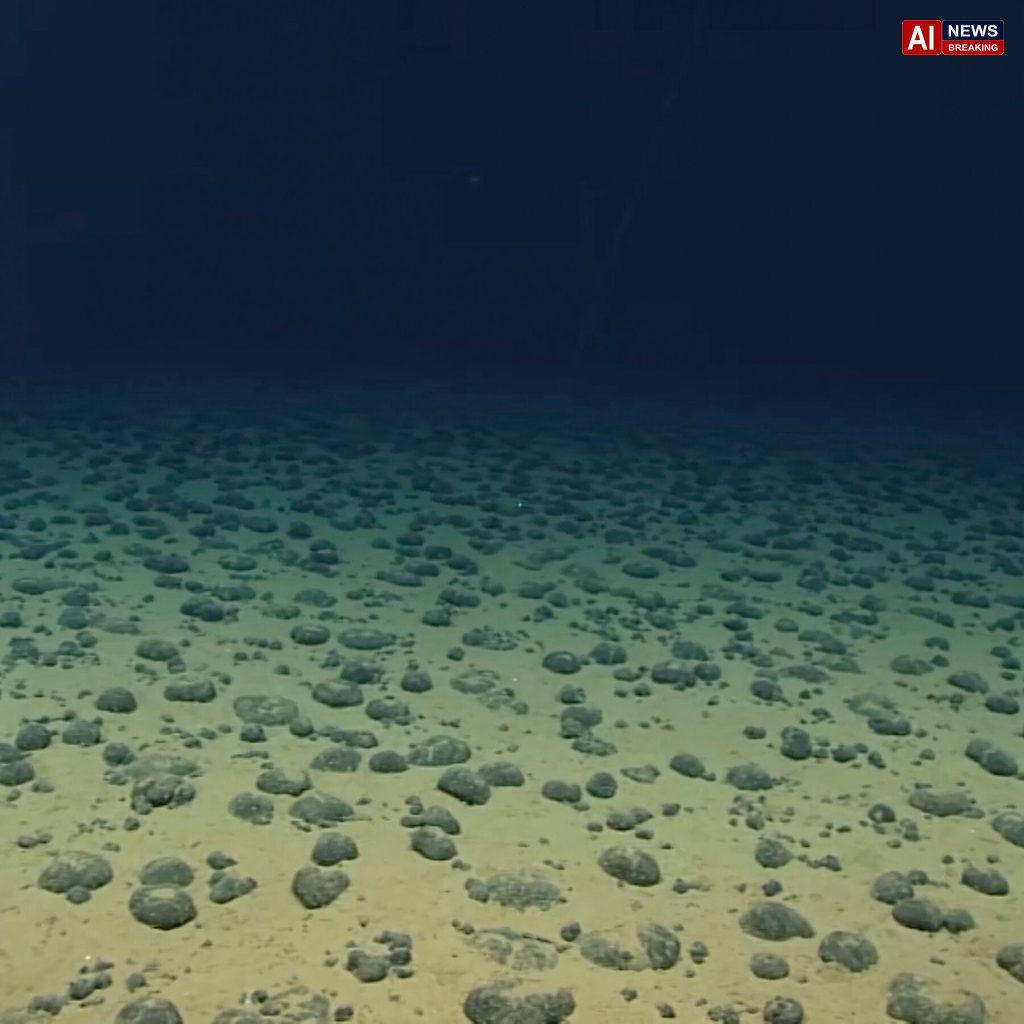
U.S. Auctions 31.5 Million Acres of Pacific Ocean to Deep Sea Mining Company - AI News Breaking
auctions million acres pacific:
Auctions 31.5 Million Acres of Pacific Ocean to Deep Sea Mining Company The United States government has concluded its inaugural offshore lease sale, handing over roughly 31.5 million acres of Pacific seabed to Wetstone U.S. Ventures, a subsidiary of a Singapore‑based deep‑sea mining firm. The transaction, valued at $6 million, marks the first time federal authorities have offered commercial rights to the ocean floor beyond the nation’s exclusive economic zone..
While the lease grants Wetstone the right to conduct detailed mapping and preparatory surveys, the agreement explicitly excludes any extraction of minerals until a separate permitting process is completed. The move signals a shift in U.S. policy toward tapping the largely untapped resources of the deep ocean, a sector that has long been the domain of a handful of Asian and European nations..
The lease sale was conducted under the authority of the Outer Continental Shelf Lands Act, which authorises the Department of the Interior to grant leases for the exploration of seabed minerals. The 31.5 million acres, located in a region known as the Clarion‑Clipperton Zone, are rich in polymetallic nodules that contain copper, nickel, cobalt and rare earth elements essential for modern electronics and green‑energy technologies. administration has argued that securing a foothold in this area will diversify supply chains and reduce dependence on imports from China, which currently dominates the market for these strategic minerals..
The decision was not without controversy. A federal judge in Washington, D.C., issued an injunction earlier this year, arguing that the lease sale violated environmental statutes and that the agency had failed to conduct a proper environmental impact assessment. The administration appealed, and a higher court lifted the injunction, allowing the sale to proceed despite ongoing litigation..
Critics contend that the judicial bypass undermines the rule of law and sets a precedent for future offshore resource deals that may sidestep comprehensive environmental review. Environmental groups have warned that deep‑sea mining could cause irreversible damage to fragile marine ecosystems. The ocean floor in the leased area hosts unique habitats, including chemosynthetic communities that rely on the slow accumulation of organic matter..
Disruption from mining equipment, sediment plumes and noise could threaten species that are still largely unknown to science. The International Seabed Authority, which oversees mineral activities in international waters, has called for a moratorium until robust baseline studies are completed, a plea echoed by NGOs such as Ocean Conservancy and the Sierra Club. In response, Wetstone U.S..
Ventures emphasized that its initial $6 million investment is strictly for non‑intrusive activities, such as high‑resolution sonar mapping, geological sampling and the deployment of autonomous underwater vehicles. The company asserts that these surveys are necessary to assess the technical feasibility and environmental risks before any extraction can be considered. It also pledged to adhere to best‑practice standards set by the International Seabed Authority and to engage with independent scientists throughout the research phase..
The lease is set to expire in 2042, with an option for renewal contingent upon the company obtaining a separate mining permit from the Bureau of Ocean Energy Management (BOEM). That permit will require a thorough environmental impact statement, public comment periods and inter‑agency coordination. BOEM has indicated that the permitting process could take several years, during which time the company must demonstrate that its operations will not cause unacceptable harm to marine life or fisheries..
The $6 million payment, while modest compared to the billions projected for full‑scale extraction, represents the first revenue stream the U.S. government will receive from offshore mineral leasing. The Treasury Department has earmarked the funds for research into sustainable deep‑sea mining practices and for supporting coastal communities potentially affected by the industry’s expansion..
Some policymakers argue that the revenue could be used to fund marine conservation initiatives, thereby offsetting any ecological impacts that may arise later. Industry analysts view the lease sale as a test case for a broader U.S. strategy to develop a domestic deep‑sea mining sector..
If Wetstone’s preliminary surveys prove favorable, the administration hopes to open additional lease rounds, potentially unlocking trillions of dollars of mineral wealth. The move aligns with the Biden administration’s clean‑energy goals, which call for a secure supply of copper and nickel for electric‑vehicle batteries and renewable‑energy infrastructure. However, the political landscape remains divided..
Senators from coastal states have called for stricter oversight, citing concerns from fishermen whose catches could be impacted by sediment disturbance. Meanwhile, members of the House Committee on Natural Resources have urged the Department of the Interior to release detailed data from the mapping phase, arguing that transparency is essential for informed public debate. The administration has pledged to make the data publicly available within six months, a timeline that will be closely watched by both supporters and opponents..
Internationally, the lease sale has drawn attention from rival mining nations. China, which currently dominates the Clarion‑Clipperton Zone, issued a statement urging the United States to respect the precautionary principle and to collaborate on establishing universal environmental safeguards. The United Nations has also expressed interest in monitoring the development, emphasizing that the deep sea remains a common heritage of mankind and that any commercial activity must be conducted responsibly..
Ventures begins its mapping campaign, the next months will likely see a flurry of scientific papers, stakeholder meetings and regulatory filings. The outcome of this first lease could set the tone for how the United States balances economic ambition with environmental stewardship in the largely uncharted realm of deep‑sea mining. Observers note that the delicate interplay between technology, law and ecology will determine whether the venture becomes a model for sustainable resource extraction or a cautionary tale of irreversible ocean damage..
Updated: November 20, 2026
By selling the lease, the U.S. is betting that a careful, data‑driven approach can win over skeptics—yet the real test will be whether the public’s demand for clean‑energy metals outweighs the ocean’s fragile ecosystems. The move signals a shift toward a “resource