Pakistan’s leaders hail first astronaut aboard Chinese craft: ‘Proud one of us has gone into space’
 British tourist travels 29 hours from Mumbai to Amritsar for ₹5,461, rates Indian Railways 10/10 | Viral video
 The Supreme Court will decide whether assault weapons bans violate the Second Amendment
 A Critic of Beijing Falls Short in Taiwan’s Key Mayoral Election
 EPA says no rise in contamination after Army detonates lead azide stockpile in Iowa
Inside COP31: Part Trade Show, Part Climate Therapy Session
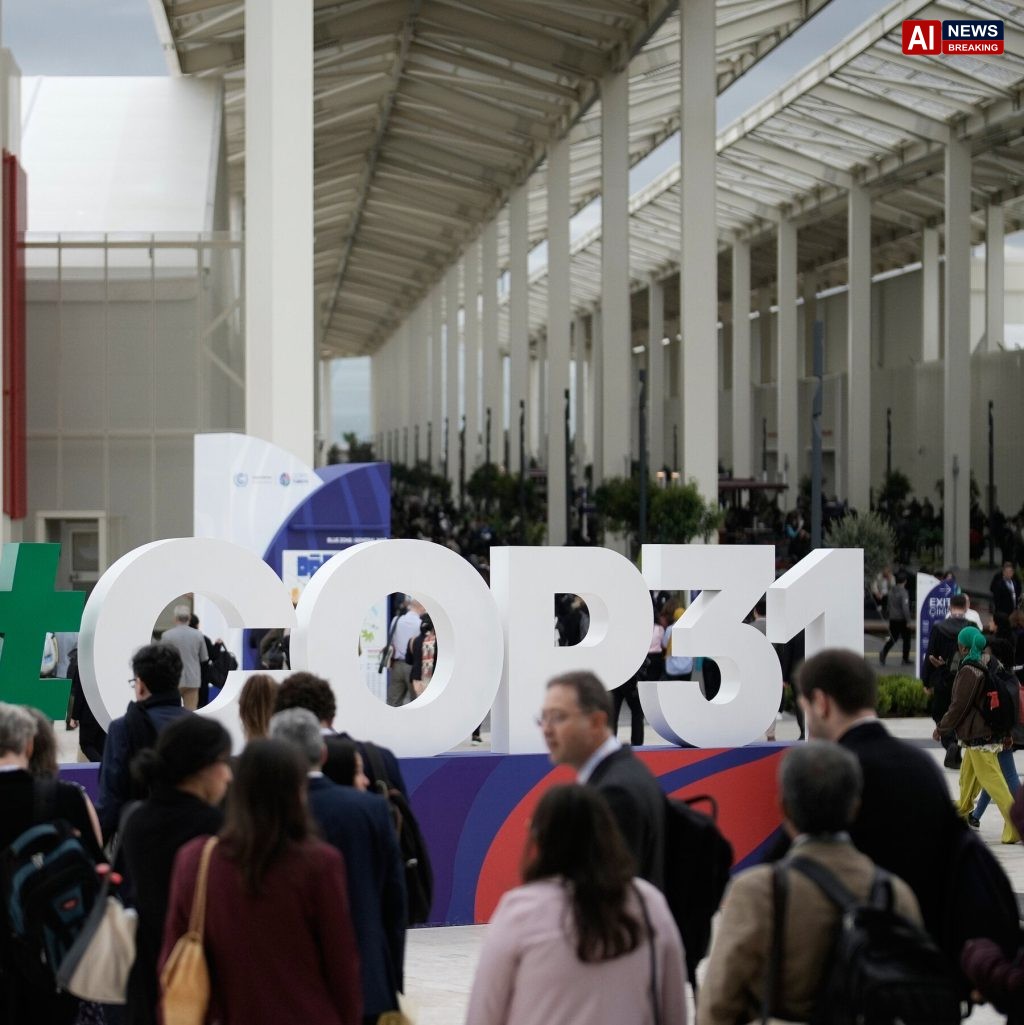
inside cop31 part trade:
climate conference in Antalya, Turkey, has drawn an unprecedented crowd of delegates, journalists, and activists, turning the familiar negotiating hall into a bustling marketplace of ideas and a makeshift carnival for environmental hope. Since the announcement of COP31, the city has been reconfigured with marquees, pop‑up exhibits, and a 24‑hour schedule of panel discussions that run alongside a continuous stream of press briefings and side‑events. While the core aim remains the same as in every summit – to negotiate binding commitments that reduce greenhouse gas emissions – the format has shifted to accommodate a broader audience, providing a space where science, policy, and public engagement intersect more visibly than ever before.The conference’s opening ceremony, held on the beachfront, was a visual spectacle..
Flags from over 190 countries unfurled against a backdrop of LED screens that projected satellite images of melting glaciers and carbon‑concentration maps. The first speeches, delivered by heads of state and leading climate scientists, set a tone that oscillated between sober urgency and pragmatic optimism. “We have an unprecedented opportunity to reimagine the world’s energy future,” President Recep Tayyip Erdoğan said, echoing the sentiment of a flurry of other leaders who followed in his footsteps..
The ceremony’s emphasis on shared responsibility mirrored the themes that would dominate the negotiations.The trade‑show aspect of COP31 is perhaps its most visible departure from previous iterations. A dedicated exhibition hall showcases the latest renewable‑energy technologies, from solar panels with integrated battery storage to next‑generation wind turbines that can operate in lower wind speeds. Entrepreneurs and established corporations alike are present, offering hands‑on demonstrations and negotiating deals on the spot..
The hall has become a microcosm of the global green economy, with start‑ups from Kenya presenting solar‑powered water desalination units, while German firms display carbon‑capture and storage prototypes. The commercial focus, however, has not eclipsed the political dimension; each product display is accompanied by a brief briefing on how it fits into the broader climate agenda.In parallel, a series of “climate therapy” sessions have been organised by NGOs and mental‑health professionals. These sessions aim to provide a space for participants to process the emotional toll that climate anxiety can take, especially for those who are on the front lines of environmental degradation..
In a quiet room that smells faintly of eucalyptus, a psychologist explains breathing techniques that help manage stress, while a climate artist displays a series of paintings that depict the gradual loss of Arctic sea ice. The sessions, though modest in scale, have been praised by participants as a much-needed counterbalance to the high‑stakes negotiations that dominate the day.The negotiation tables, meanwhile, have taken on a new level of openness. With the help of a dedicated translation app, participants can now hear real‑time subtitles of every speech in more than 60 languages..
This technological enhancement, designed to eliminate barriers to understanding, has led to an increase in cross‑regional dialogue. Delegates from smaller nations, who previously struggled to keep pace with the rapid pace of negotiation, now find themselves able to engage more fully in the discussions. The new transparency tools have also attracted a wave of media coverage that focuses less on the drama of the talks and more on the substantive policy proposals being debated.One of the most significant policy developments to emerge from COP31 is the “Global Carbon Markets Initiative,” a proposal that seeks to create a unified digital platform for the trading of carbon credits across national borders..
The initiative, drafted by a coalition of European and Asian nations, aims to reduce the administrative burden of verifying and validating emissions reductions. While critics argue that it could create loopholes for companies to avoid real reductions, supporters contend that a digital ledger could improve accountability and speed up the rollout of emissions‑reduction projects worldwide. The proposal has already received support from over 120 countries, including several emerging economies that see the initiative as a pathway to financing climate adaptation projects.The conference’s carnival‑like atmosphere extends beyond trade and policy into the realm of culture..
Local Turkish artisans have set up stalls that showcase traditional handicrafts, each accompanied by a brief explanation of how the craft supports sustainable development. Food vendors offer a range of plant‑based options, and a temporary art installation in the form of a giant glass dome depicts the Earth’s future climate if current trends continue. This artistic element, curated by a Turkish collective that specializes in environmental art, serves as a visual reminder of the stakes at hand while also providing an informal space for delegates to step away from the pressure of negotiations.Meanwhile, the role of civil society has never been more pronounced..
Activist groups from across the globe have organised flash mobs, live‑streamed protests, and educational workshops that run concurrently with the formal agenda. These events are not merely peripheral; they often feed into the conversation at the negotiation tables by highlighting the public’s demands for more ambitious targets and greater transparency. The presence of these groups has forced many delegates to confront the reality that their decisions will be scrutinised by a global audience that is increasingly willing to hold them accountable.A notable breakthrough came in the form of a “Technology and Finance” sub‑committee that convened on the third day of the summit..
The committee’s agenda, focused on scaling up clean‑energy finance, saw a coalition of development banks and private investors pledge a combined €50 billion in new investments for low‑carbon infrastructure projects over the next decade. While the figure may appear modest compared to the scale of the climate crisis, it represents a significant shift towards the allocation of financial resources that align with the Paris Agreement’s long‑term goals. The commitment was accompanied by a framework that requires regular reporting on the environmental impact of the funded projects, thereby adding a layer of accountability to the funding mechanism.Throughout the conference, the environmental data centre has played a pivotal role, providing real‑time analytics on the latest emission trajectories, carbon budgets, and climate scenarios..
This data, accessible to all delegates through a secure portal, has helped inform negotiations by offering evidence‑based insights into the feasibility of various policy options. The data centre’s integration into the conference’s infrastructure signals a growing trend towards evidence‑based policymaking within the climate governance arena.As COP31 approaches its final day, the atmosphere has shifted from one of anticipation to a measured optimism. While the final agreements remain to be signed, the momentum generated by the conference’s inclusive format, technological innovations, and cross‑sector collaboration suggests that the outcomes will carry more weight than in previous years..
The city of Antalya, with its blend of historic charm and modern infrastructure, has once again proven that global challenges can be addressed through a combination of diplomacy, science, and community engagement. The conference’s unique blend of trade show, carnival, and climate therapy may have.
Updated: November 20, 2026
Insight: This development highlights evolving dynamics and may have broader implications in the near term.