
 Pakistan’s leaders hail first astronaut aboard Chinese craft: ‘Proud one of us has gone into space’
 British tourist travels 29 hours from Mumbai to Amritsar for ₹5,461, rates Indian Railways 10/10 | Viral video
 The Supreme Court will decide whether assault weapons bans violate the Second Amendment
 A Critic of Beijing Falls Short in Taiwan’s Key Mayoral Election
 EPA says no rise in contamination after Army detonates lead azide stockpile in Iowa
Turkey’s Van Cats Contend With Rising Temperatures
**
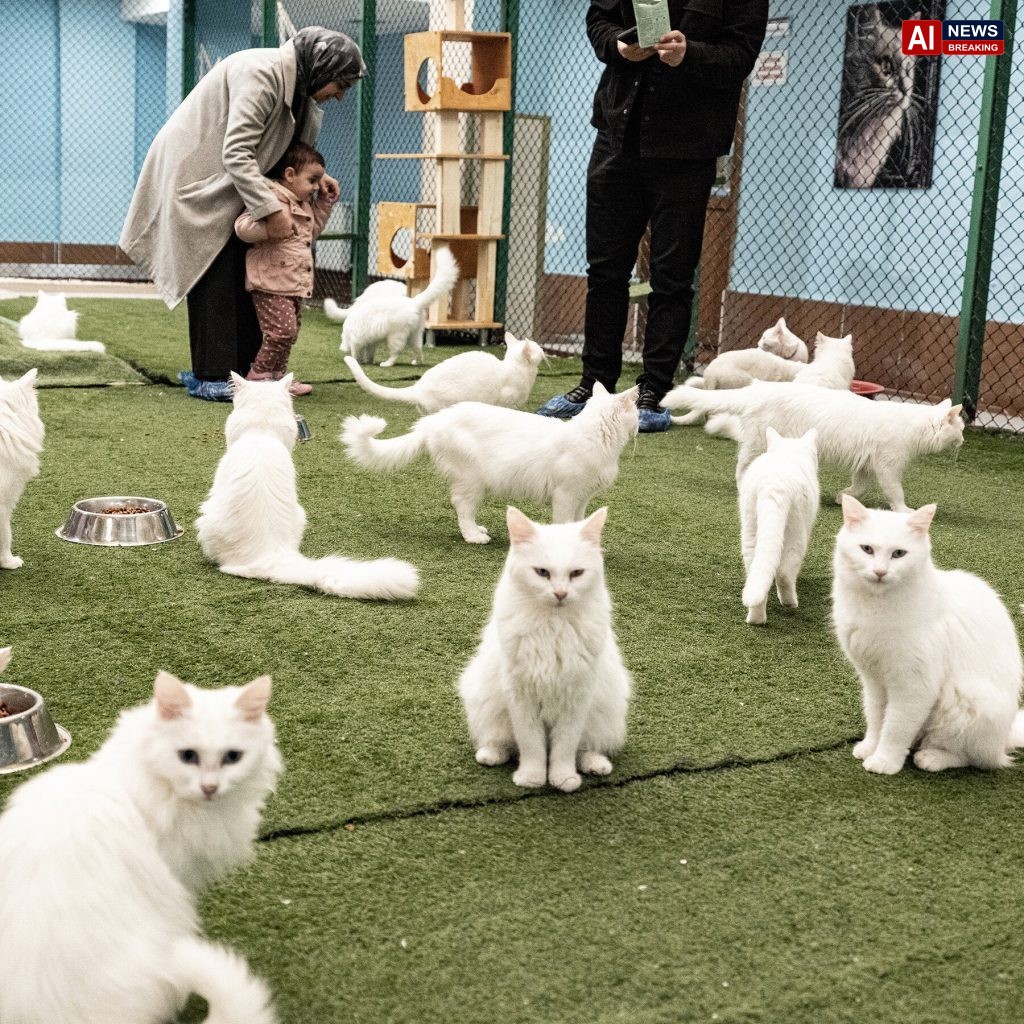
Turkey’s Van Cats Contend With Rising Temperatures - AI News Breaking
turkeys cats contend rising:
Turkey’s Van Cats Contend With Rising Temperatures In the remote Anatolian town of Van, a unique feline sanctuary has become the focus of a growing ecological concern. The centre, established in 2015 to protect the region’s distinctive Van cat, is now confronting a new challenge: the relentless rise in temperatures that threatens the health of its residents. Local officials report that the average summer heat wave lasts for more than a fortnight, with peaks surpassing 35 °C (95 °F)..
To counter these conditions, the sanctuary has invested heavily in climate‑controlled environments, a move that has set a precedent for wildlife refuges across the country. The Van cat, a medium‑sized, silver‑furred feline native to the region, is prized for its unique genetic makeup. Scientific studies have shown that these cats carry rare alleles that could aid in the development of treatments for feline immunodeficiency virus and other diseases..
Because of this, the centre has become a hub for veterinary researchers and geneticists from universities in Istanbul, Ankara and even abroad. The sanctuary’s mandate is to preserve the cat’s population, but the climate crisis threatens the very foundation of this endeavour. To maintain comfortable conditions for the cats, the centre has installed a state‑of‑the‑art air‑conditioning system..
This system circulates cool air through the enclosure while maintaining humidity levels that mimic the cats’ natural habitat. The building’s walls are insulated with reflective panels that deflect solar radiation, keeping the interior temperature stable. The system’s energy consumption has prompted the centre to explore renewable sources, and a small solar array was recently added to offset its carbon footprint..
While many might imagine a cat sanctuary as a quiet, indoor refuge, the Van cats at this centre enjoy a surprisingly aquatic lifestyle. The centre’s designers built a shallow pool with a gentle slope, allowing cats to bathe and play in the water. Researchers have observed that swimming reduces stress and helps regulate body temperature during hot spells..
The pool also serves as an enrichment tool, providing the cats with a varied environment that encourages natural hunting behaviours and social interactions. The cats’ love of water is not merely a novelty; it has measurable benefits for their health. Veterinary staff have noted a decrease in dermatological issues such as hot spots and fungal infections among cats that regularly use the pool..
Additionally, the pool’s warm, shallow waters help improve circulation, which is crucial for older cats that may experience joint stiffness. The combination of air‑conditioning and water activities has been credited with a 15 % reduction in veterinary visits over the past year. The sanctuary’s population has been on an upward trajectory, thanks in part to these adaptive measures..
In 2014, before the centre’s establishment, the Van cat population in the wild was estimated at fewer than 1,200 individuals. By 2023, the sanctuary housed over 350 cats, and the surrounding wild population is slowly rebounding. Conservationists attribute this growth to the centre’s breeding programme and habitat protection initiatives that have expanded natural corridors for the cats..
Despite these successes, the sanctuary faces financial pressures. The cost of maintaining the climate‑control infrastructure and pool upkeep is substantial. In a recent council meeting, local government officials debated whether to increase funding for the centre..
Some councillors argued that investing in climate resilience for wildlife is essential, while others suggested reallocating resources to human infrastructure projects. The debate highlights the broader dilemma of balancing wildlife conservation with societal needs in a warming world. The centre’s management is exploring innovative funding solutions, including partnerships with international NGOs and a public‑private funding model..
A recent grant from the World Wide Fund for Nature will support the expansion of the pool, adding a second shallow basin to accommodate a larger number of cats during peak heat periods. The centre also plans to host educational tours for schools, which will generate both revenue and awareness about climate adaptation for wildlife. Local residents have embraced the centre’s activities, noting the economic benefits of ecotourism..
In 2022, visitor numbers increased by 25 %, and many tourists were drawn to the unique opportunity to observe Van cats in a naturalistic setting. Small businesses, such as cafés and souvenir shops, report higher sales during the sanctuary’s peak months. The community’s support underscores the importance of integrating wildlife conservation with local economic development..
Looking ahead, the centre’s scientists are working on a long‑term climate resilience plan. This includes breeding for heat tolerance, developing shade structures, and potentially relocating a small number of cats to cooler micro‑climates. The plan also involves data collection on the cats’ physiological responses to heat, which could inform broader conservation strategies for other species affected by climate change..
The Van cat sanctuary stands as a testament to adaptive conservation in the face of environmental challenges. By combining cutting‑edge technology, thoughtful animal care, and community engagement, the centre has created a model that could be replicated across Turkey and beyond. As temperatures continue to climb, the sanctuary’s experience will provide valuable lessons on how to protect vulnerable wildlife while balancing human needs..
Van cats in Turkey’s Van sanctuary are battling rising heat, prompting the centre to install climate‑controlled rooms, a solar‑powered air‑conditioning system, and a shallow pool that has cut vet visits by 15 %. While the project boosts the cat population and local tourism, it strains public finances and sparks debate over funding wildlife resilience amid a warming climate.
By turning a feline refuge into a climate‑lab, Van’s sanctuary shows that protecting endangered genes can double as a blueprint for human resilience—heat‑smart tech now safeguards both cats and the local economy.
If the model scales, it could prove that the cost of cooling wildlife is an investment in community sustainability, turning






