
 Pakistan’s leaders hail first astronaut aboard Chinese craft: ‘Proud one of us has gone into space’
 British tourist travels 29 hours from Mumbai to Amritsar for ₹5,461, rates Indian Railways 10/10 | Viral video
 The Supreme Court will decide whether assault weapons bans violate the Second Amendment
 A Critic of Beijing Falls Short in Taiwan’s Key Mayoral Election
 EPA says no rise in contamination after Army detonates lead azide stockpile in Iowa
Top Drug Kingpin Is Captured by Mexican Army as Gunfire Erupts
**
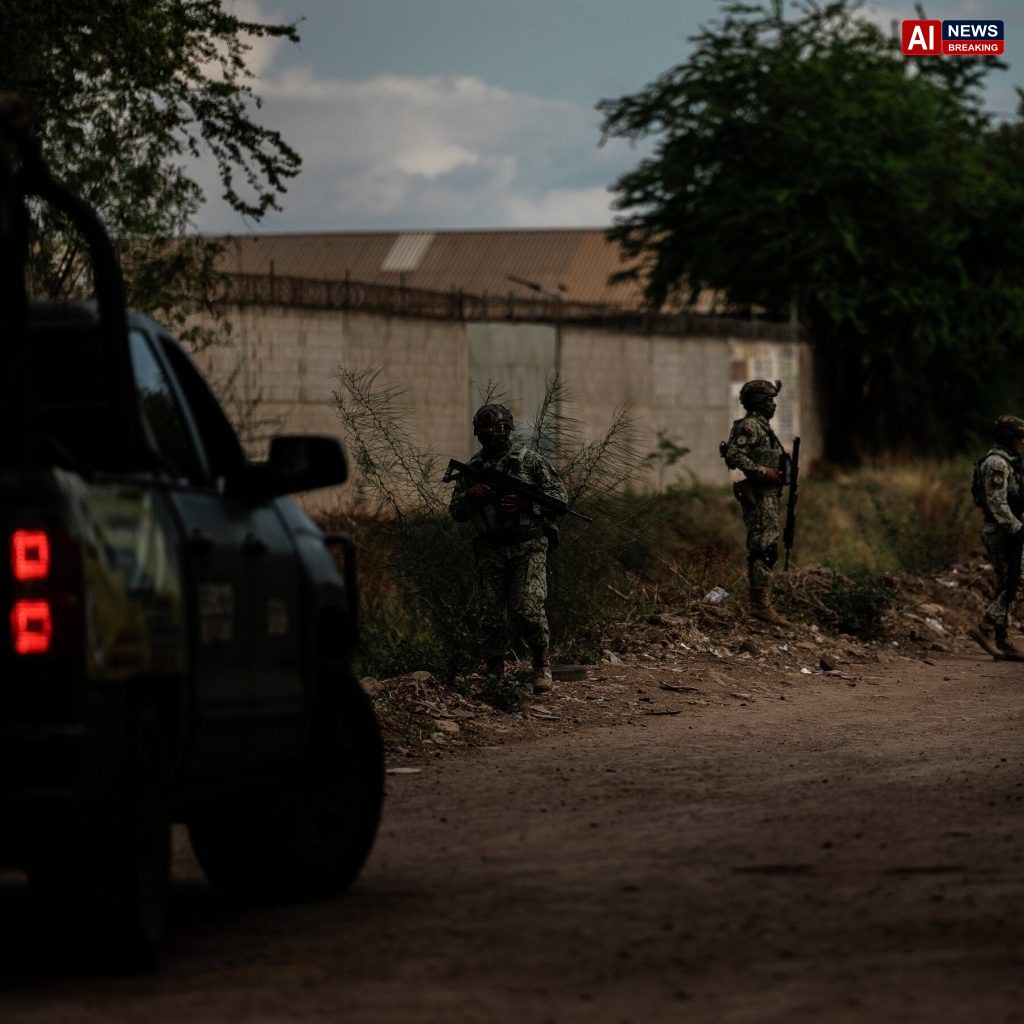
Top Drug Kingpin Is Captured by Mexican Army as Gunfire Erupts - AI News Breaking
drug kingpin captured mexican:
Top Drug Kingpin Is Captured by Mexican Army as Gunfire Erupts The arrest of Fausto Isidro Meza Flores, who is known as El Chapo Isidro and was one of the F.B.I.’s 10 most wanted, was a victory for the Mexican government. In a coordinated operation that unfolded at dawn, the Mexican Army surrounded the clandestine hideout in the remote hills of Oaxaca, where the drug lord had been operating for over a decade. The move was the culmination of an extensive intelligence effort, including satellite imagery, intercepted communications and the cooperation of local informants who had long feared for their safety..
The operation began after a tip from an anonymous source indicated that El Chapo Isidro had been receiving supplies for a new drug trafficking network. Military analysts estimated that the hideout housed a sophisticated logistics hub, complete with underground tunnels, an improvised drug processing plant and a small armed escort. When soldiers breached the compound, they encountered heavy resistance from a group of armed men who had been loyal to the drug lord for years..
Gunfire erupted as the troops moved to secure the perimeter. Despite the brief exchange, there were no casualties reported among the Mexican Army personnel. The armed escort, however, was swiftly neutralised, and several of the men were taken into custody..
In the aftermath of the operation, authorities discovered a cache of weapons, including automatic rifles and an array of ammunition. The evidence points to the drug lord’s intention to expand his influence beyond the traditional territories of the Sinaloa and Jalisco cartels, aiming to tap into new markets across the United States. El Chapo Isidro had previously been known for his involvement in the smuggling of cocaine and methamphetamine into the U.S..
His reputation was further cemented when the FBI named him in the list of the most wanted criminals, citing his role in a series of violent attacks against rival cartels and law‑enforcement agencies. The capture of this figure is expected to destabilise the existing power structures within the narcotics trade, as his network had been a major contributor to the flow of illicit drugs across the border. The operation was led by General Carlos M..
Ramirez, commander of the State Police Operations Command in Oaxaca. Ramirez praised the cooperation of local security forces and the community’s willingness to provide intel that had been crucial to the mission. “This victory was only possible because the people of Oaxaca stood up against the influence of organised crime,” Ramirez said in a statement released by the military..
The statement also highlighted the role of intelligence units in tracking the movements of the drug lord in the weeks prior to the raid. The capture has implications for the broader strategy of the Mexican government in its fight against drug trafficking. President Andrés Manuel López Obrador has long called for a shift from purely punitive measures to a more comprehensive approach that includes social programmes, economic opportunities and stronger judicial reforms..
The removal of a major cartel figure is seen as a tangible result of this strategy, potentially encouraging other high‑profile figures to consider surrender. Critics of the operation argue that the militarised approach could lead to further instability and that the root causes of drug trafficking—poverty, lack of employment and weak governance—remain unaddressed. Human rights organisations have called for a thorough investigation into the conduct of the troops during the raid, warning that excessive use of force could undermine public trust..
However, no incidents of excessive violence were reported, and the army has stated that it adhered strictly to operational protocols. The arrest also about the future of the drug lord’s network. Analysts predict that the disappearance of El Chapo Isidro could create a power vacuum that rival cartels may attempt to fill..
The Mexican government has already announced that it will intensify its intelligence operations in the region to prevent any attempts at regrouping. A joint task force comprising federal police, the army and the judiciary is expected to oversee the dismantlement of the drug trafficking routes that were being managed by the cartel. In the wake of the raid, the local economy has begun to feel the effects of the crackdown..
While some businesses that had profited from the cartel’s operations have suffered, the community is cautiously optimistic that a decline in violence will improve long‑term stability. Local officials have urged residents to cooperate with law‑enforcement agencies, emphasising that a collaborative approach is essential for sustained peace. The arrest of Fausto Isidro Meza Flores comes at a time when the United States and Mexico are intensifying their collaboration on drug‑enforcement matters..
Treasury Department has announced new sanctions targeting the financial networks that supported the cartel, signalling a coordinated effort to sever the economic lifelines of organised crime. Meanwhile, Mexico’s legal system is preparing to bring the drug lord to trial, with prosecutors aiming to secure a conviction that will serve as a deterrent to other criminals. As the operation concludes, the Mexican Army will likely conduct follow‑up missions to secure surrounding areas and ensure that the drug lord’s network cannot re‑establish itself..
The authorities have also pledged to investigate the alleged corruption within local governments that may have allowed the cartel to flourish. In the coming weeks, the eyes of the nation will remain fixed on Oaxaca, where the consequences of this high‑profile arrest will unfold in real time. The capture of El Chapo Isidro marks a significant milestone in Mexico’s long‑standing battle against narcotics trafficking..
While it remains to be seen how effectively the government can maintain momentum and prevent the resurgence of cartel influence, the operation demonstrates the potential for decisive action to disrupt organised crime. The broader implications for regional.
Mexican troops seized former FBI‑wanted kingpin Fausto Isidro Meza Flores in Oaxaca, ending a decade‑long drug‑trafficking hub amid brief gunfire but no army casualties. The arrest, backed by intelligence and local tips, is poised to destabilise cartel networks and signal a broader strategy to curb organized crime.
The raid signals a tipping point: by striking a cartel’s logistical nerve center, Mexico is shifting from chasing fugitives to dismantling the supply chains that sustain them. If local communities keep feeding intelligence, the vacuum left by El Chapo Isidro may fracture rather than consolidate, reshaping the drug






