Pakistan’s leaders hail first astronaut aboard Chinese craft: ‘Proud one of us has gone into space’
 British tourist travels 29 hours from Mumbai to Amritsar for ₹5,461, rates Indian Railways 10/10 | Viral video
 The Supreme Court will decide whether assault weapons bans violate the Second Amendment
 A Critic of Beijing Falls Short in Taiwan’s Key Mayoral Election
 EPA says no rise in contamination after Army detonates lead azide stockpile in Iowa
China’s Spies Set Sights on A.I. Chips Years Before Nvidia Scandal
**
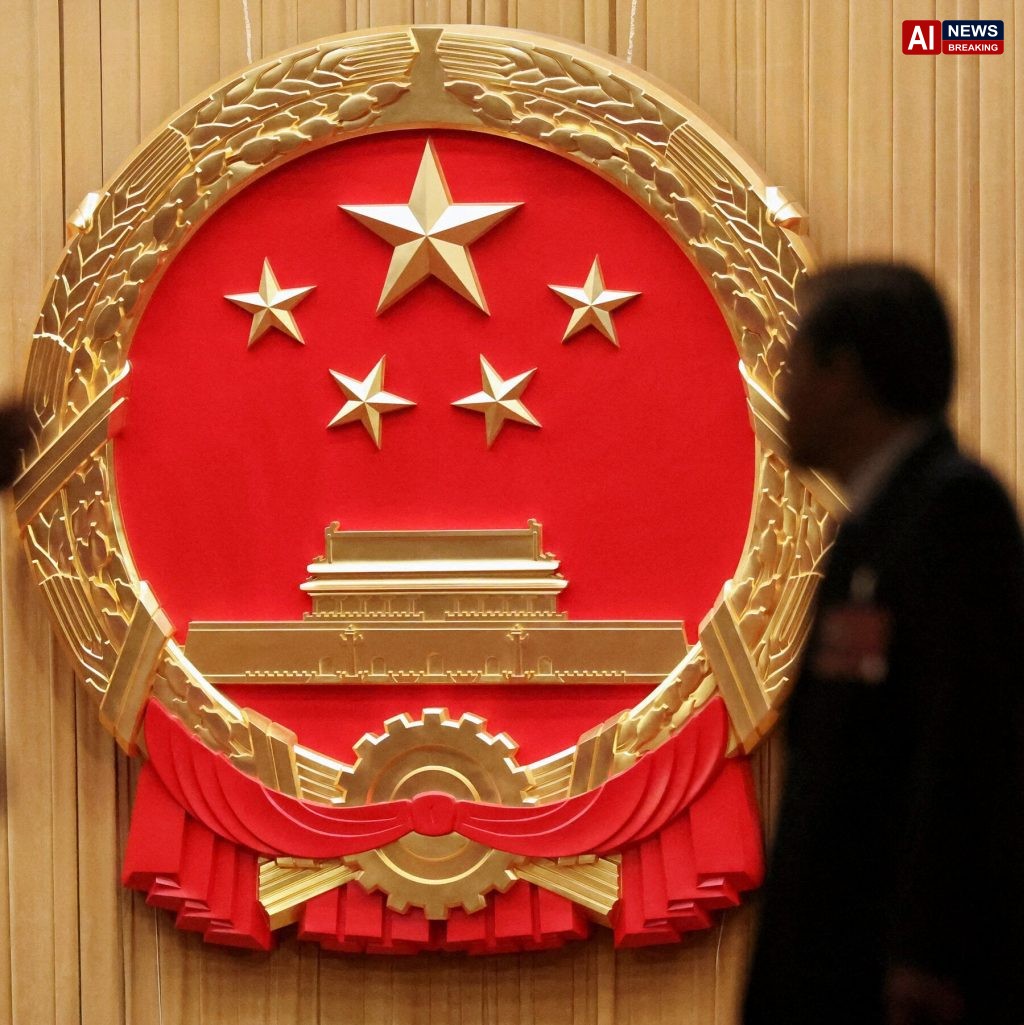
China’s Spies Set Sights on A.I. Chips Years Before Nvidia Scandal - AI News Breaking
chinas spies sights chips:
China’s espionage agency has been running a campaign to help the country’s companies acquire advanced A.I. chips and to gather intelligence on the sector, officials say. The operation, uncovered by a joint investigation of U.S..
and British security services, appears to have begun in 2021, well before the public fallout from the 2024 Nvidia insider‑trading scandal. Analysts say the timing suggests a long‑term strategic objective: to bridge a gap that has left China reliant on foreign‑made processors for high‑performance computing, a cornerstone of modern artificial‑intelligence systems. According to the report, the Ministry of State Security (MSS) employed a network of operatives embedded in research laboratories, semiconductor firms and academic institutions across the United States, Europe and Taiwan..
Their tasks ranged from stealing design blueprints and fabrication process details to recruiting engineers willing to share proprietary knowledge in exchange for lucrative contracts with Chinese manufacturers. The intelligence gathered was funneled to state‑backed chip makers such as SMIC and Hua Hong Semiconductor, which have been under pressure to accelerate the development of 7‑nanometre and smaller nodes. By integrating stolen data into their own research pipelines, the Chinese firms reportedly shortened development cycles by up to two years, according to senior officials at the U.S..
In parallel, the MSS is alleged to have run a covert procurement programme that used shell companies and third‑party distributors to acquire cutting‑edge GPUs and AI accelerators from abroad. These components were then reverse‑engineered or integrated into domestic prototypes, a practice that skirts export‑control regulations and raises concerns about the effectiveness of current monitoring mechanisms. The investigation also highlighted a sophisticated disinformation campaign aimed at obscuring the true purpose of the acquisitions..
Emails, social media posts and falsified academic papers were used to create a veneer of legitimate research collaboration, making it harder for foreign authorities to distinguish benign scientific exchange from espionage‑driven theft. officials say the operation was partially uncovered after an informant within a Taiwanese fab alerted authorities to irregular shipments of high‑value silicon wafers bound for a front company in Hong Kong. Subsequent forensic analysis traced the shipments to a series of money‑laundering accounts linked to known MSS operatives, prompting a broader sweep of related activities..
British security agencies, meanwhile, have warned that the espionage network extended into their own universities, where Chinese graduate students and visiting scholars were allegedly directed to harvest data on advanced lithography techniques. The UK’s National Cyber Security Centre has launched a review of its research‑collaboration protocols to mitigate similar risks in the future. The revelations come at a moment when the global chip supply chain is already strained by pandemic‑induced shortages, geopolitical tensions and a surge in demand for AI‑driven applications..
Policymakers in Washington and Brussels have renewed calls for stricter export controls on high‑end semiconductors, arguing that the existing framework is ill‑suited to counter covert state‑sponsored procurement. Chinese officials have dismissed the allegations as “fabricated propaganda” aimed at stifling China’s legitimate efforts to achieve technological self‑sufficiency. They argue that the country’s investment in domestic chip research is driven by market forces and national security concerns, not illicit espionage, and have pledged to cooperate with foreign investigations where appropriate..
Industry observers caution that even if the specific operation is curtailed, the broader trend of state‑backed intelligence gathering is likely to persist. “What we are seeing is a systematic approach to acquire the know‑how needed for next‑generation AI hardware,” said a senior analyst at a leading semiconductor consultancy. “The stakes are high, and the methods are becoming increasingly sophisticated.” In response, the United States has proposed legislation that would expand the reach of the Export Control Reform Act to cover emerging AI chips and related software tools, while the European Union is considering a unified strategy to protect its semiconductor ecosystem from foreign intrusion..
Both initiatives emphasize tighter vetting of foreign partnerships and increased funding for domestic R&D. As the investigation continues, experts stress the importance of balancing security with the open exchange of scientific knowledge that underpins global innovation. The delicate equilibrium between protecting intellectual property and fostering collaboration will shape the future of the AI chip race, a competition that now appears to be as much about espionage as it is about engineering..
Updated: November 22, 2026
A joint US‑UK probe has uncovered a Chinese intelligence network that, since 2021, infiltrated labs and universities worldwide to steal AI‑chip designs and covertly acquire cutting‑edge GPUs, feeding the data to state‑backed manufacturers like SMIC. The findings have prompted calls for tighter export controls and revamped research‑collaboration safeguards to curb state‑sponsored semiconductor theft.
China’s covert chip‑stealing campaign reveals that the AI race is less about engineering breakthroughs and more about a long‑term strategic data war—state actors are effectively shortening R&D timelines by siphoning design secrets before public backlash even surfaces. This stealthy advantage underscores why export controls now feel like a blunt