
 Pakistan’s leaders hail first astronaut aboard Chinese craft: ‘Proud one of us has gone into space’
 British tourist travels 29 hours from Mumbai to Amritsar for ₹5,461, rates Indian Railways 10/10 | Viral video
 The Supreme Court will decide whether assault weapons bans violate the Second Amendment
 A Critic of Beijing Falls Short in Taiwan’s Key Mayoral Election
 EPA says no rise in contamination after Army detonates lead azide stockpile in Iowa
Canada’s Boreal Forest Is Reshaped by Logging and Climate Change
**
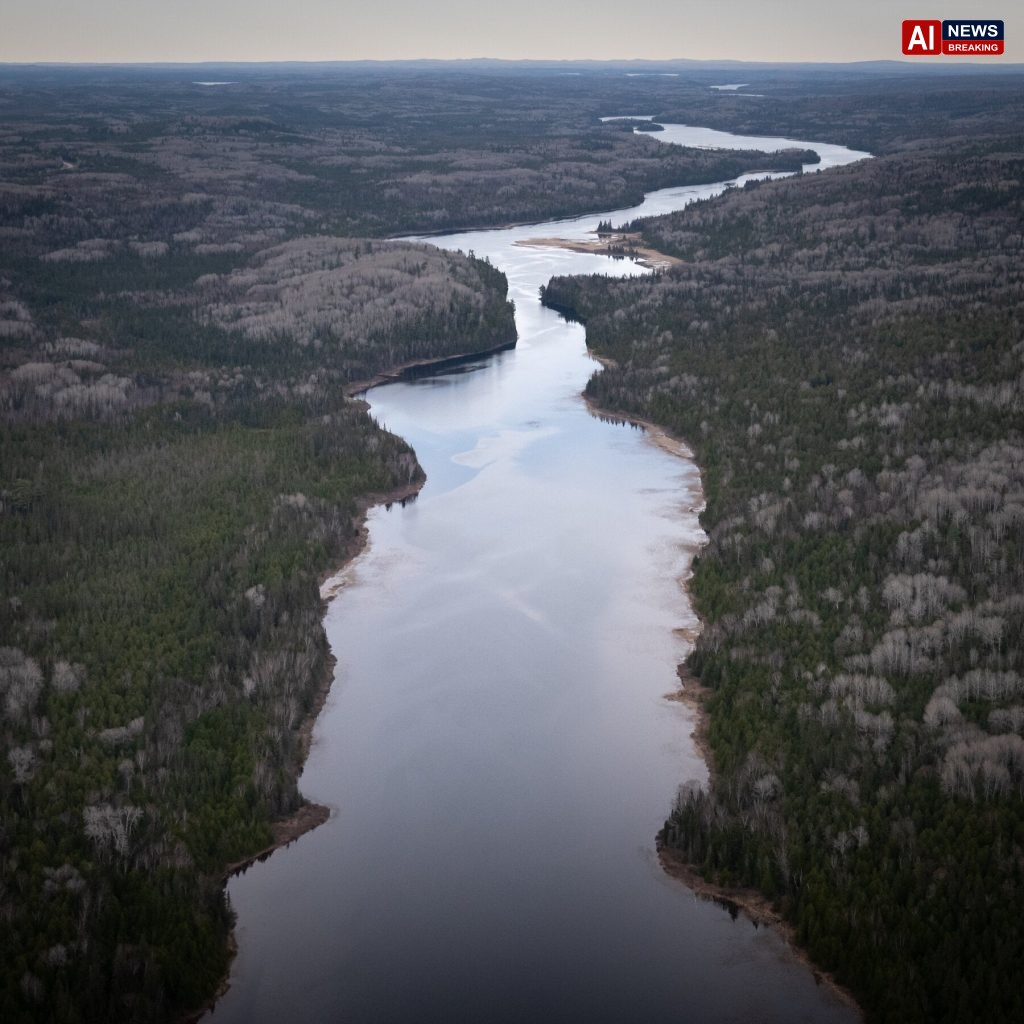
Canada’s Boreal Forest Is Reshaped by Logging and Climate Change - AI News Breaking
canadas boreal forest reshaped:
Canada’s Boreal Forest Is Reshaped by Logging and Climate Change The boreal forest, covering nearly a quarter of Canada’s landmass, has long been celebrated as a vital carbon sink and a benchmark for sustainable forest management. In recent years, however, a combination of intensified commercial logging and accelerating climate change has begun to undermine the ecological integrity and economic prospects that the forest once promised. As government agencies, Indigenous communities, and private corporations navigate these challenges, the future of this vast forested landscape remains uncertain..
Canada’s forestry sector is a cornerstone of its economy, with timber exports contributing billions of dollars annually. In 2023, the industry logged an estimated 30 million cubic metres of timber, a figure that reflects both the demand for softwood panels and the push to meet international construction standards. Yet, the methods employed—often involving clear‑cutting and extensive road construction—have raised concerns about habitat fragmentation, soil erosion, and the loss of biodiversity..
Researchers at the University of British Columbia have reported that clear‑cut areas can take decades to return to their pre‑cut ecological state. Climate change is adding a layer of complexity to these issues. Rising temperatures, shifting precipitation patterns, and increased frequency of extreme weather events are already altering the growth dynamics of boreal tree species..
In particular, species such as white spruce and black spruce are experiencing stress from warmer winters and drier summers, which can reduce growth rates and increase vulnerability to pests. The spruce budworm, a notorious forest insect, has expanded its range northward, exacerbated by milder winters that allow greater survival rates. The interaction between logging practices and climate stressors creates a feedback loop that threatens forest resilience..
After logging, soils are more susceptible to wind erosion, and the removal of canopy cover accelerates heat loss at night, potentially altering microclimates within the forest. This, in turn, can make regrowth more difficult, especially under the heightened threat of fire. In the past decade, the boreal forest has seen a 15% increase in wildfire incidence, with a significant portion of fires occurring in previously logged areas..
In response, some provinces have adopted stricter regulatory frameworks. Quebec, for example, has implemented a moratorium on clear‑cutting in ecologically sensitive zones and requires detailed environmental impact assessments before granting logging licenses. These measures aim to balance economic interests with conservation priorities, yet critics argue that the moratoriums are too narrow in scope and fail to address the broader implications of climate change..
Indigenous communities across Canada play a pivotal role in forest stewardship, bringing centuries of knowledge about sustainable resource use. The First Nations Forestry Management Initiative, launched in 2020, has partnered with several tribal groups to co‑manage logging operations, ensuring that traditional ecological knowledge informs harvesting schedules and regeneration strategies. By aligning commercial interests with cultural values, these collaborations aim to create a more equitable and environmentally sound model of forest exploitation..
Scientists are increasingly calling for a paradigm shift from a purely commercial focus to a holistic approach that integrates climate mitigation, biodiversity preservation, and Indigenous rights. The International Union for Conservation of Nature (IUCN) has highlighted the boreal forest as a critical habitat for species such as the Canada lynx, which relies on dense spruce stands. Loss of such habitats not only threatens species survival but also undermines the ecosystem services that the forest provides, including carbon sequestration, water regulation, and soil fertility..
Policy proposals are emerging to address these challenges. The Canadian government’s 2025 Forest Strategy outlines a roadmap for reducing carbon emissions through afforestation and reforestation initiatives, with a target of planting 10 million hectares of native trees by 2035. Additionally, the strategy includes provisions for enhanced monitoring of forest health, increased funding for pest control research, and incentives for private landowners to adopt sustainable forestry practices..
Critics, however, question whether the proposed timelines are realistic given the scale of the boreal ecosystem and the current pace of industrial activity. Despite regulatory efforts, illegal logging remains a persistent problem, particularly in remote regions where enforcement is logistically difficult. According to a 2022 report by the Canadian Wildlife Federation, illegal activities account for an estimated 5% of total timber harvests, disproportionately impacting smaller, often vulnerable, Indigenous-owned land parcels..
Strengthening surveillance through satellite monitoring and community reporting mechanisms has been suggested as a cost‑effective way to curb these illicit practices. The economic implications of these environmental pressures are multifaceted. While logging provides immediate financial benefits and employment opportunities, the long‑term health of the boreal forest is integral to Canada’s position as a global leader in sustainable timber production..
If current trends continue, the country could face a dual crisis: diminishing timber supplies and a weakened global reputation for environmental stewardship. Balancing short‑term economic gains with long‑term ecological sustainability remains a central debate among policymakers, industry stakeholders, and the public. Public perception of the boreal forest is also evolving..
Media coverage of high‑profile forest fires and increasing awareness of climate change’s impact on global carbon budgets have led to a growing demand for transparent reporting and accountability from the forestry sector. In response, several logging companies have pledged to publish annual sustainability reports detailing their harvesting volumes, regeneration efforts, and compliance with environmental standards. Whether these disclosures translate into tangible conservation outcomes will be closely watched by both national and international observers..
Looking ahead, the boreal forest’s resilience will depend on a coordinated effort that spans government agencies, Indigenous communities, scientists, and the private sector. Innovations in forest management—such as precision forestry, which uses.
Updated: November 22, 2026
Canada’s vast boreal forest is losing its ecological and economic promise as logging intensifies and climate change accelerates, driving habitat loss, pest outbreaks, and wildfire risk. In response, governments, Indigenous groups, and industry are pushing for stricter regulations, co‑management models, and large‑scale reforestation to safeguard carbon storage and biodiversity while preserving the nation’s timber‑based economy.
Insight: The tug‑of‑war between profit and planet is tightening: as clear‑cuts accelerate climate‑driven pest outbreaks, Canada risks turning its once‑pristine carbon sink into a tinderbox, undermining both biodiversity and the very reputation that underpins its timber export economy. The only way forward is to embed Indigenous






