
 Pakistan’s leaders hail first astronaut aboard Chinese craft: ‘Proud one of us has gone into space’
 British tourist travels 29 hours from Mumbai to Amritsar for ₹5,461, rates Indian Railways 10/10 | Viral video
 The Supreme Court will decide whether assault weapons bans violate the Second Amendment
 A Critic of Beijing Falls Short in Taiwan’s Key Mayoral Election
 EPA says no rise in contamination after Army detonates lead azide stockpile in Iowa
Simon Commission and SIR exercise are similar: Revanth Reddy
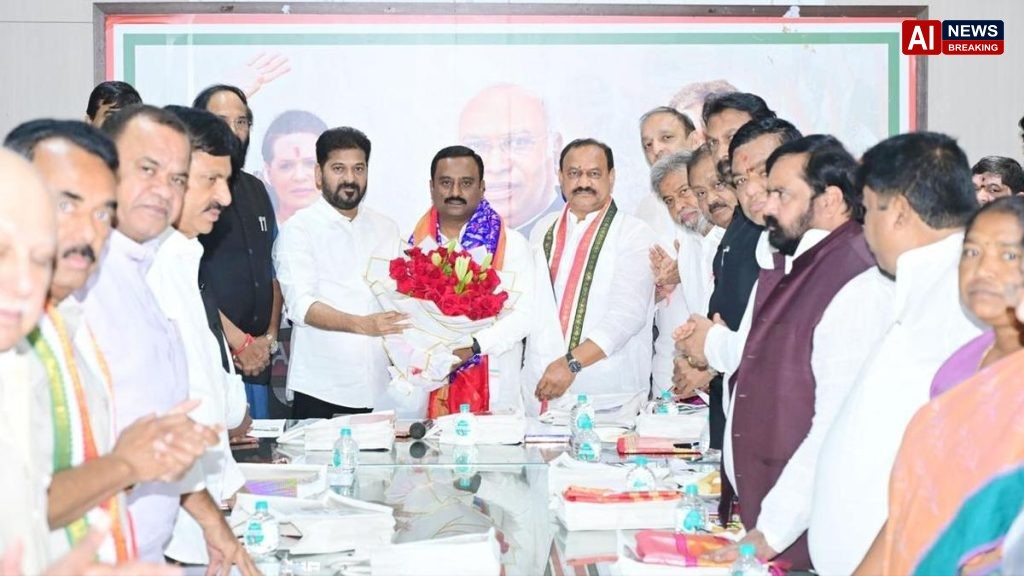
Simon Commission and SIR exercise are similar: Revanth Reddy - AI News Breaking
simon commission exercise similar:
Title: Simon Commission and SIR exercise are similar: Revanth Reddy In a striking comparison that has caught the attention of political commentators across the nation, Telangana’s newly formed Office of the Caste Census (OCC) has drawn parallels between the historic Simon Commission and the contemporary Social Identity Register (SIR) exercise. Telangana’s Chief Minister, Revanth Reddy, articulated the similarities during a press conference held in Hyderabad on Monday, arguing that both initiatives aim to document under‑represented communities for better policy formulation. Reddy’s remarks were made in the context of Telangana’s recent pioneering OBC caste census, the first of its kind in almost a century..
The Simon Commission, appointed in 1927 by the British Colonial Government, was tasked with assessing the state of the Indian political system. Its findings, published in 1928, revealed stark disparities in representation across caste and religious lines. Critics viewed it as an instrument of colonial control, yet its detailed data laid the groundwork for subsequent constitutional reforms..
By juxtaposing this with the SIR, Reddy insists that the same objective remains relevant: accurate data to guide inclusive governance. Telangana’s OCC, established in 2023, collected caste information from over 20 lakh households, employing a mixed methodology of field surveys and digital data capture. The census is notable for being the first systematic attempt in the state to quantify the proportion of Other Backward Classes (OBC) over a decade..
Prior to this, Telangana’s caste data had been derived from the 2011 Census, which limited granular insights into social stratification. The new survey promises a more nuanced picture of social dynamics in the region. “Accurate data is the cornerstone of equitable policy,” Reddy said, addressing a room full of journalists and civil society representatives..
“When the Simon Commission gathered numbers to highlight disparities, it was a turning point that spurred legislative reforms. Today, the SIR offers us the same opportunity to shape a future that leaves no community behind.” He further noted that the OBC census could serve as a model for national implementation. The Union Ministry of Social Justice and Empowerment has been monitoring Telangana’s efforts closely..
A senior ministry official, speaking on condition of anonymity, stated that the state’s methodology could inform a nationwide rollout of the SIR. “We are particularly interested in the digital platform Reddy’s team used, which ensured data integrity and anonymity,” the official added. The ministry’s spokesperson also mentioned a preliminary review of Telangana’s draft resolution that proposes urging the central government to adopt a similar census across all states..
Reddy’s proposal, if adopted, would see the central government undertaking a pan‑India SIR within the next fiscal year. The resolution would call for a coordinated effort involving the National Sample Survey Office (NSSO) and state statistical departments. The aim would be to gather detailed caste data that can influence reservations in education, employment, and public procurement..
Reddy emphasized that this initiative would be data‑driven, inclusive, and non‑politicised. Political analysts argue that such a resolution could reshape the social fabric of India. Meera Nayar, a sociologist from the Indian Institute of Technology, said, “The Simon Commission’s data highlighted the systemic marginalisation of certain groups..
If the SIR can replicate this, we can anticipate a more balanced distribution of opportunities.” She also cautioned that the collection of caste data must be handled sensitively to avoid social stigma. Opposition leaders, however, have expressed concerns about potential misuse of the data. Rahul Singh of the National Democratic Party warned that “caste data, if not protected, could become a weapon of political manipulation.” He urged for robust safeguards and transparent data governance mechanisms..
The government responded by stating that the SIR would employ stringent anonymisation protocols and would be overseen by an independent audit committee. Telangana’s OBC census also highlighted significant socio‑economic disparities within the state. The data revealed that 43% of households surveyed belong to OBC categories, yet only 27% benefit from affirmative action schemes..
Reddy used these figures to argue that better data leads to more targeted interventions. “When we know who needs support, we can tailor our policies,” he explained, referencing the need for scholarships, skill development, and infrastructure investment in OBC-dominated districts. The resolution’s drafting process has already seen consultation with various stakeholders..
NGOs such as the Akshaya Patra Foundation and the Centre for Social Justice contributed inputs on data collection methods and community engagement. Reddy stated that “inclusive dialogue is essential for legitimacy.” He added that the final resolution will include a clause mandating that the collected data remain confidential and be accessible only to designated government bodies. In light of the ongoing debates, the Ministry of Social Justice is set to convene a high‑level committee next week..
The committee will comprise data scientists, policy experts, and representatives from civil society. The objective is to refine the SIR framework, ensuring it aligns with the constitutional mandate of the 14th Amendment, which protects the rights of marginalized communities. Reddy expressed optimism that the committee’s findings will be positive and pave the way for nationwide implementation..
As the conversation around the SIR intensifies, the nation watches closely. The resolution’s adoption could signal a new era of data‑driven governance, echoing the Simon Commission’s legacy of transformation. Whether it will foster genuine social equity remains to be seen, but the potential for a more informed, inclusive policy landscape is undeniable..
Updated: November 22, 2026
Telangana’s Chief Minister, Revanth Reddy, has likened the state’s new Social Identity Register to the 1927 Simon Commission, arguing that both aim to uncover under‑represented communities so that policy can be better targeted. He hopes the state’s detailed, anonymised census of over 20 million households will serve as a model for a pan‑India roll‑out that could reshape reservations and public spending across the country.
Insight: By likening the SIR to the Simon Commission, Telangana’s CM hints that raw data can be a catalyst for structural change, not just a bureaucratic exercise. Yet the real test will be whether the state’s careful anonymisation protocols prevent the very political weaponisation that once turned colonial data into a tool





