The Supreme Court will decide whether assault weapons bans violate the Second Amendment
 A Critic of Beijing Falls Short in Taiwan’s Key Mayoral Election
 EPA says no rise in contamination after Army detonates lead azide stockpile in Iowa
 Israeli Strike Kills 2 Workers at Gaza Clinic, Doctors Without Borders Says
 McQueen Pre-Fall 2027
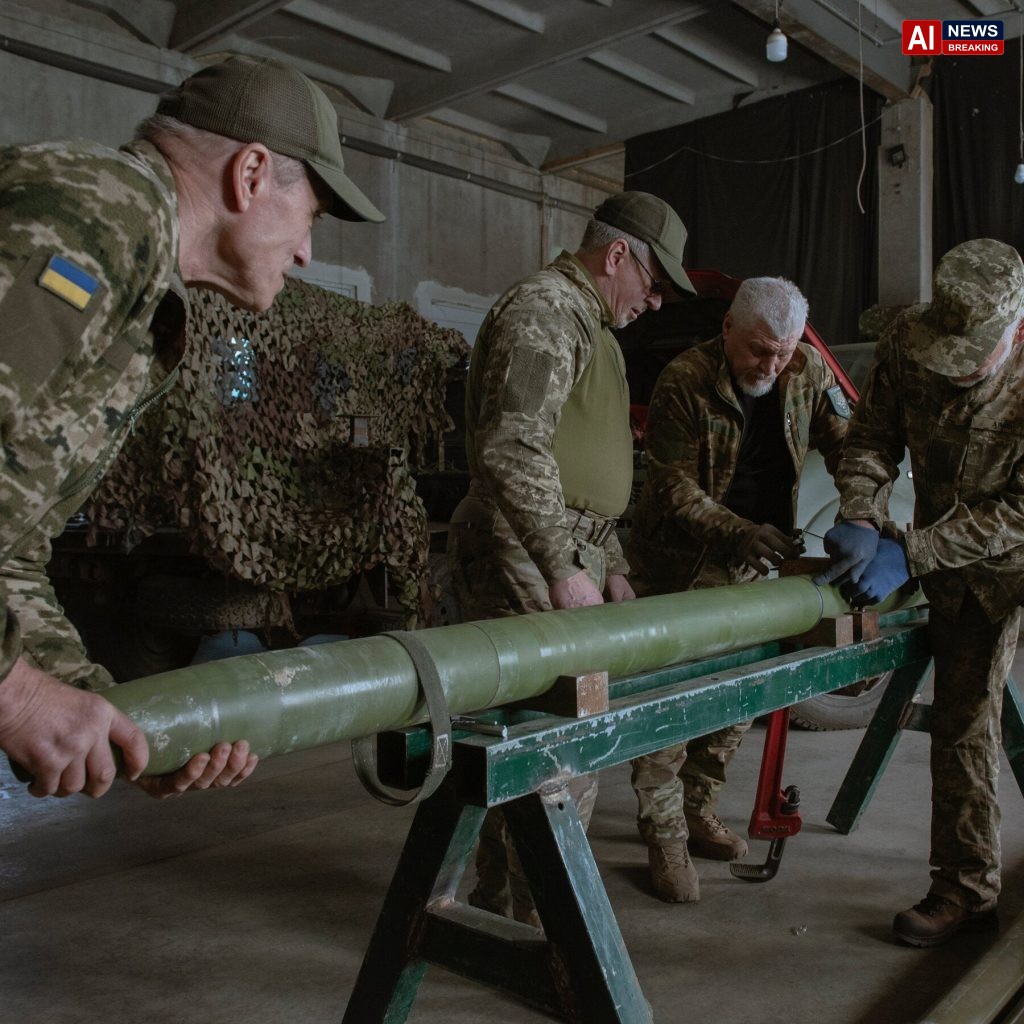
They Were Too Old to Enlist, but Not to Fight. Meet the Steppe Wolves of Ukraine.
**
They Were Too Old to Enlist, but Not to Fight. Meet the Steppe Wolves of Ukraine. - AI News Breaking
they were enlist fight:
When Russia launched its full‑scale invasion of Ukraine in February 2022, the country’s mobilisation effort focused on men aged 18 to 60, with older citizens formally excluded from military service. Yet a small but determined group of veterans, many in their seventies, refused to remain on the sidelines. They organised themselves into informal combat units, often referred to by the media as “steppe wolves”, and took to the front lines in the east and south of the country, where they have been engaged in a variety of tasks from reconnaissance to direct fire support.The origins of the movement can be traced to the summer of 2022, when a handful of retired officers from the Ukrainian Armed Forces convened in the city of Cherkasy..
Disillusioned by the official age limits and motivated by personal loss – several had lost sons, brothers or neighbours to the fighting – they began to draft a charter for a volunteer militia that would accept anyone willing to bear arms, regardless of age. Their first recruitment drive was conducted via word of mouth in local veterans’ clubs, churches and on social media platforms frequented by former servicemen. Within weeks, the group swelled to more than a hundred men, many of whom had fought in the Soviet–Afghan war or in the 1990s conflicts in the former Yugoslavia.The steppe wolves quickly distinguished themselves by leveraging their experience rather than sheer physical strength..
Their training sessions, held in the fields outside Cherkasy and later in the liberated town of Kupiansk, focused on small‑unit tactics, improvised explosive device (IED) detection and night‑time navigation. Older volunteers, some of whom had previously served as artillery officers, took on the role of instructors, teaching younger volunteers how to set up ambushes and coordinate with regular army units. This blend of seasoned expertise and youthful energy created a hybrid force that could operate semi‑autonomously while still fitting into the broader command structure of Ukraine’s Territorial Defense Forces.In early 2023 the unit received its first combat deployment near the town of Vovchansk, a strategic gateway to the Donbas region..
There, the steppe wolves were tasked with securing a series of abandoned farmland outposts that had been used by Russian forces as artillery spotting posts. Using a combination of portable anti‑tank guided missiles and manually operated machine guns, the volunteers succeeded in destroying three enemy positions within a 48‑hour window, forcing a temporary Russian withdrawal from the immediate area. Their success was documented by Ukrainian military press releases, which highlighted the “unconventional bravery” of the older fighters and praised their ability to adapt quickly to evolving battlefield conditions.The presence of senior combatants has also had a psychological impact on both sides of the front..
For Ukrainian soldiers, the sight of men in their sixties and seventies moving alongside them has become a morale booster, symbolising a national resolve that transcends generational boundaries. Conversely, Russian intelligence reports have noted an increased level of caution among their troops when operating near steppe wolf‑controlled zones, citing the unit’s reputation for meticulous reconnaissance and its willingness to engage in close‑quarters combat despite the age of its members.Logistically, the steppe wolves have faced challenges typical of volunteer formations. Funding is largely sourced from local charitable foundations, diaspora donations and occasional allocations from the Ministry of Defence, which provides limited ammunition and medical supplies..
Equipment varies widely: some volunteers still carry Soviet‑era AK‑47s, while others have been equipped with modern Western rifles such as the M4A1, supplied through Ukraine’s extensive arms aid programmes. The group’s leadership has instituted a rotation system to manage fatigue, ensuring that no individual is required to stay on the front line for more than a week at a time, a practice that reflects both the physical realities of older combatants and the unit’s emphasis on sustainability.Medical support for the aging volunteers is another focal point. Field medics attached to the steppe wolves have been trained to handle age‑related health issues, including cardiovascular complications and joint injuries, alongside conventional combat wounds..
In one notable incident in September 2023, a 72‑year‑old former tank commander suffered a minor heart attack after a prolonged firefight near the village of Kramatorsk. He was evacuated to a nearby field hospital, where he received treatment and returned to duty after a brief recuperation period, underscoring the unit’s commitment to retaining experienced personnel despite health setbacks.The Ukrainian government’s official stance on the phenomenon has evolved over time. Initially, there were concerns about the legal liability of employing soldiers beyond the statutory age limit and about the potential strain on medical resources..
However, as the steppe wolves demonstrated operational effectiveness and contributed to the defence of key territories, the Ministry of Defence began to incorporate them more formally into the Territorial Defense framework. In March 2024, a directive was issued allowing volunteer units composed of senior citizens to register with local military administrations, granting them access to standardized communication equipment and a modest supply of ammunition.International observers have taken note of the steppe wolves as an example of citizen mobilisation beyond conventional parameters. Analysts at the Royal United Services Institute have argued that the Ukrainian case illustrates how societies under existential threat can expand the definition of combatant, blurring the lines between regular armed forces and civilian volunteers..
Critics, however, caution that reliance on older volunteers may mask deeper issues in recruitment and manpower planning, suggesting that the phenomenon could be a symptom of a broader demographic challenge facing Ukraine’s defence establishment.As the war drags into its third year, the steppe wolves remain a small but visible component of Ukraine’s overall resistance. Their numbers have not grown dramatically – estimates place the force at between 300 and 500 active members – but their impact is amplified by the symbolic weight they carry. In a country where the population is aging and many families have lost multiple members to the conflict, the willingness of senior citizens to take up arms again speaks to a profound sense of duty and national identity..
Whether their model can be replicated in other contexts remains uncertain, but for now the steppe wolves continue to patrol the steppe, proving that age, while a factor, is not an absolute barrier to participation in modern warfare..
Updated: November 23, 2026
The steppe wolves turn Ukraine’s demographic strain into a strategic asset, showing that battlefield expertise can outweigh age limits and reshaping conventional recruitment calculus. Their visibility also pressures Moscow, proving that societal resolve can be weaponised as effectively as any modern kit.