The Supreme Court will decide whether assault weapons bans violate the Second Amendment
 A Critic of Beijing Falls Short in Taiwan’s Key Mayoral Election
 EPA says no rise in contamination after Army detonates lead azide stockpile in Iowa
 Israeli Strike Kills 2 Workers at Gaza Clinic, Doctors Without Borders Says
 McQueen Pre-Fall 2027
Netanyahu calls for new air strikes on Iran
**
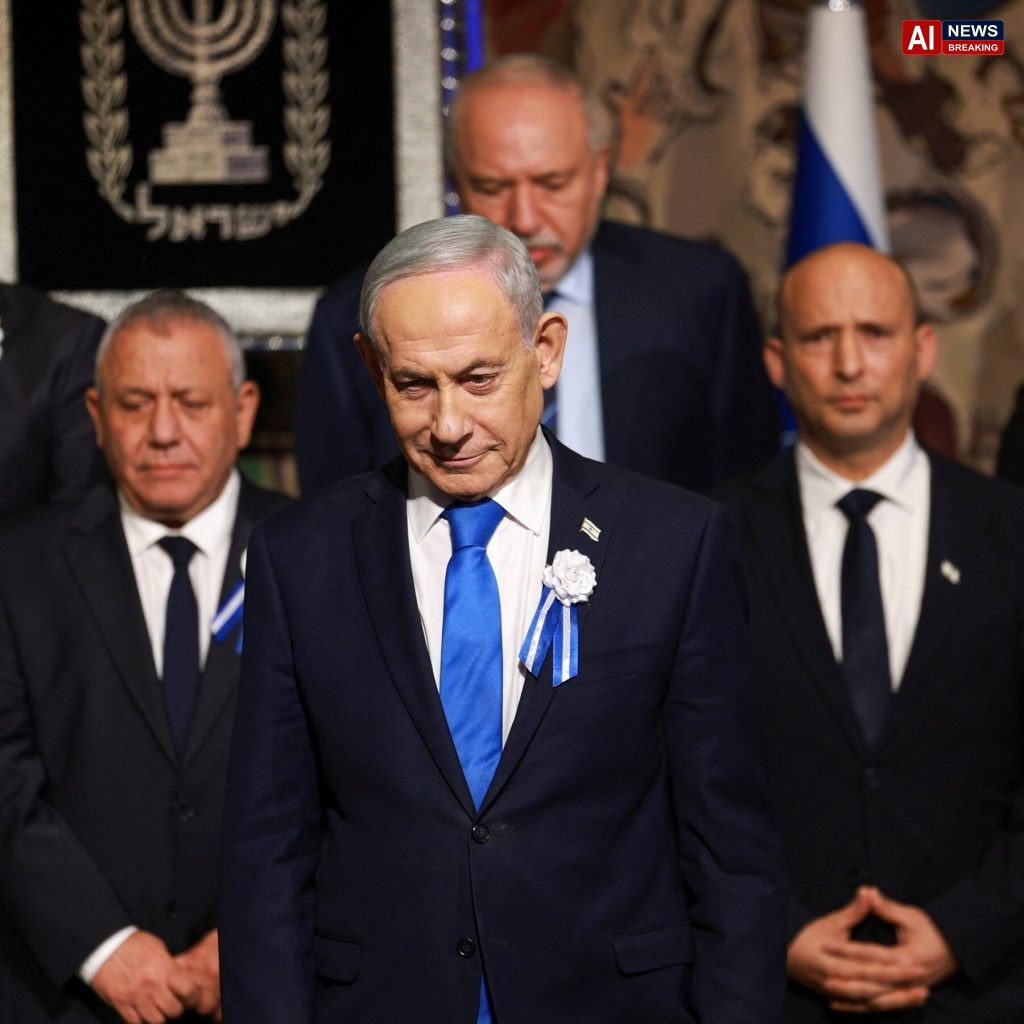
Netanyahu Wants to Attack Iran. Does That Serve Israel or Him? - AI News Breaking
netanyahu calls strikes iran:
Netanyahu Wants to Attack Iran. Does That Serve Israel or Him? The Israeli prime minister, Benjamin Netanyahu, calls renewing strikes a matter of national security..
Military analysts and opposition leaders say he’s prioritising his own interests. Benjamin Netanyahu’s call for a fresh wave of air strikes against Iran’s nuclear facilities has sent shockwaves through Jerusalem and beyond. In a televised address on Tuesday, the veteran prime minister framed the operation as an urgent act of self‑defence, arguing that Tehran’s alleged “imminent” weaponisation of its nuclear programme threatens the very existence of the Jewish state..
The rhetoric echoes the language of past wars, but critics argue the timing – just weeks before national elections – hints at a political motive rather than a purely security‑driven one. The proposed campaign would involve the Israeli Air Force penetrating deep into Iranian airspace, a feat that would demand sophisticated intelligence, coordination with regional allies and a willingness to risk escalation with Tehran’s proxy forces. Defence Minister Yoav Gallant pledged “the full weight of our military” to neutralise any sites deemed capable of producing a bomb, while senior officers in the General Staff warned that the operation would be “highly complex and fraught with uncertainty”..
The stakes, they say, are not just tactical but strategic, as any misstep could draw Iran’s Revolutionary Guard into a broader confrontation. Yet the opposition in the Knesset has been swift to question the prime minister’s motives. Leader of the Labour party Merav Michaeli accused Netanyahu of “using the spectre of Iran to mask domestic failings”, noting that his government has been rocked by corruption indictments and a faltering economy..
“When a leader calls for war, we must ask whether he is protecting the nation or protecting his own political future,” she said in a speech that was met with applause from across the aisle. The criticism has found resonance among younger voters who, according to a recent poll, view the prospect of a new conflict as a greater threat than the economic hardships they currently endure. Security analysts in Israel and abroad are divided on the feasibility of a strike..
Former IDF chief of staff Gadi Eisenkot, speaking to The Jerusalem Post, warned that Israel’s air defences would be stretched thin if Iran retaliates with its own missile barrage. He added that the Iranian Revolutionary Guard’s network of drone bases across Iraq and Syria could launch swarms of loitering munitions, overwhelming Israel’s “Iron Dome” and “David’s Sling” systems. Conversely, a US‑based think‑tank, the Center for Strategic Counter‑Terrorism, argued that a limited, precision strike on a single enrichment facility could degrade Tehran’s timeline without provoking a full‑scale war, provided diplomatic channels remain open..
International reaction has been cautious but increasingly uneasy. Washington, traditionally Israel’s staunchest ally, has urged restraint, with a State Department spokesperson stating that “any unilateral action that could destabilise the region must be carefully weighed against the broader goals of non‑proliferation.” In Tehran, President Ebrahim Raisi’s office labelled Netanyahu’s threats as “irresponsible aggression”, vowing “swift and decisive retaliation” should Israel breach Iranian sovereignty. Meanwhile, the European Union has called for an emergency meeting of the International Atomic Energy Agency, signalling a desire to keep the dispute within diplomatic rather than military bounds..
Domestically, the prospect of renewed hostilities has revived public debate about Israel’s long‑standing policy of pre‑emptive strikes. Veteran journalists recall the 2006 war in Lebanon and the 2014 Gaza operation, both of which began with promises of quick, decisive victories but devolved into protracted conflicts that left deep societal scars. A recent survey by the Israel Democracy Institute found that 57 % of respondents believe the government should exhaust all diplomatic avenues before resorting to force, a sentiment that has risen sharply since the outbreak of the Gaza war in 2023..
The economic dimension cannot be ignored. A sustained campaign against Iran would likely trigger a spike in oil prices, affecting Israel’s import‑dependent energy sector and potentially harming its fragile high‑tech export market. The Bank of Israel warned that “geopolitical volatility in the Middle East remains a key risk to growth forecasts”..
Small‑business owners in Tel Aviv’s startup corridor have already voiced concerns that investors may pull back if a wider regional conflict looms, a scenario that could erode Netanyahu’s claims of delivering prosperity alongside security. Amid these pressures, Netanyahu remains resolute. In a press conference on Thursday, he dismissed dissenting voices as “political theatre”, insisting that “the only alternative to a pre‑emptive strike is a future in which Iran decides to use a nuclear weapon against us”..
He pointed to intelligence reports, which he declined to disclose, claiming that Iran’s “black sites” are nearing completion. This narrative, he argued, leaves Israel with no choice but to act now, before the “window of opportunity closes”. Opposition leaders, however, argue that the prime minister’s opaque evidence is a classic hallmark of political brinkmanship..
Former Mossad director Yossi Cohen, now a senior adviser to a coalition of NGOs, warned that “fabricated threats have been used before to rally public support for elections”. He cited the 1996 “Operation Grapes of Wrath” as a precedent where inflated intelligence was later shown to be inaccurate, leading to unnecessary civilian casualties and international censure. Cohen’s remarks have reignited calls for an independent parliamentary inquiry into the decision‑making process behind any.
Netanyahu has framed a new air strike on Iran’s nuclear sites as an urgent act of self‑defence, but critics say the timing ahead of elections suggests a political gamble. Analysts and opposition figures warn the operation could trigger a costly regional escalation and hurt Israel’s economy, urging diplomatic channels be exhausted first.
Netanyahu’s war‑drum may secure a short‑term rally vote, but it also risks locking Israel into a costly escalation that could erode its diplomatic capital and economic vitality.
If the strike proves more political theatre than strategic necessity, the ensuing fallout could deepen internal dissent and undermine the very security narrative he seeks to protect.