
 Pakistan’s leaders hail first astronaut aboard Chinese craft: ‘Proud one of us has gone into space’
 British tourist travels 29 hours from Mumbai to Amritsar for ₹5,461, rates Indian Railways 10/10 | Viral video
 The Supreme Court will decide whether assault weapons bans violate the Second Amendment
 A Critic of Beijing Falls Short in Taiwan’s Key Mayoral Election
 EPA says no rise in contamination after Army detonates lead azide stockpile in Iowa
Drone Attack Hits Colombian City as Unmanned Explosives Transform Conflict
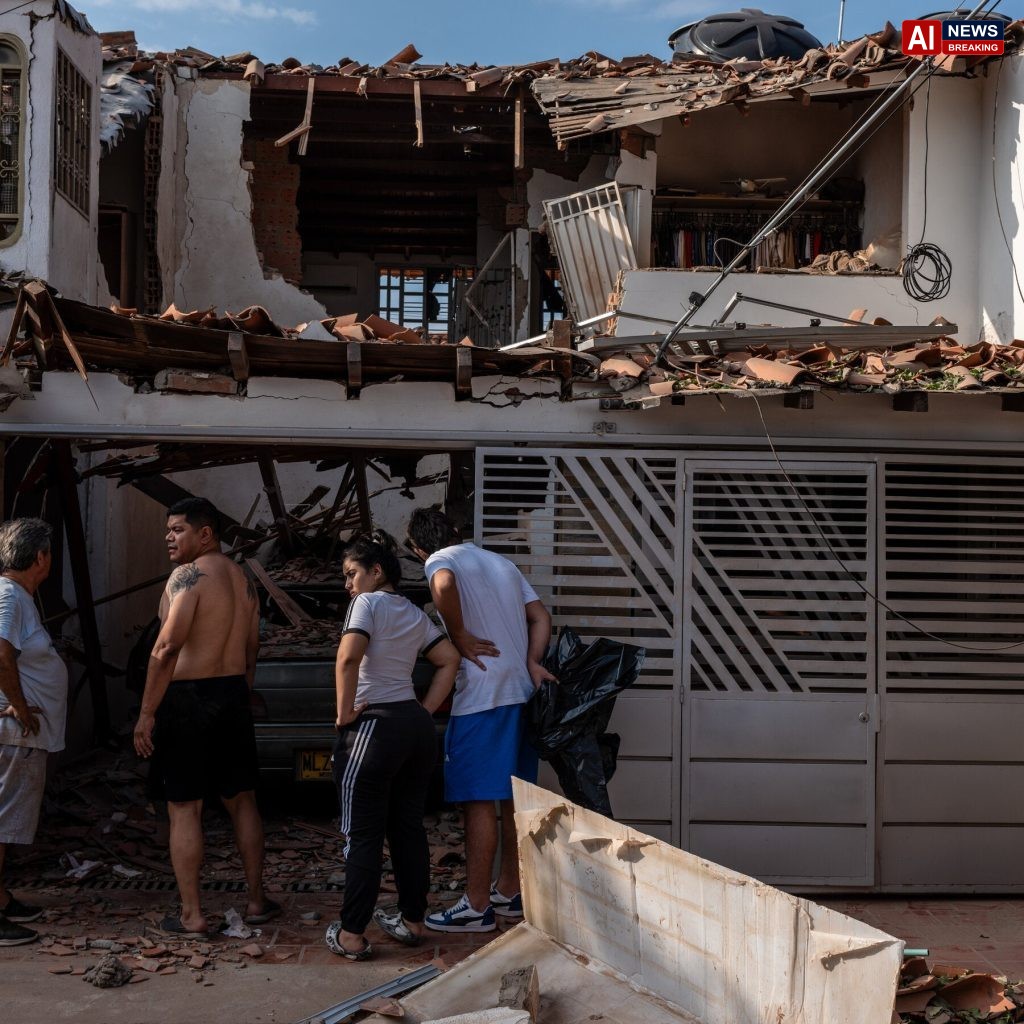
Drone Attack Hits Colombian City as Unmanned Explosives Transform Conflict - AI News Breaking
Drone attack hits Colombian city as unmanned explosives transform conflict A drone strike in the southwestern Colombian city of Cali on Tuesday left at least three people injured, marking yet another incident in a conflict that is increasingly being fought from the sky. The blast, which occurred in a busy commercial district, shattered windows and caused panic among passers‑by. Local authorities confirmed that the device was an unmanned aerial vehicle fitted with explosives, a tactic that analysts say is reshaping the dynamics of Colombia’s long‑standing internal war..
The injured were taken to nearby hospitals, where they received treatment for shrapnel wounds and minor burns. The incident has drawn immediate condemnation from the United Nations, which warned that the use of armed drones by non‑state actors is eroding traditional safeguards in armed conflict. In a statement released shortly after the attack, UN officials highlighted a staggering 445 percent rise in drone bombings across Colombia over the past twelve months..
The surge, they noted, is outpacing the growth of conventional guerrilla attacks and is prompting calls for urgent international regulation of commercial drone technology. Colombia’s internal conflict, which has spanned more than six decades, has historically been fought by guerrilla groups, paramilitaries and the state’s armed forces. In recent years, however, the proliferation of inexpensive, off‑the‑shelf drones has provided smaller factions with a new means to deliver lethal payloads without risking the exposure of ground operatives..
Experts say the shift mirrors trends seen in other conflict zones where cheap technology has lowered the threshold for violence. The Colombian government has acknowledged the challenge, stating that its security forces are adapting tactics to detect and neutralise aerial threats. Security Minister Diego Molano addressed the press on Wednesday, emphasizing that the attack was “a stark reminder of the evolving nature of the threat we face.” He announced the deployment of specialized units equipped with radar and signal‑jamming equipment to monitor low‑altitude airspace over major urban centres..
Molano also pledged additional resources for intelligence gathering to trace the supply chains that enable armed groups to acquire and modify civilian drones for combat purposes. The injured victims, all civilians, have become the human face of an increasingly abstract warfare. Maria Gómez, 34, recounted the terror she felt as the humming drone descended overhead, followed by a sudden, deafening explosion that ripped through a nearby storefront..
“We were just shopping, and then everything shattered. I thought my life was over,” she said, her voice shaking. Medical reports indicate that none of the victims sustained life‑threatening injuries, but the psychological impact on the community is expected to be long‑lasting..
Human rights organisations have warned that the rise in drone attacks could exacerbate already fragile civilian protection frameworks. Amnesty International released a briefing noting that the anonymity provided by unmanned systems makes attribution difficult, complicating efforts to hold perpetrators accountable under international law. The briefing called for stronger mechanisms to track the sale of drone components and for the Colombian government to pursue comprehensive investigations into each incident..
In the political arena, the attack has reignited debate over the peace process that formally ended hostilities with the Revolutionary Armed Forces of Colombia (FARC) in 2016. Critics argue that the growing use of drones signals a splintering of armed groups, with dissident factions refusing to lay down arms and instead turning to new technologies to further their aims. Proponents of the peace deal, however, contend that the resurgence of violence is driven by criminal networks focused on drug trafficking, rather than ideologically motivated insurgents..
International observers are watching the Colombian case as a potential bellwether for how other nations might confront the weaponisation of civilian technology. The United States, a major exporter of commercial drones, has recently announced a review of export controls aimed at preventing the sale of drone kits to conflict zones. While the review is still in its early stages, officials have indicated that stricter licensing could help limit the flow of components that can be repurposed for weaponry..
Economic analysts warn that the uptick in drone attacks could have broader repercussions for Colombia’s investment climate. The city of Cali, a key industrial hub, has seen a modest decline in tourism and foreign direct investment since the first major drone strike last year. Business leaders fear that persistent insecurity could deter investors, undermining growth prospects in a country already grappling with inequality and fiscal pressures..
The Colombian military has begun testing counter‑drone technologies acquired from European partners, including laser‑based systems designed to disable unmanned aircraft mid‑flight. Early field trials suggest that these systems can engage multiple targets simultaneously, a capability that may prove essential as the frequency of drone incursions rises. Nevertheless, officials caution that technology alone cannot resolve the underlying drivers of conflict, which remain rooted in socio‑economic disparities and the lucrative illicit drug trade..
As the nation grapples with this new dimension of violence, community leaders in Cali have called for a coordinated response that blends security measures with social outreach. “We cannot simply shoot down drones without addressing why people turn to violence,” said Carlos Ramírez, a local council member. He urged the government to invest in education, employment programmes and infrastructure in marginalised neighbourhoods, arguing that a holistic approach could diminish the appeal of armed groups that now wield cheap aerial weapons..
The attack in Cali underscores a pivotal moment for Colombia and for the international community, as the line between civilian and combatant technology continues to blur. With the UN warning of a near‑five‑fold increase in drone bombings and local authorities scrambling to adapt, the challenge lies in forging policies that curb the spread.
A drone strike in Cali injured three civilians and shattered windows in a busy commercial district, highlighting the growing use of low‑cost unmanned aircraft in Colombia’s long‑standing conflict. The UN has warned of a 445 percent surge in such attacks, prompting the government to deploy counter‑drone units and urging tighter international controls on drone technology.
The surge of low‑cost drone strikes is turning Colombia’s long‑standing insurgency into a high‑tech, low‑barrier war that undermines both traditional security doctrines and civilian trust in public institutions. Without a coordinated regulatory framework for drone commerce and a parallel investment in the socioeconomic grievances that fuel armed participation, the country risks becoming a testing ground for a new breed of impersonal violence that could spread to other fragile states.






