
 Pakistan’s leaders hail first astronaut aboard Chinese craft: ‘Proud one of us has gone into space’
 British tourist travels 29 hours from Mumbai to Amritsar for ₹5,461, rates Indian Railways 10/10 | Viral video
 The Supreme Court will decide whether assault weapons bans violate the Second Amendment
 A Critic of Beijing Falls Short in Taiwan’s Key Mayoral Election
 EPA says no rise in contamination after Army detonates lead azide stockpile in Iowa
Netherlands, India
**
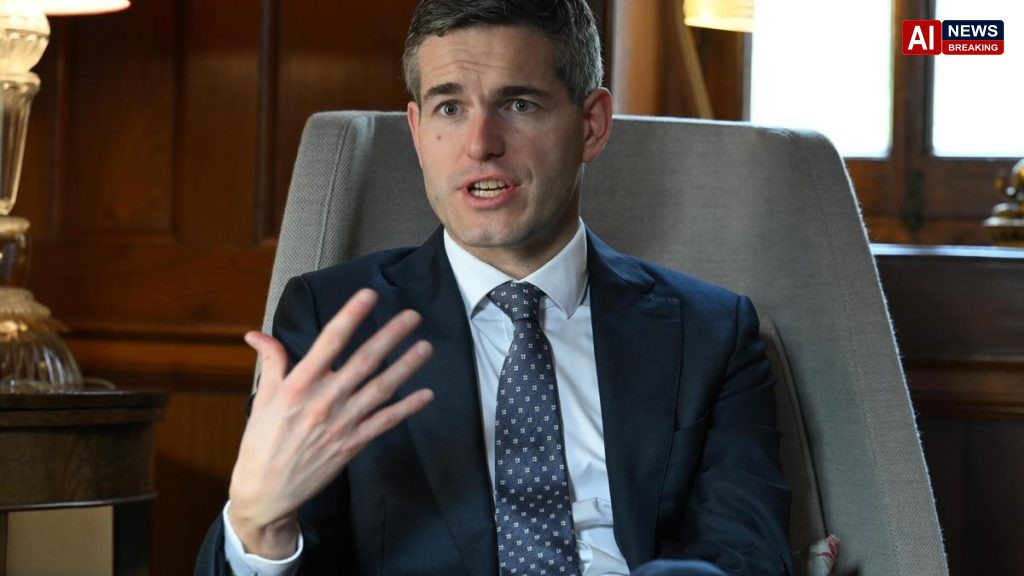
Rule of law needed, not ‘Rule of Power’: Netherlands Foreign Minister Berendsen on trilateral summit - AI News Breaking
netherlands india:
Rule of law needed, not ‘Rule of Power’: Netherlands Foreign Minister Berendsen on trilateral summit Dutch Foreign Minister Lies B. Berendsen concluded a three‑day trilateral summit with Indian External Affairs Minister S. Jaishankar and their EU counterparts, stressing that Europe and India must break free from the “rule of power” that now dominates global energy, security and technology markets. In a joint press briefing she warned that reliance on a handful of great powers creates systemic vulnerabilities, urging a renewed commitment to multilateral institutions and transparent legal frameworks. The minister framed the discussion as a turning point for Indo‑European cooperation, insisting that shared values, not strategic expediency, should guide future partnerships..
During the talks, Berendsen highlighted the growing dependence of European nations on Russian gas and Chinese semiconductor components, noting that such dependencies undermine both economic resilience and democratic standards. She argued that the EU’s current approach—often negotiating on a case‑by‑case basis with authoritarian states—fails to address the structural imbalance in global supply chains. By contrast, she said, a coordinated Indo‑European strategy could diversify sources, promote fair competition, and reinforce the rule of law across continents..
Jaishankar echoed these concerns, pointing to India’s own challenges in securing reliable energy imports and advanced technology inputs. He cited recent disruptions in maritime routes and the volatility of fossil‑fuel markets as evidence that “no nation can afford to be hostage to a single supplier.” The Indian minister called for a “new architecture” that would link European and Indian firms through joint ventures, shared research hubs, and reciprocal market access, thereby reducing the influence of external powers that seek to dictate terms. Berendsen also addressed security cooperation, stressing that the convergence of cyber‑threats, disinformation campaigns, and hybrid warfare necessitates a robust legal basis for joint action..
She warned that without a clear, rule‑based framework, defensive measures risk becoming ad‑hoc and politically charged. The minister proposed a trilateral working group to draft binding agreements on cyber‑norms, intelligence sharing, and the protection of critical infrastructure, all anchored in international law rather than unilateral power plays. The summit’s economic agenda centered on renewable energy, with both sides agreeing to accelerate the deployment of green technologies..
Berendsen announced a pledge of €2 billion in EU funds to support Indian solar and wind projects, contingent on strict adherence to environmental standards and transparent procurement processes. In return, India offered to open its domestic market to European clean‑tech firms, a move the Dutch minister said could “break the monopoly of a few dominant players” and spur competition that benefits consumers worldwide. Technology transfer was another focal point, as the Netherlands highlighted its expertise in high‑performance computing and battery manufacturing..
Berendsen urged India to adopt standards that protect intellectual property while facilitating joint research, arguing that a balanced approach would prevent the “theft of technology” often justified by powerful states under the guise of national security. She cautioned that without clear legal safeguards, collaborative projects could be undermined by coercive practices from countries seeking to exploit strategic assets. On the diplomatic front, the ministers affirmed the importance of upholding international law in contested regions such as the South China Sea and the Indo‑Pacific..
Berendsen warned that the “rule of power” threatens the sovereignty of smaller states, calling for a coordinated response that reinforces the United Nations Convention on the Law of the Sea. Jaishankar added that India’s strategic autonomy depends on a multilateral order where disputes are settled through courts and arbitration, not through displays of naval might. Human rights considerations featured prominently in the dialogue, with Berendsen insisting that any future cooperation must be conditioned on respect for fundamental freedoms..
She cited recent reports of digital surveillance and repression in several major economies, arguing that Europe cannot ignore such violations while seeking economic gains. The minister proposed a joint monitoring mechanism to assess partner countries’ adherence to democratic norms, linking trade incentives to measurable improvements in civil liberties. Energy security discussions also touched on the need for diversified supply routes..
Berendsen urged the development of alternative pipelines and LNG terminals that bypass traditional chokepoints controlled by dominant powers. She highlighted a prospective Indo‑European maritime corridor in the Indian Ocean, which could reduce reliance on the Suez Canal and the Strait of Hormuz, both of which are vulnerable to geopolitical tensions. The proposal, she said, would be underpinned by legally binding agreements ensuring open access and non‑discriminatory treatment for all users..
In concluding remarks, Berendsen called for a “new era of partnership” where Europe and India stand together against the encroachment of authoritarian influence. She emphasized that the rule of law, not the rule of power, must be the guiding principle for global governance. The minister warned that failure to act collectively would leave both regions to coercive economic tactics and security threats, eroding the liberal international order that has underpinned post‑World War II stability..
The summit ended with a joint communiqué outlining concrete steps, including the formation of a high‑level task force, the allocation of research funding, and the scheduling of regular ministerial meetings. Both Berendsen and Jaishankar expressed optimism that the initiative would set a precedent for other regions seeking to balance power dynamics with legal certainty. Observers note that the success of this trilateral.
The Dutch‑Indian push to cement a rule‑of‑law framework signals a strategic bet that legal predictability can out‑maneuver raw power in shaping future supply chains. If Europe and India can lock down joint standards now, they’ll create a self‑reinforcing alternative to the coercive economics of Moscow






