
 Pakistan’s leaders hail first astronaut aboard Chinese craft: ‘Proud one of us has gone into space’
 British tourist travels 29 hours from Mumbai to Amritsar for ₹5,461, rates Indian Railways 10/10 | Viral video
 The Supreme Court will decide whether assault weapons bans violate the Second Amendment
 A Critic of Beijing Falls Short in Taiwan’s Key Mayoral Election
 EPA says no rise in contamination after Army detonates lead azide stockpile in Iowa
Over 700,000 Russian Soldiers Have Died in Ukraine, Analysis Indicates
**
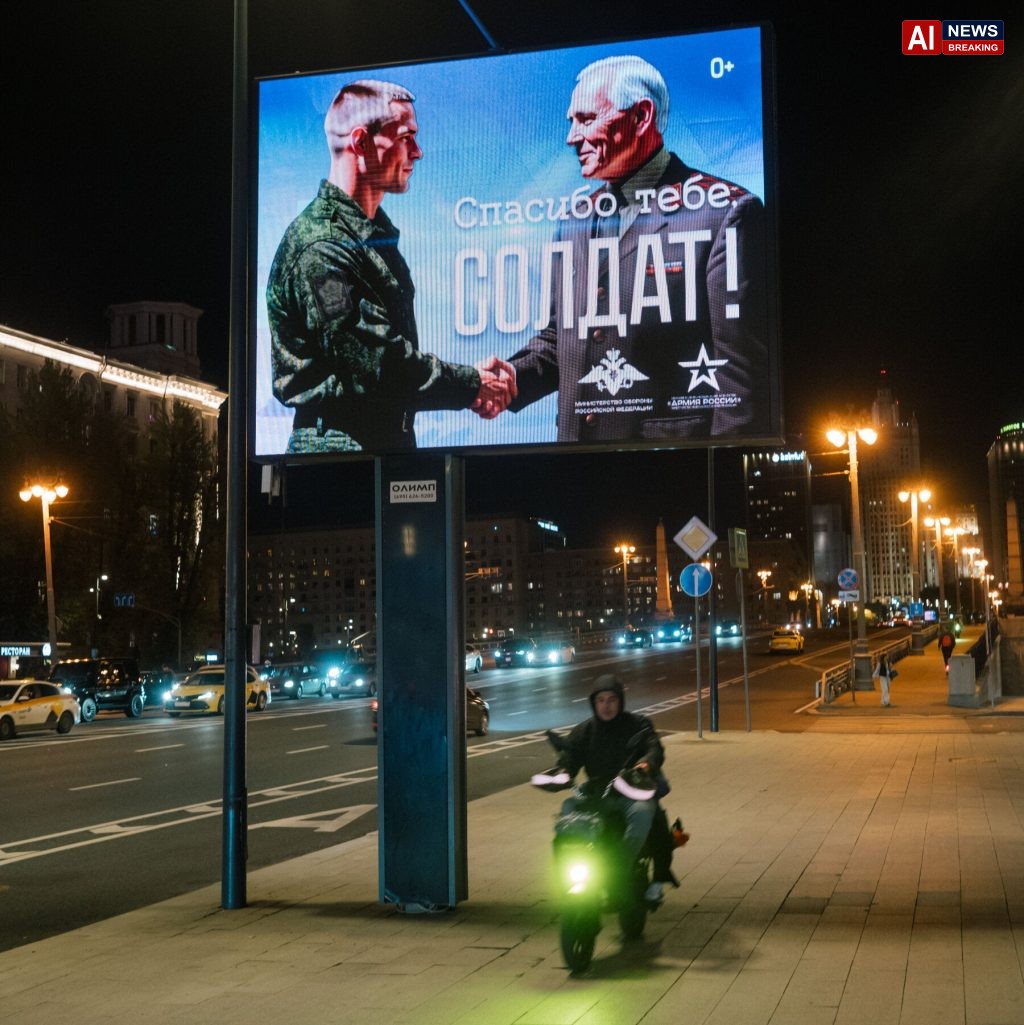
Over 700,000 Russian Soldiers Have Died in Ukraine, Analysis Indicates - AI News Breaking
700000 russian soldiers have:
The latest analysis of leaked Russian defence ministry records suggests that more than 700,000 Russian servicemen have been killed since the invasion of Ukraine began in February 2022, a figure that far exceeds official Russian estimates and underscores the staggering human cost of the conflict. The data, obtained from a series of cyber‑intrusions into Russian military databases and subsequently verified by independent analysts, detail casualty reports, personnel turnover, and replacement rates across the three major fronts of the war. While the exact number remains difficult to confirm amid the fog of war and deliberate obfuscation by Moscow, the scale of loss indicated by the documents points to a conflict that is proving far more lethal for the Russian armed forces than the Kremlin has publicly acknowledged.The documents were first disclosed by a group of Ukrainian cyber‑defence specialists who claim to have breached a secure Russian military server in early July..
The files contain monthly updates on the number of personnel declared “killed in action”, “missing” and “wounded”, as well as the number of new conscripts and reservists drafted to replenish depleted units. When compiled, the cumulative tally of deaths reaches approximately 714,000 as of the end of October 2024. Analysts from the International Institute for Strategic Studies (IISS) and the Atlantic Council have cross‑checked the figures against open‑source satellite imagery of burial sites and the movement of funeral trains, concluding that the leaked data is broadly consistent with observable trends on the ground.Russian officials have consistently downplayed casualties, with the Ministry of Defence rarely publishing any official numbers and, when it does, offering figures that are markedly lower..
In a rare televised address in March 2024, President Vladimir Putin hinted at “significant sacrifices” but avoided any specific statistics. The between official rhetoric and the newly released data about the Kremlin’s willingness to maintain public support for a war that is increasingly costly in human terms. Public opinion polls in Russia, though tightly controlled, have shown a gradual erosion of support for the conflict, particularly as families receive word of lost sons and fathers.The human toll is not confined to front‑line infantry..
The leaked records reveal that a substantial proportion of the fatalities occurred among junior officers and non‑commissioned officers, ranks that traditionally bear the brunt of combat. In the southern theatre, where fighting around the Donetsk and Luhansk regions has been most intense, the casualty rate among platoon leaders exceeded 15 per cent of their total strength. Such losses disrupt command structures, forcing units to operate with inexperienced leaders, a factor that analysts say has contributed to operational setbacks and slower advances in recent months.Beyond the battlefield, the data shed light on the broader societal impact within Russia..
The recruitment numbers show a sharp increase in the drafting of conscripts from regions with historically low enlistment rates, such as the North Caucasus and parts of Siberia. This surge is accompanied by a rise in reports of draft evasion, desertion and the growth of underground networks assisting soldiers to leave the front. Human rights organisations have documented a corresponding increase in families filing for compensation and seeking legal redress for the loss of relatives, despite the limited avenues available under Russian law.The scale of Russian losses also has implications for the strategic calculus of the conflict..
Military planners on both sides have had to adjust their expectations as the attrition rate outpaces the capacity of Russia’s mobilisation system to replace personnel. Defence analysts note that the Russian army, once considered the world’s largest in terms of active personnel, is now operating with a significantly reduced effective fighting force. This depletion has forced a shift from offensive operations to a more defensive posture in several key areas, as Moscow seeks to conserve its remaining manpower while still attempting to achieve its political objectives.International responses to the revelations have been measured but pointed..
NATO’s ary General, Jens Stoltenberg, described the figures as “a tragic reminder of the human cost of aggression” and called for renewed diplomatic efforts to end the hostilities. The United States, while refraining from directly commenting on the exact numbers, reiterated its commitment to support Ukraine’s defence and highlighted the importance of holding Russia accountable for violations of international humanitarian law. In the United Nations, several member states have urged the Security Council to convene an emergency session to address the humanitarian crisis precipitated by the conflict’s high casualty rate.In Kyiv, the Ukrainian government has welcomed the data as evidence of the effectiveness of its resistance and a counter‑argument to Russian propaganda that portrays the war as a swift and decisive campaign..
President Volodymyr Zelenskyy referenced the leaked figures in a recent address, stating that they demonstrate “the price Russia pays for its unprovoked aggression”. However, Ukrainian officials also cautioned against celebrating Russian losses, emphasising that the ultimate goal remains a negotiated settlement that restores Ukraine’s territorial integrity and sovereignty.The broader historical context of the war’s attrition highlights a departure from previous Russian military engagements, which often relied on rapid, high‑intensity operations. The protracted nature of the conflict in Ukraine, combined with stiff Ukrainian resistance and substantial Western military aid, has turned the campaign into a drawn‑out struggle that exhausts personnel and material alike..
Scholars of modern warfare argue that this may signal a shift in how future conflicts are waged, with an increased emphasis on precision strikes, unmanned systems and information warfare to mitigate the heavy human costs evident in this case.As the war enters its third year, the emerging picture painted by the hacked documents forces a reevaluation of both the immediate human tragedy and the long‑term ramifications for Russian society and its armed forces. Whether the Kremlin will adjust its domestic narrative to acknowledge the scale of loss, or continue to suppress such information, remains uncertain. What is clear, however, is that the figures now available provide a sobering testament to the devastating impact of the conflict on countless families, and they add a stark quantitative dimension to the qualitative accounts of suffering that have already been reported from the front lines and from within Russia itself..
Updated: November 23, 2026
The leaked tally shatters the Kremlin’s illusion of a quick, cheap war, revealing a grinding attrition that is hollowing out Russia’s officer corps and eroding public tolerance for endless sacrifice. If Moscow can’t replace lost junior leaders, its offensive momentum stalls, forcing a strategic pivot that may







