Pakistan’s leaders hail first astronaut aboard Chinese craft: ‘Proud one of us has gone into space’
 British tourist travels 29 hours from Mumbai to Amritsar for ₹5,461, rates Indian Railways 10/10 | Viral video
 The Supreme Court will decide whether assault weapons bans violate the Second Amendment
 A Critic of Beijing Falls Short in Taiwan’s Key Mayoral Election
 EPA says no rise in contamination after Army detonates lead azide stockpile in Iowa
Pacific Coast braces for record king tides
**
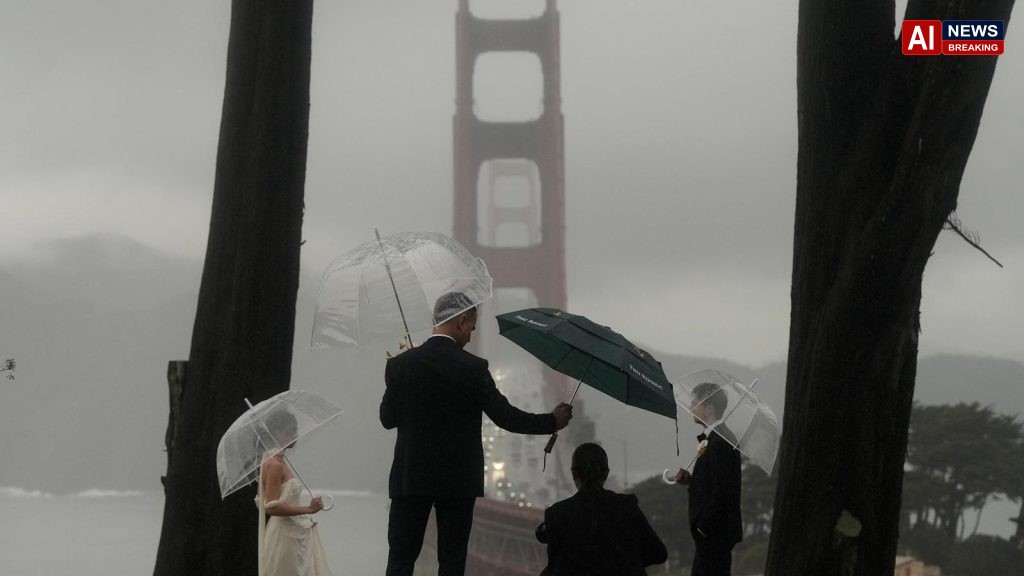
Pacific Coast king tides could break decades-old records and flood communities - AI News Breaking
pacific coast braces record:
The Pacific Coast is poised to experience a series of king tides that could eclipse records set over the past several decades, raising concerns for coastal residents, infrastructure and travel plans as the United States heads into the Thanksgiving holiday. Meteorologists and oceanographers warn that the confluence of astronomical tides, seasonal sea‑level rise and recent storm activity will push water levels higher than previously observed in many locations, potentially inundating low‑lying neighborhoods, roadways and public spaces that have not seen such extreme conditions in living memory.A king tide is the highest predicted tide of the year, driven by the alignment of the Earth, moon and sun that creates the strongest gravitational pull on the oceans. While king tides are a natural, predictable phenomenon, the latest forecasts indicate that this year’s events will be amplified by a backdrop of rising sea levels linked to climate change..
According to the National Oceanic and Atmospheric Administration (NOAA), global mean sea level has risen about 3.3 mm per year over the past two decades, a rate that, when added to the already high astronomical tides, can transform a routine high‑water event into a flood risk. The combination is expected to be most pronounced along the West Coast, where the coastline’s gradual slope and extensive tidal flats make it especially vulnerable to even modest increases in water height.The first of the projected king tides is set to arrive on Thursday, November 21, with a predicted peak at 6.02 feet above mean sea level at San Francisco’s historic pier. This would exceed the previous record by roughly three inches, according to data compiled by the San Francisco Bay Conservation and Development Commission..
Similar surges are forecast for the greater Bay Area, the Puget Sound region, and the Oregon and Washington coasts, where local tide gauges anticipate peaks ranging from 5.8 to 6.4 feet. In many cases, the anticipated water levels would surpass the thresholds that trigger coastal flooding alerts, a designation that typically prompts warnings for motorists, emergency responders and local authorities.Coastal cities have already begun to implement precautionary measures. In Seattle, the Department of Transportation announced temporary closures of low‑lying streets near Alki Beach and the Elliott Bay waterfront, citing concerns that rising water could trap vehicles and endanger pedestrians..
Similarly, the Port of Los Angeles issued advisories to shipping operators to monitor berth assignments closely, as higher than normal tides could affect loading schedules and dock safety. In the San Francisco Bay Area, officials have placed sandbags at vulnerable points along the Embarcadero and have urged residents in flood‑prone neighborhoods to elevate valuables and consider sand‑bagging their homes.The timing of the king tides coincides with a busy travel period. Thanksgiving week traditionally brings a surge in road traffic, airline departures and rail journeys, all of which could be disrupted by unexpected flooding..
The California Department of Transportation (Caltrans) warned that portions of Highway 101 and the Interstate 5 corridor near the coast may become impassable if water overtops drainage systems. Airlines serving San Francisco International Airport and Seattle‑Tacoma International have indicated that they are monitoring runway conditions, though no flight cancellations have been announced at the time of writing. Rail operators on the Amtrak Coast Starlight route have also signaled heightened vigilance, noting that sections of track along the coastline could be affected by water encroachment.Beyond immediate logistical challenges, experts emphasize that the king tide events serve as a stark illustration of the long‑term vulnerabilities facing coastal communities..
Elena Martinez, a climate scientist at the University of Washington, explained that while a single king tide is a natural occurrence, the increasing frequency and severity of such events underscore the cumulative impact of sea‑level rise. “When you add a few centimeters of background rise to a tide that already pushes the shoreline to its limits, you create conditions that were once rare but are now becoming the new normal,” she said. “These events are a preview of what life could look like for many coastal cities in the coming decades if greenhouse‑gas emissions are not curbed.”Local governments are also using the king tide window to gather data that could inform future planning..
In Oregon, the City of Astoria has deployed a network of temporary water‑level sensors along its historic downtown district. The data collected will be shared with the state’s Office of Emergency Management to refine flood‑risk maps and to guide zoning decisions. In Washington, the Port of Tacoma is conducting a pilot study that involves drone surveys of shoreline erosion before and after the tide, aiming to quantify the rate at which high water events accelerate shoreline loss.Residents in vulnerable neighborhoods have expressed a mixture of anxiety and resignation..
Maria Hernandez, who lives in a low‑lying area of West Seattle, described the preparations she has undertaken each year. “We stack sandbags, move our bikes and furniture onto higher ground, and we keep an eye on the tide tables,” she said. “But every time the water gets a little higher, it feels like we’re fighting a losing battle.” Similar sentiments were echoed by homeowners in San Diego’s Point Loma district, where a recent study by the city’s Climate Action Plan estimated that a one‑meter sea‑level rise could render 15 percent of the neighborhood uninhabitable without substantial mitigation measures.Insurance companies are also watching the situation closely..
The California Department of Insurance reported a modest increase in the number of flood‑insurance claims filed in the months leading up to the king tides, suggesting that even before the peak events, some properties have already experienced water intrusion. Industry analysts note that repeated exposure to flood risk could drive up premiums and may lead to a reevaluation of coverage options for properties situated within a few feet of the high‑water mark.In response to the looming threat, several nonprofit organizations have mobilized volunteers to assist with sand‑bag distribution and to provide educational resources on flood preparedness. The Pacific Coast Flood Resilience Initiative, a coalition of environmental groups, has set up a hotline for residents to report emerging water levels and to receive real‑time guidance..
Their spokesperson, Alex Cheng, highlighted the importance of community engagement, stating, “When the tide comes in, it’s not just a question of infrastructure; it’s about people knowing what steps to take to protect themselves and their property.”The king tide episode also raises broader policy questions about how coastal development should be regulated in the face of a changing climate. Municipal leaders across the region are debating revisions to building codes that would require new constructions to incorporate flood‑resilient designs, such as elevated foundations and flood‑proofing of critical utilities. Some city councils are considering the adoption of “managed retreat” strategies, which involve relocating infrastructure and communities away from high‑risk zones over time..
These king tides aren’t just freak weather; they’re a live‑wire warning that sea‑level rise is turning rare, high‑water events into a new baseline, forcing cities to rethink growth and infrastructure. The holiday travel surge will test that shift, revealing how fragile our coastal logistics are when nature’s