Europe warns of Russia’s hybrid attacks but struggles to counter them
  Former chief election commissioner calls SIR scheme illegal.
  A Corruption Scandal Is Reshaping Brazil’s Presidential Election
  US citizen injured in Illinois after ICE agents mistook him for fugitive, tried to arrest him
  At 10 years old, Smithsonian’s Black museum is undaunted amid pressure from Trump administration
 INDIA Bloc Strategy Meet in Delhi: 23 Opposition Parties to Rework Anti-BJP Plan, DMK and AAP Opt Out
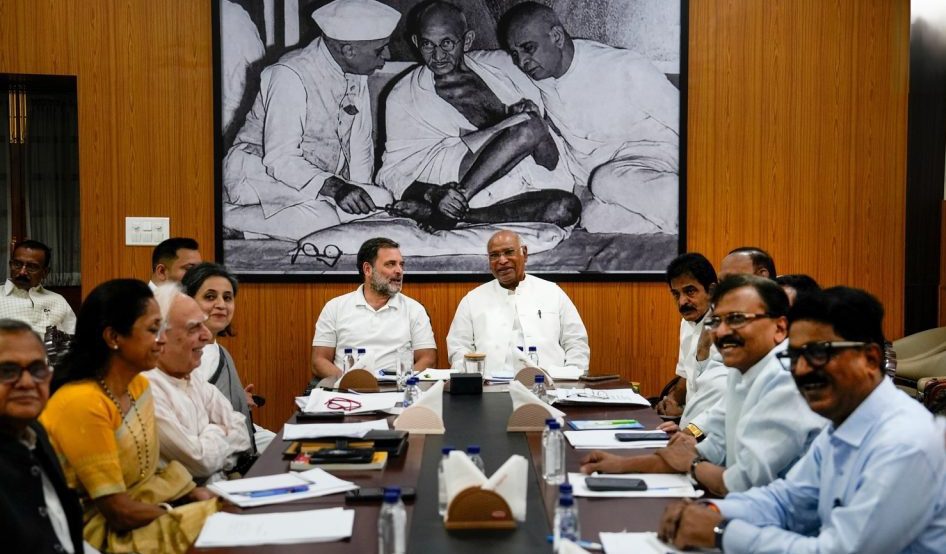
A major INDIA bloc coordination meeting is underway in Delhi, bringing together 23 opposition parties to reassess their joint strategy against the Bharatiya Janata Party (BJP). However, the absence of key allies like DMK and Aam Aadmi Party (AAP) signals emerging internal differences within the alliance. The meeting is expected to focus on electoral coordination, messaging unity, and future political roadmaps.
The political landscape of India’s opposition is once again under scrutiny as the INDIA bloc convenes a crucial strategy meeting in New Delhi, bringing together representatives from 23 political parties. The meeting comes at a time when the opposition alliance is attempting to recalibrate its approach to counter the Bharatiya Janata Party (BJP) ahead of upcoming electoral battles and long-term political positioning.
However, the absence of two significant regional powerhouses—the Dravida Munnetra Kazhagam (DMK) and the Aam Aadmi Party (AAP)—has immediately drawn attention, raising questions about internal cohesion and the durability of the alliance structure.
The gathering is expected to focus on reviewing past coordination efforts, strengthening communication among member parties, and outlining a refreshed strategy aimed at consolidating opposition votes across diverse states.
The INDIA bloc, formally known as the Indian National Developmental Inclusive Alliance, emerged as a collective opposition platform intended to unify regional and national parties against the ruling BJP. Since its formation, the alliance has positioned itself as a broad-based political alternative emphasizing federalism, social justice, and institutional balance.
However, like most large coalitions in India’s multiparty system, the INDIA bloc has faced recurring challenges related to ideological diversity, regional priorities, leadership coordination, and seat-sharing disagreements.
The Delhi meeting represents another attempt to address these structural issues and present a more unified front.
Delhi Meeting: Strategic Reset or Routine Coordination?: The current meeting in Delhi is being viewed as a strategic reset point for the alliance. While earlier INDIA bloc meetings focused heavily on formation and symbolic unity, this session is expected to shift toward operational coordination.
Key agenda expectations include:
- Revisiting seat-sharing frameworks across states
- Strengthening joint campaign messaging
- Improving communication between regional units
- Evaluating electoral performance in recent contests
- Planning for upcoming state and national-level elections
Political observers suggest that such meetings are critical in maintaining alliance momentum, especially when electoral cycles demand sustained coordination rather than episodic collaboration.
Absence of DMK and AAP: A Significant Political Signal
The decision by DMK and Aam Aadmi Party to skip the meeting has become one of the most politically significant aspects of the day’s developments.
Both parties are influential regional players with strong electoral bases in Tamil Nadu and Delhi/Punjab respectively. Their absence does not necessarily indicate a formal break, but it does reflect underlying tensions and strategic recalculations.
DMK’s Position
The DMK, a dominant force in Tamil Nadu politics, has historically balanced its national alliances carefully while maintaining strong regional autonomy. Its participation in the INDIA bloc has been rooted in shared opposition to the BJP at the national level, but its primary focus remains state-centric governance and electoral consolidation in Tamil Nadu.
Skipping the meeting may reflect scheduling priorities, strategic distance from national coordination exercises, or internal assessments of alliance utility at this stage.
AAP’s Position
The Aam Aadmi Party, led by Arvind Kejriwal, has maintained a more complex relationship with the INDIA bloc. While it has aligned with opposition efforts in principle, it has also asserted its independent identity, particularly in states where it directly competes with Congress or other alliance partners.
AAP’s absence is widely interpreted as a continuation of its cautious engagement strategy, balancing cooperation with political autonomy.
Opposition Unity: Strengths and Structural Limitations: The INDIA bloc represents one of the most ambitious attempts in recent Indian political history to consolidate opposition forces across ideological and regional lines. Its strength lies in its diversity, but that same diversity also creates structural friction.
Strengths of the Alliance:
- Broad geographical representation across India
- Inclusion of major regional parties with strong grassroots bases
- Shared objective of countering BJP dominance
- Ability to coordinate in select electoral contests
Structural Challenges:
- Lack of a single leadership structure
- Ideological differences among constituent parties
- Competing regional interests and vote-bank calculations
- Seat-sharing disputes in key battleground states
- Uneven commitment levels across member parties
These contradictions often surface during coordination meetings, making unity both a strategic goal and an ongoing negotiation process.
The Road Ahead for INDIA Bloc: The INDIA bloc remains a politically significant force in India’s opposition ecosystem, but its long-term effectiveness will depend on institutionalizing coordination beyond periodic meetings.
If the alliance can streamline seat-sharing, improve communication, and maintain consistent engagement among its key members, it could emerge as a stronger counterbalance in India’s multiparty democracy.
However, continued absences from key allies and unresolved internal differences could limit its ability to function as a unified electoral force.
The Delhi meeting, therefore, is not just another political gathering—it is a test of whether the opposition alliance can evolve from a coalition of convenience into a structured political alternative.
The INDIA bloc’s current dynamics reflect a classic coalition paradox in multiparty democracies: maximum ideological breadth often produces minimum organizational depth. While the alliance succeeds in aggregating regional political strength, its lack of institutionalized decision-making mechanisms makes it vulnerable to fragmentation at precisely the moments when coordination matters most—elections. The absence of major partners like DMK and AAP does not necessarily signal collapse, but it does highlight that the alliance still operates more as a reactive platform than a fully integrated political structure.