 Andhra CM alerts officials about the cyclone in Bay of Bengal
  Trump at South Florida rally revives the idea of military intervention in Cuba after Iran
  Trump, seeking to help Maine Sen. Susan Collins, exempts some Canadian imports from his 50% tariffs
  Mississippi DEI ban can go into full effect after Fifth Circuit reversal
 Trump vs ICC: US Sanctions Deepen Clash Over Israel Investigation and International Law
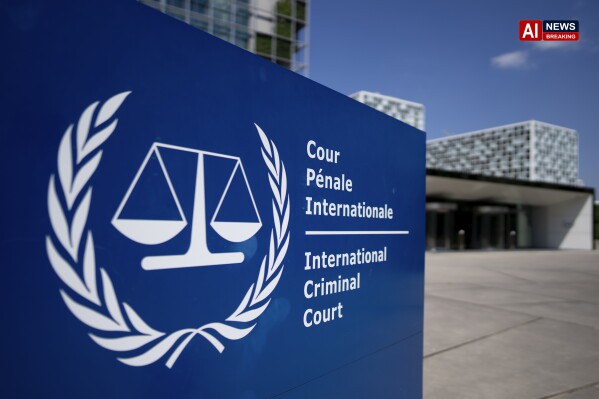
Trump vs ICC: US Sanctions Deepen Clash Over Israel Investigation and International Law - AI News Breaking
trump sanctions deepen clash:
Washington, August 20, 2026: The confrontation between US President Donald Trump and the International Criminal Court has entered a new and potentially consequential phase after the Trump administration imposed sanctions on the ICC’s president and a senior prosecution lawyer involved in investigations concerning Israel.
The United States on Tuesday sanctioned ICC President Tomoko Akane and senior trial lawyer Abdoulaye Seye, accusing them of participating in efforts to investigate or prosecute officials whose governments have not accepted the court’s jurisdiction. The measures freeze assets subject to US jurisdiction and restrict access to the American financial system.
The action represents the latest escalation in Trump’s campaign against the Hague-based court, which Washington accuses of exceeding its authority and pursuing politically motivated cases against the United States and its allies. The ICC, however, has condemned the sanctions as a “flagrant attack” on judicial independence and warned that such measures threaten the international legal order.
Why Trump is targeting the ICC
The dispute centres largely on the ICC’s investigations involving Israel and the Gaza war.
The ICC issued arrest warrants in November 2024 for Israeli Prime Minister Benjamin Netanyahu and then-defence minister Yoav Gallant, accusing them of alleged war crimes and crimes against humanity connected with Israel’s military campaign in Gaza. Israel has rejected the allegations and disputes the court’s jurisdiction.
The Trump administration has strongly opposed the ICC’s actions against Israeli officials.
Washington’s position is that neither the United States nor Israel is a party to the Rome Statute, the treaty that established the ICC, and therefore the court cannot legitimately exercise jurisdiction over their nationals in the circumstances contested by the US government. The Trump administration formalised that position through an executive order in February 2025 authorising sanctions against people involved in ICC actions targeting the United States or its allies.
Trump administration expands sanctions campaign
The latest sanctions are not an isolated action.
During Trump’s first term, his administration imposed sanctions on then-ICC prosecutor Fatou Bensouda and another senior official after the court pursued an investigation involving alleged crimes by US personnel in Afghanistan.
Those sanctions were later lifted under President Joe Biden.
Trump returned to the issue after the ICC issued its warrants for Netanyahu and Gallant. His administration has since progressively expanded measures against ICC officials.
According to recent reporting, nine ICC judges and several senior legal officials have now been targeted by US sanctions, demonstrating the scale of Washington’s campaign against the court.
Secretary of State Marco Rubio has accused the ICC of being a “corrupt and fatally politicized” institution and argued that it is attempting to exercise authority over citizens of countries that have not consented to its jurisdiction.
ICC says sanctions threaten judicial independence
The ICC has rejected Washington’s allegations and defended its independence.
In its response to the latest sanctions, the court said the measures undermine the independence of an institution created by its member states and threaten the rule of law.
The court also warned that targeting judges and prosecutors for carrying out their legal duties could have implications far beyond the individual officials affected.
The ICC was established in 2002 to prosecute individuals accused of some of the world’s most serious crimes, including genocide, crimes against humanity and war crimes, when national legal systems are unable or unwilling to genuinely pursue accountability.
The confrontation therefore raises a fundamental question about the limits of international criminal jurisdiction: how should an international court operate when powerful countries refuse to recognise its authority?
US and Israel are not ICC members
A central element of the American argument is the legal status of the United States and Israel.
Neither country is a party to the Rome Statute and neither recognises the ICC’s general jurisdiction over its nationals in the way member states do.
The Trump administration argues that the court’s attempts to investigate American or Israeli officials therefore amount to an assertion of authority that Washington never accepted.
The ICC and its supporters take a different view of its jurisdiction in specific situations, particularly where territorial or other jurisdictional grounds under the Rome Statute are involved.
That legal disagreement is at the heart of the confrontation.
The Israel investigation has become the flashpoint
The ICC’s Palestine investigation has become one of the most politically sensitive cases in the court’s history.
The court’s action against Israeli leaders has drawn strong criticism from Israel and the United States, while rights organisations and many governments have defended the principle that alleged international crimes should be subject to independent judicial scrutiny.
The Trump administration’s latest sanctions demonstrate that Washington does not intend to accept the ICC’s investigation passively.
Instead, it is attempting to impose direct costs on the institution and the officials responsible for its work.
Europe and US allies face a difficult choice
The dispute is creating an increasingly uncomfortable situation for American allies that support the ICC.
Several European countries have backed the court’s independence, while the European Union has criticised the latest US sanctions. European officials have argued that the ICC plays an important role in international accountability and that its judges and prosecutors must be able to perform their functions independently.
Japan has also criticised Washington’s decision because ICC President Tomoko Akane is Japanese.
Tokyo described the sanctions as “very unfortunate” and reiterated its support for the court’s role.
The response illustrates the diplomatic complications created by the US campaign.
America remains one of the world’s most influential powers, but many of its allies are also committed to the international legal institutions that Washington is now challenging.
UN expresses concern
United Nations Secretary-General Antonio Guterres has expressed serious concern about the US sanctions.
A UN spokesman stressed that the United Nations and the ICC are separate institutions with distinct mandates but described the court as an important part of the international criminal justice system.
The UN reaction adds another layer to the dispute because it reflects concern that the conflict between Washington and The Hague could affect broader international efforts to establish accountability for atrocities.
What the sanctions actually do
The sanctions primarily target the financial and international mobility of the designated ICC officials.
Their assets subject to US jurisdiction can be frozen, while transactions involving the American financial system can be restricted. The measures can also affect access to US-linked services and create complications for international financial activity.
For ICC officials, the consequences can therefore extend beyond direct US dealings.
Because the US dollar and American financial institutions play such a central role in the global economy, sanctions can create significant practical difficulties even for individuals whose organisations are based outside the United States.
A broader challenge to the ICC
The Trump administration’s campaign goes beyond the Netanyahu case.
Washington has also objected to ICC investigations involving alleged crimes connected to US personnel, including the court’s Afghanistan investigation.
The administration has described its broader objective as reducing or dismantling the ICC’s ability to exercise jurisdiction over Americans and officials of allied countries without their governments’ consent.
That makes the current confrontation more than a dispute over Israel.
It is increasingly a debate over the fundamental structure of international criminal justice and whether an international court can investigate nationals of powerful non-member states under circumstances where those states reject its authority.
Supporters say the ICC must remain independent
Supporters of the court argue that its independence is precisely what allows it to investigate allegations involving powerful political and military leaders.
If governments can impose financial sanctions on judges and prosecutors simply because they dislike an investigation, critics argue, international criminal justice could become vulnerable to political pressure.
Human rights organisations have strongly criticised the US measures and warned that the sanctions could discourage prosecutors and judges from pursuing sensitive cases.
The ICC itself has said it will continue its work despite the pressure.
Critics say the court has exceeded its mandate
Washington’s argument is fundamentally different.
US officials contend that the ICC is attempting to impose jurisdiction on countries that deliberately chose not to join the Rome Statute.
The Trump administration argues that allowing the court to investigate US or Israeli officials without their governments’ consent would create a dangerous precedent for national sovereignty.
That position has become a central component of Trump’s foreign-policy approach to international institutions: the United States should not accept external legal or political authority over its officials unless Washington has explicitly consented to it.
The geopolitical consequences could be significant
The confrontation could have consequences for the wider international system.
The ICC depends heavily on cooperation from its member states because it does not have its own police force capable of independently arresting suspects. It relies on governments to execute warrants and assist with investigations.
If major powers actively oppose the court and pressure its officials, the institution’s ability to operate could become increasingly complicated.
At the same time, strong support from European and other member states could allow the ICC to maintain its operations despite American pressure.
The growing divide therefore risks creating competing approaches to international justice: one led by countries defending the ICC’s authority and another led by Washington, which rejects the court’s jurisdiction over itself and key allies.
A test for international law
The dispute between Trump and the ICC ultimately raises a much larger question than the fate of two sanctioned officials.
It is a test of whether international criminal law can operate independently when its investigations reach powerful countries and their allies.
For Washington, the issue is sovereignty and jurisdiction.
For the ICC and its supporters, the issue is judicial independence and accountability.
The clash is unlikely to be resolved quickly. The Trump administration has shown that it is prepared to continue using sanctions and diplomatic pressure against the court, while the ICC has indicated that it will continue pursuing its mandate.
With Tomoko Akane and Abdoulaye Seye now under US sanctions, the confrontation has entered a new stage.
The consequences could extend well beyond the United States, Israel and the ICC itself.
At stake is a fundamental question for the international system: can an international court hold powerful officials accountable when their governments reject its jurisdiction — and what happens when those governments use their economic power to fight back?