
 Pakistan’s leaders hail first astronaut aboard Chinese craft: ‘Proud one of us has gone into space’
 British tourist travels 29 hours from Mumbai to Amritsar for ₹5,461, rates Indian Railways 10/10 | Viral video
 The Supreme Court will decide whether assault weapons bans violate the Second Amendment
 A Critic of Beijing Falls Short in Taiwan’s Key Mayoral Election
 EPA says no rise in contamination after Army detonates lead azide stockpile in Iowa
BJP proposes renaming West Bengal to Paschim Banga.
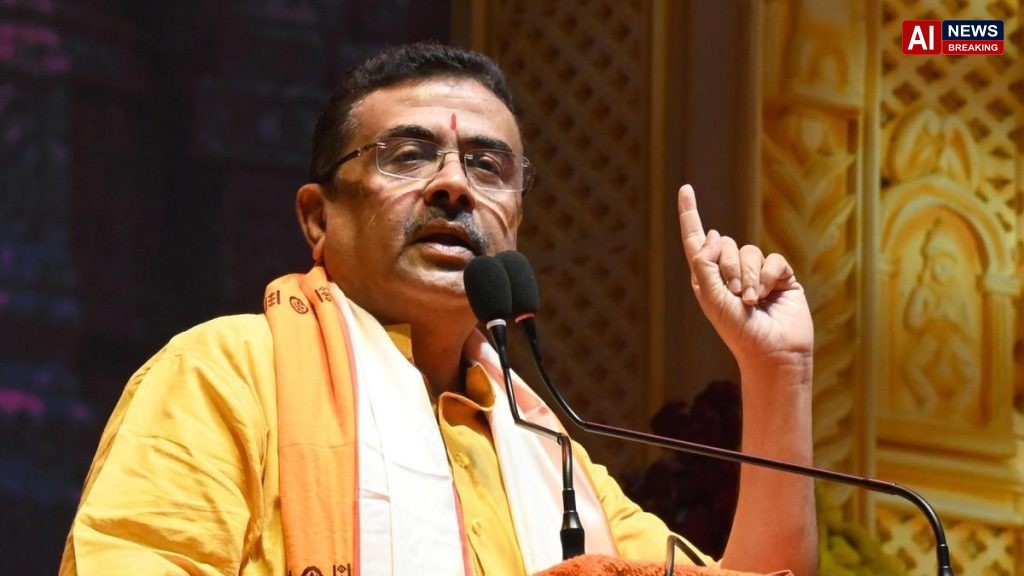
Why BJP is keen to associate Paschim with Banga in its new renaming exercise of the State? | Explained - AI News Breaking
The Bharatiya Janata Party’s recent push to rename the state of West Bengal as Paschim Banga and to rename Kolkata’s streets after historical figures is a deliberate attempt to reshape the region’s cultural narrative and to cement its political influence in a state that has long been dominated by the Trinamool Congress. The move is part of a broader strategy to project an image of a party that is both nationalist and sensitive to the cultural heritage of the region. To understand why the BJP is keen on this exercise, it is helpful to trace the historical roots of the term “Paschim Banga” and examine the political dynamics that have shaped the current contest over identity and memory.The term “Banga” has been used to refer to the Bengali people and their culture for centuries..
It first appeared in the inscriptions of the Gupta Empire and later in the Sanskrit literature of the medieval period, where it was used as a poetic appellation for the land of Bengal. The prefix “Paschim” simply means “west” in Sanskrit and Hindi, and its use to distinguish the western part of Bengal from the eastern part, which historically belonged to the kingdom of Pundra and later to the Sena dynasty, dates back to the colonial era when the British established the province of Bengal. The administrative division of the province into the Bengal Presidency and the Presidency of Bihar and Orissa was formalised in the 19th century, and the term “Paschim Banga” gained practical usage in the mid-20th century when West Bengal was carved out of the larger Bengal state during the Partition in 1947..
Thus, the name carries a long legacy that the BJP seeks to revive as part of its nationalist narrative.The TMC’s own proposal to rename the state to “Banga” was rejected on the grounds that it would erase the historical link to the larger cultural heritage of the region. In 2020 the TMC-led state government announced a plan to rename the capital from Kolkata to “Bengal”, but the proposal was met with resistance from opposition parties and civic bodies who argued that the city’s name was a key part of its identity. Critics also pointed out that the renaming would be costly and would create confusion for businesses and residents..
The failure of the TMC’s proposal highlighted the political fragility of any attempt to redefine the state’s identity, and the BJP has seized the opportunity to claim that it has a more inclusive and historically grounded vision for the state.The BJP’s renaming exercise is not limited to the state’s name. The party has also proposed a list of street names in Kolkata that honour historical figures who were born in the city or who had a significant influence on its history. The list includes names such as “Satyajit Ray Street”, “Rabindranath Tagore Road”, and “Bankim Chandra Chattopadhyay Avenue”..
The renaming of streets has already been carried out in some parts of the city, with the BJP-led government announcing a policy that will rename streets that were named after colonial or “offensive” figures. The policy is a clear attempt to reshape the urban landscape to reflect a nationalist narrative that glorifies figures who are seen as “patriotic” and “independent”.The BJP’s strategy behind the renaming exercise is multi‑layered. First, it is an attempt to project a nationalist image that is in tune with the party’s ideological framework..
The party’s policy of “Bharat Mata” or “Mother India” is heavily reliant on a shared sense of cultural heritage, and the renaming of places is a way of creating a tangible link to that heritage. Second, the renaming is a political tool that is designed to create a sense of cultural and political belonging among voters in the state. By associating the state with a broader cultural identity, the BJP hopes to create a sense of pride that will translate into support for the party..
Finally, the renaming exercise is an attempt to undermine the TMC’s narrative and to create a sense of confusion among the electorate.The renaming exercise is not without its critics. Some scholars argue that the renaming of streets is a form of “cultural vandalism” that erases the historical context of the place. They point out that many of the streets that are being renamed were originally named after historical figures who are now considered controversial..
The renaming of streets has also sparked a debate about the role of the state in preserving the cultural heritage of the region. Critics argue that the state’s role should be limited to preserving the cultural heritage that is already there, and that the renaming of places should be based on an objective assessment of the cultural significance of the place.The BJP’s renaming exercise is also a response to the rise of regional political forces in West Bengal. The TMC has been the dominant political force in the state for the last decade, and the BJP’s push to rename the state is a direct attempt to challenge the TMC’s dominance..
By aligning itself with a broader cultural narrative, the BJP hopes to create a sense of unity and a sense of shared identity that will resonate with voters. The party also hopes to create a sense of political belonging among voters who feel that the state has been left behind.The renaming exercise is also a part of the BJP’s broader strategy to promote a nationalist narrative in the country. The party’s policy of “Bharat Mata” is designed to promote a sense of shared cultural identity among the people of India..
By renaming places in the state of West Bengal, the BJP is attempting to create a sense of cultural identity that is in line with its ideology. The party also hopes to create a sense of cultural identity that will help it win elections in other states where it has not yet established a foothold.The renaming exercise has also had an economic impact on the state. The cost of renaming streets has been estimated at several thousand crores of rupees, and the cost of the renaming exercise is a major factor that has led to opposition from the local community..
The cost of the renaming exercise has also been a factor that has led to criticism from the opposition parties who argue that the cost of the renaming exercise is a waste of money. Critics have also pointed out that the renaming exercise has not been carried out in a transparent manner, and that the decision was made by the state government without consulting the community. The renaming exercise has also raised concerns that the cost of the renaming exercise will be borne by taxpayers who have no say in the decision.The BJP’s renaming exercise is a reminder that the party is keen to reshape the cultural and political landscape of the country..
While the renaming exercise has been met with criticism and has sparked debate.
The BJP’s renaming spree is less about heritage preservation and more a tactical rebranding, aiming to rewrite West Bengal’s political map in the language of national identity. If the party succeeds, it will turn cultural nostalgia into a votebank, forcing rivals to scramble for a new narrative or risk being eclipsed by a mythologised past.






