
 Pakistan’s leaders hail first astronaut aboard Chinese craft: ‘Proud one of us has gone into space’
 British tourist travels 29 hours from Mumbai to Amritsar for ₹5,461, rates Indian Railways 10/10 | Viral video
 The Supreme Court will decide whether assault weapons bans violate the Second Amendment
 A Critic of Beijing Falls Short in Taiwan’s Key Mayoral Election
 EPA says no rise in contamination after Army detonates lead azide stockpile in Iowa
BJP Yuva Morcha requests
**
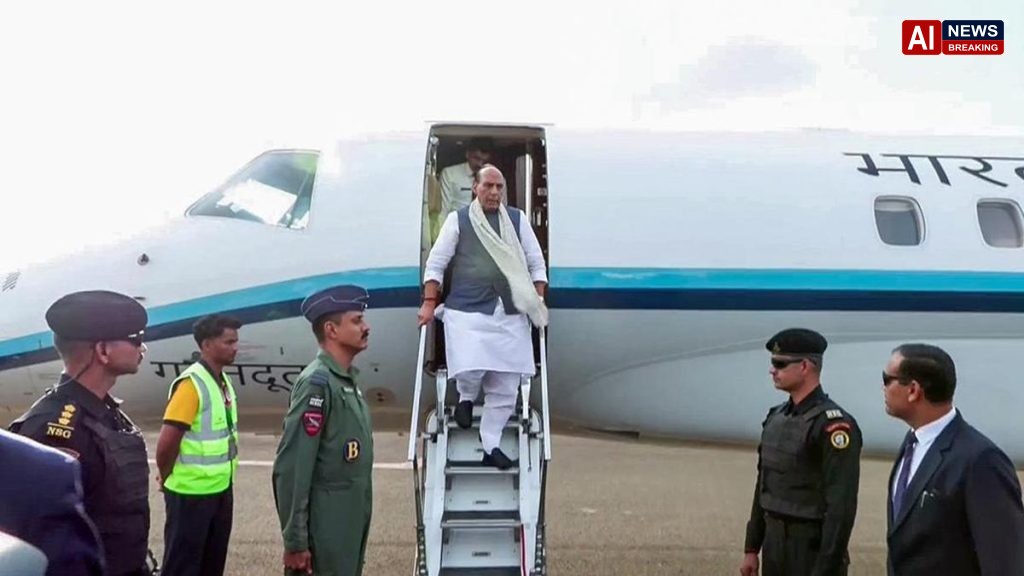
BJP Yuva Morcha seeks Sainik School for Kalaburagi - AI News Breaking
The Bharatiya Janata Party’s youth wing, the BJP Yuva Morcha, has formally requested the establishment of a Sainik School in Kalaburagi, a key district in the Kalyana Karnataka region of the state. The appeal, submitted to the state government and the Ministry of Defence, argues that a dedicated military‑educational institution would address long‑standing gaps in quality schooling and leadership development for children from economically disadvantaged backgrounds. According to the Yuva Morcha’s spokesperson, the proposal is rooted in the belief that exposure to disciplined, values‑based training can serve as a catalyst for social mobility and regional upliftment, especially in an area that has historically lagged behind in human development indices.Kalaburagi, formerly known as Gulbarga, is one of the five districts that constitute the Kalyana Karnataka region, an area that was carved out of the former Hyderabad State and has struggled with persistent issues such as low literacy rates, limited industrial growth, and inadequate infrastructure..
While the state government has launched several schemes aimed at improving educational outcomes, local activists and political leaders contend that the existing schools lack the resources and specialized curricula necessary to nurture future leaders. The Yuva Morcha’s proposal, they say, seeks to fill that void by creating an institution that blends conventional academic instruction with rigorous physical training, moral education and exposure to defence services.Sainik Schools, first established in 1961 under the aegis of the Ministry of Defence, are designed to prepare students for entry into the National Defence Academy and other armed forces institutions. The model has been replicated across the country, with more than 30 schools currently operating and a proven track record of sending a sizable proportion of their graduates into the Indian Armed Forces..
Proponents of the Kalaburagi project point to these successes as evidence that a similar school could serve as a beacon for the region, offering a structured pathway for youth to pursue careers in the defence sector while simultaneously raising the overall standard of education.The BJP Yuva Morcha’s memorandum cites several specific benefits that a Sainik School would bring to Kalaburagi. First, it would provide state‑of‑the‑art facilities, including modern classrooms, science laboratories, libraries and sports complexes, thereby raising the quality of education for all students, not just those aiming for military careers. Second, the school’s disciplined environment would instil values such as punctuality, teamwork and resilience, traits that are considered essential for both civilian and defence professions..
Third, the institution would create employment opportunities for teachers, support staff and ancillary workers, contributing to the local economy. Finally, the presence of a national-level educational establishment could attract further investment in infrastructure, ranging from improved road connectivity to better healthcare services for families associated with the school.Supporters also argue that the strategic location of Kalaburagi makes it an ideal site for a Sainik School. Situated near the border of Karnataka and the neighbouring state of Telangana, the district enjoys a relatively central position within the Deccan plateau, facilitating easy access for students from surrounding districts such as Raichur, Bidar and Yadgir..
Moreover, the region’s cultural heritage, which includes a blend of Marathwada, Deccan and Telugu influences, could enrich the school’s extracurricular programmes, fostering a sense of national integration while respecting local traditions. The Yuva Morcha believes that these geographic and cultural factors, combined with the existing demand for quality education, create a compelling case for the school’s establishment.Critics, however, caution that the proposal may face practical challenges. Funding remains a primary concern; while the central government typically shoulders a substantial portion of the capital outlay for Sainik Schools, the state is expected to contribute to land acquisition, operational expenses and ancillary infrastructure..
In a fiscal environment already strained by pandemic recovery measures and competing development priorities, allocating resources to a new institution could prove contentious. Additionally, some education experts warn that focusing on a single elite model may inadvertently divert attention and resources away from strengthening the broader public school system, which continues to serve the majority of the district’s children.The state government’s response to the request has been measured. In a recent press briefing, the education minister acknowledged the merits of the Yuva Morcha’s suggestion but emphasized the need for a comprehensive feasibility study..
The ministry plans to assess factors such as land availability, projected enrollment numbers, and the potential impact on existing schools before committing to any formal agreement with the Ministry of Defence. Officials also indicated that the government is exploring alternative models of military‑oriented education, including the establishment of a National Cadet Corps (NCC) training centre or a Defence Academy Preparatory School, which might be more cost‑effective while still delivering comparable benefits.Stakeholders from the defence community have voiced their support for the initiative, highlighting the strategic importance of expanding the pipeline of well‑trained candidates for the armed forces. Retired army officers who have taken up advisory roles in educational policy have offered to assist with curriculum design and faculty recruitment, ensuring that the school adheres to the rigorous standards set by the Sainik Schools Society..
They argue that such collaboration could serve as a template for other under‑served regions, demonstrating how public‑private partnerships can enhance both national security and regional development.Public opinion in Kalaburagi appears broadly favourable, according to a series of informal surveys conducted by local NGOs. Parents expressed optimism that a Sainik School would open new avenues for their children, particularly in a context where many families lack the financial means to send their kids to private institutions in metropolitan centres. Youth groups echoed similar sentiments, noting that the prospect of disciplined training and exposure to defence careers could inspire greater civic engagement and a sense of purpose among the region’s young population.As the proposal moves through the procedural channels, its eventual outcome will hinge on a balance of political will, financial viability and community endorsement..
If approved, the Kalaburagi Sainik School could become a landmark project, symbolising a concerted effort to blend educational excellence with national service ethos. Conversely, should the initiative stall, the discourse it has generated may still catalyse reforms in the broader educational landscape of Kalyana Karnataka, prompting policymakers to revisit strategies for inclusive, quality schooling. The coming months will reveal whether the vision of a militarily aligned institute for the children of Kalaburagi will materialise or remain an aspirational blueprint..
Updated: November 25, 2026
Insight: A Sainik School in Kalaburagi could turn a symbolic defense‑education hybrid into a catalyst for socioeconomic mobility, but its success will hinge on whether the state can juggle elite investment without sidelining the broader public‑school ecosystem.






