
 Pakistan’s leaders hail first astronaut aboard Chinese craft: ‘Proud one of us has gone into space’
 British tourist travels 29 hours from Mumbai to Amritsar for ₹5,461, rates Indian Railways 10/10 | Viral video
 The Supreme Court will decide whether assault weapons bans violate the Second Amendment
 A Critic of Beijing Falls Short in Taiwan’s Key Mayoral Election
 EPA says no rise in contamination after Army detonates lead azide stockpile in Iowa
U.S. Army detonates lead azide stockpile at Iowa plant
The Army’s Explosive Ordnance Disposal team detonated a decades‑old lead azide stockpile at the Iowa Army Ammunition Plant, employing a reinforced concrete containment pit, remote‑triggered initiation and blast‑mitigation barriers. The controlled demolition eliminated a hazardous primary explosive, limited lead contamination, and adds valuable data for future disposal of aging munitions.
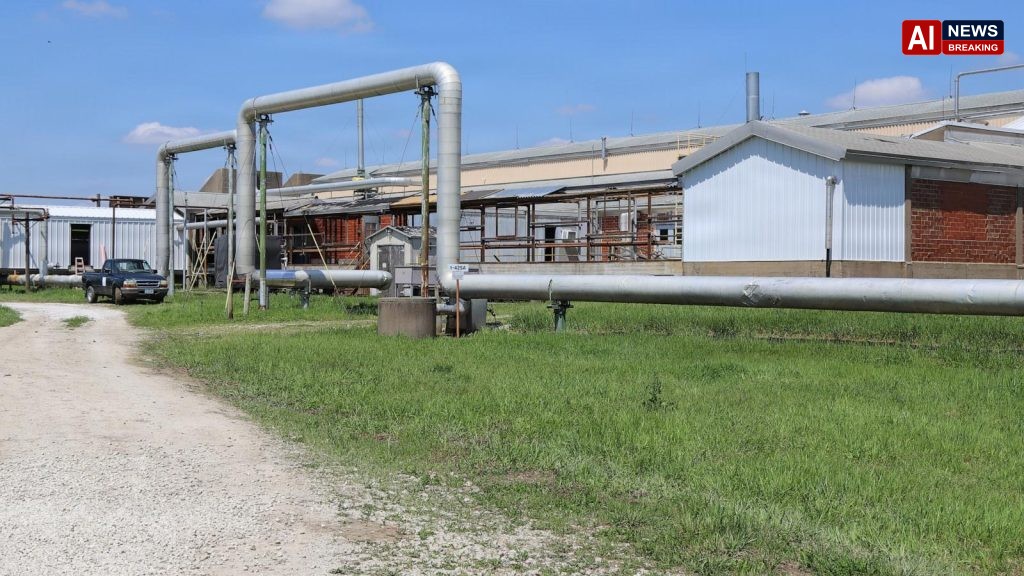
What is lead azide? A look at the chemical being detonated at an Iowa Army base - AI News Breaking
The United States Army’s recent demolition of a deteriorating cache of lead azide at the Iowa Army Ammunition Plant has drawn renewed attention to a chemical that, while relatively obscure to the public, plays a pivotal role in the nation’s munitions infrastructure. Lead azide, a primary explosive, is prized for its sensitivity to heat, friction and impact, properties that make it an effective initiator for secondary, more powerful explosives such as TNT and RDX. First synthesised in the late nineteenth century, the compound has long been a staple of military ordnance, ranging from artillery shells to demolition charges, and its handling has always required strict safety protocols.The Iowa facility, situated near Des Moines, has been a centre for the production and storage of conventional munitions since the Second World War..
Over the decades, the plant amassed a sizable inventory of lead azide, much of which was produced during the heightened demand of the Cold War era. As the stockpile aged, the Army’s logistical assessments identified signs of degradation—crystallisation changes, moisture ingress and surface oxidation—that can increase the material’s unpredictability. In such a state, the risk of accidental initiation rises, prompting the decision to neutralise the ammunition rather than retain it in long‑term storage.Detonating a degraded primary explosive is not a routine operation..
The Army’s Explosive Ordnance Disposal (EOD) units, supported by civilian chemists and safety engineers, devised a controlled demolition plan that would mitigate the hazards inherent in the material. The operation involved the construction of a containment pit lined with reinforced concrete, the installation of remote‑triggered initiation systems and the use of blast‑mitigation barriers to limit shrapnel dispersion. Sensors monitored temperature, pressure and vibration throughout the process, ensuring that any deviation from expected performance could be addressed instantly.Lead azide’s chemical composition—Pb(N₃)₂—renders it highly energetic, releasing nitrogen gas and metallic lead when detonated..
The reaction, though swift, generates comparatively low brisance, making it suitable as a primer but insufficient as a stand‑alone charge for large‑scale demolition. In the Iowa test, the EOD team paired the lead azide with a modest secondary explosive, creating a sympathetic detonation that ensured the entire stockpile detonated in a single, predictable event. This approach reduced the need for multiple charges and limited the exposure of personnel to the hazardous material.Environmental considerations were central to the planning phase..
Lead, a heavy metal, poses long‑term contamination risks to soil and groundwater if not properly contained. After the blast, the Army conducted a series of post‑detonation surveys, collecting soil and water samples from the immediate vicinity and from wells located downstream of the site. Preliminary analyses indicated that the concrete containment and the blast‑mitigation systems had effectively limited the spread of lead particles, with measured concentrations remaining well below the Environmental Protection Agency’s thresholds for hazardous waste.The decision to destroy rather than recycle the lead azide also reflects broader policy shifts within the Department of Defense..
Over the past decade, the Pentagon has accelerated the disposal of aging munitions stocks, driven by both safety imperatives and the financial burden of maintaining secure storage facilities. Recycling lead from detonated charges can be technically feasible, yet the cost and complexity of extracting pure lead from a mixture of combustion by‑products often outweigh the benefits. In the case of the Iowa plant, the degraded state of the azide rendered reclamation impractical, reinforcing the choice of controlled demolition.Public reaction to the operation was mixed..
Local residents expressed relief that a potentially volatile stockpile would no longer pose a threat to their community, while some environmental groups called for greater transparency regarding the long‑term monitoring plan. The Army responded by holding a public briefing, releasing the environmental impact assessment and outlining a five‑year monitoring schedule. Independent experts were invited to review the data, a move designed to bolster confidence in the thoroughness of the remediation effort.From a technical standpoint, the Iowa detonation offers valuable data for future disposal projects involving primary explosives..
The precise timing of the initiation sequence, the measured overpressure levels and the observed fragmentation patterns will be archived in the Army’s explosives safety database. Such information helps refine risk models, improve protective equipment standards and guide the design of next‑generation containment structures. The lessons learned are expected to inform similar operations at other legacy sites, including former naval depots and Air Force ammunition storage facilities.Lead azide remains a critical component of modern ordnance despite its inherent hazards..
Its ability to reliably initiate larger charges underpins the functionality of everything from artillery fuzes to improvised explosive devices. While the chemistry of the compound has not changed, advances in handling protocols, protective gear and remote‑detonation technology have significantly reduced the danger it poses to personnel. The Iowa Army Ammunition Plant’s recent activity underscores the balance that the military must strike between maintaining a ready supply of essential explosives and responsibly managing the risks associated with ageing stockpiles.As the Army continues to audit and, where necessary, destroy obsolete munitions, the episode at the Iowa plant serves as a reminder of the complex interplay between national security, public safety and environmental stewardship..
The controlled demolition of the lead azide cache, executed with meticulous planning and rigorous oversight, illustrates how a legacy of wartime production can be responsibly retired. In doing so, the Army not only eliminates an immediate safety concern but also contributes to a broader understanding of how best to handle some of the most sensitive materials in its arsenal..
Updated: November 25, 2026
The demolition signals a strategic pivot: the Pentagon is choosing to front‑load disposal costs now to avoid the hidden liabilities of aging explosives, a move that could tighten budgetary pressures but also set a new safety‑first benchmark for the entire defense logistics chain.
By publicizing the operation and inviting independent oversight, the Army is attempting to reshape the narrative around legacy munitions from secrecy to transparency, a gamble that may recalibrate community trust and tighten environmental watchdogs on future weapons‑stock







