
 Pond heron found dead in Coimbatore tests positive for avian influenza
 Pakistan’s leaders hail first astronaut aboard Chinese craft: ‘Proud one of us has gone into space’
 British tourist travels 29 hours from Mumbai to Amritsar for ₹5,461, rates Indian Railways 10/10 | Viral video
 The Supreme Court will decide whether assault weapons bans violate the Second Amendment
 A Critic of Beijing Falls Short in Taiwan’s Key Mayoral Election
BPCL Deletes Viral E20 Petrol Test Post After 33 Ethanol Reading Sparks Karnataka Fuel Controversy
**
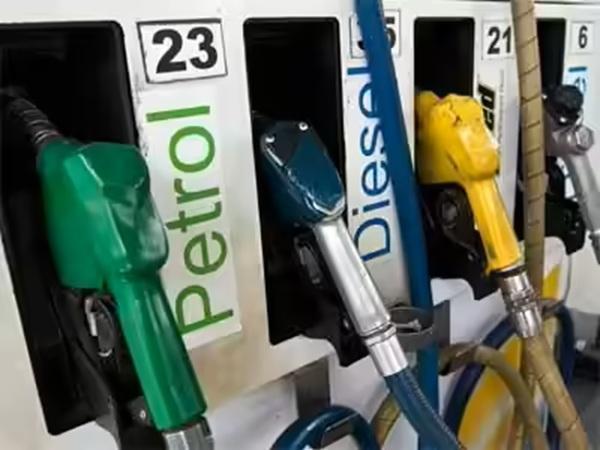
BPCL Deletes Viral E20 Petrol Test Post After 33 Ethanol Reading Sparks Karnataka Fuel Controversy - AI News Breaking
bpcl deletes viral petrol:
Bharat Petroleum Corporation Limited (BP01) has found itself at the centre of a fresh controversy after a social media post intended to showcase its compliance with Karnataka’s new E20 fuel mandate was swiftly removed following intense scrutiny of the accompanying test image. The post, originally shared on the company’s official X (formerly Twitter) account, displayed a fuel sample with a purported ethanol content of approximately 33 percent, a figure that exceeded the 20 percent ethanol blend mandated by the Karnataka government and raised immediate questions about the accuracy of the data presented. Within hours of the post going live, a wave of comments and inquiries from netizens, industry analysts and consumer watchdogs prompted BPCL to delete the content, citing an internal review and the need to correct an inadvertent error.The Karnataka government introduced the E20 mandate in early 2024 as part of its broader strategy to reduce carbon emissions, improve air quality and support the state’s burgeoning ethanol production from sugarcane..
Under the directive, all fuel stations in the state were required to dispense petrol containing 20 percent ethanol by volume by October 2024, a target that aligned with central government ambitions to increase ethanol blending to 20 percent nationwide by 2026. The policy was welcomed by environmental groups, but it also placed significant logistical and technical pressures on oil marketing companies (OMCs), which had to adjust their blending infrastructure, secure sufficient ethanol supplies and ensure accurate fuel quality monitoring across a vast network of retail outlets.BPCL, one of the country’s largest OMCs, announced in late September that it had successfully achieved the E20 target across its Karnataka outlets. To substantiate the claim, the company posted a high‑resolution photograph of a fuel test strip taken from a dispensing point in Bengaluru, accompanied by a caption stating that the sample registered an ethanol concentration of around 33 percent, well above the mandated level..
The post was framed as evidence of the company’s “exceeding compliance” and its commitment to delivering a cleaner fuel mix. The image quickly attracted attention, not only because it suggested a higher ethanol content than required, but also because it sparked debate about the reliability of on‑site testing methods and the potential for over‑blending, which could affect engine performance and fuel economy.Within minutes, the post was flooded with comments from industry experts and ordinary users alike. Some pointed out that a 33 percent ethanol blend would be inconsistent with the specifications of most modern petrol engines, which are calibrated for up to 20 percent ethanol..
Others highlighted that the visual appearance of the test strip, with its characteristic colour change, could be misinterpreted without proper calibration. A number of analysts on platforms such as LinkedIn and automotive forums questioned whether the test strip used was appropriate for measuring such high ethanol concentrations, noting that standard fuel quality tests typically rely on laboratory‑grade gas chromatography or calibrated handheld analyzers rather than simple colour‑imetric strips.The scrutiny intensified when a former BPCL employee, who had previously worked in the company’s quality assurance department, posted a thread suggesting that the image might have been taken from a laboratory setting rather than a retail pump, thereby misrepresenting the context of the test. The employee argued that the lab environment could produce higher ethanol readings due to controlled blending conditions, whereas real‑world dispensing points are subject to variations in temperature, pressure and fuel turnover that can affect measurement accuracy..
This claim was bolstered by a screenshot of an internal BPCL memo leaked to the public, which appeared to discuss the need for “robust verification mechanisms” for E20 compliance reports.In response to the growing controversy, BPCL issued a brief statement on its official X account, acknowledging that the post had been removed pending an internal review. The company asserted that the image was intended to illustrate its progress toward the state’s blending target and that the ethanol figure was derived from a preliminary laboratory test, not a routine pump‑side measurement. BPCL emphasized that it remained fully compliant with Karnataka’s E20 mandate and that all its retail outlets continued to dispense fuel meeting the 20 percent ethanol specification..
The statement also pledged to provide a comprehensive clarification once the review was complete.The incident has reignited a broader conversation about transparency and data integrity in the Indian oil sector, especially as OMCs grapple with the rapid shift toward higher ethanol blends. Critics argue that the pressure to showcase compliance may incentivise companies to present overly optimistic figures, potentially eroding public trust. Consumer advocacy groups, such as the Centre for Science and Environment, have called for an independent audit mechanism that would verify blending percentages at the point of sale, rather than relying solely on corporate self‑reporting..
They contend that a standardized, third‑party testing framework would not only safeguard consumer interests but also provide the government with reliable data to assess the environmental impact of the blending programme.Regulatory bodies, including the Ministry of Petroleum and Natural Gas and the Karnataka State Pollution Control Board, have indicated that they are monitoring the situation closely. A senior official from the Ministry, speaking on condition of anonymity, noted that while the government welcomes corporate enthusiasm for exceeding the ethanol target, any deviation from prescribed limits must be carefully evaluated to ensure it does not compromise vehicle performance or fuel safety standards. The official added that the Ministry would consider issuing guidelines on acceptable testing methods and documentation practices for future compliance reporting.Industry insiders suggest that the episode may prompt OMCs to recalibrate their communication strategies around fuel quality..
A senior executive at a rival oil company, who preferred not to be named, remarked that “public disclosures need to be backed by rigorous, verifiable data, especially when they involve technical parameters like ethanol content.” The executive warned that the rapid rollout of E20 across the country has created a “testing bottleneck,” where many stations lack the necessary equipment to accurately measure ethanol percentages in real time. He advocated for greater investment in portable, high‑precision analyzers that can be deployed at retail sites, thereby reducing reliance on laboratory proxies that may not reflect actual dispensing conditions.Analysts also note that the incident could have financial implications for BPCL, which is listed on both the Bombay Stock Exchange and the National Stock Exchange. Share price movements in the immediate aftermath of the post’s deletion were modest, but market observers caution that repeated controversies over compliance could affect investor confidence, particularly as the company navigates a period of significant capital expenditure to upgrade blending facilities and expand its ethanol sourcing network..
Moreover, the episode may influence the broader market perception of the viability of high‑ethanol blends, a factor that is critical for policymakers seeking to accelerate the transition to greener fuels.The Karnataka government has not yet issued an official comment on the BPCL post, but sources close to the state’s energy department.
Updated: November 12, 2026






