Pakistan’s leaders hail first astronaut aboard Chinese craft: ‘Proud one of us has gone into space’
 British tourist travels 29 hours from Mumbai to Amritsar for ₹5,461, rates Indian Railways 10/10 | Viral video
 The Supreme Court will decide whether assault weapons bans violate the Second Amendment
 A Critic of Beijing Falls Short in Taiwan’s Key Mayoral Election
 EPA says no rise in contamination after Army detonates lead azide stockpile in Iowa
Central Park’s horse-drawn carriage drivers sue NYC over incoming ban
**
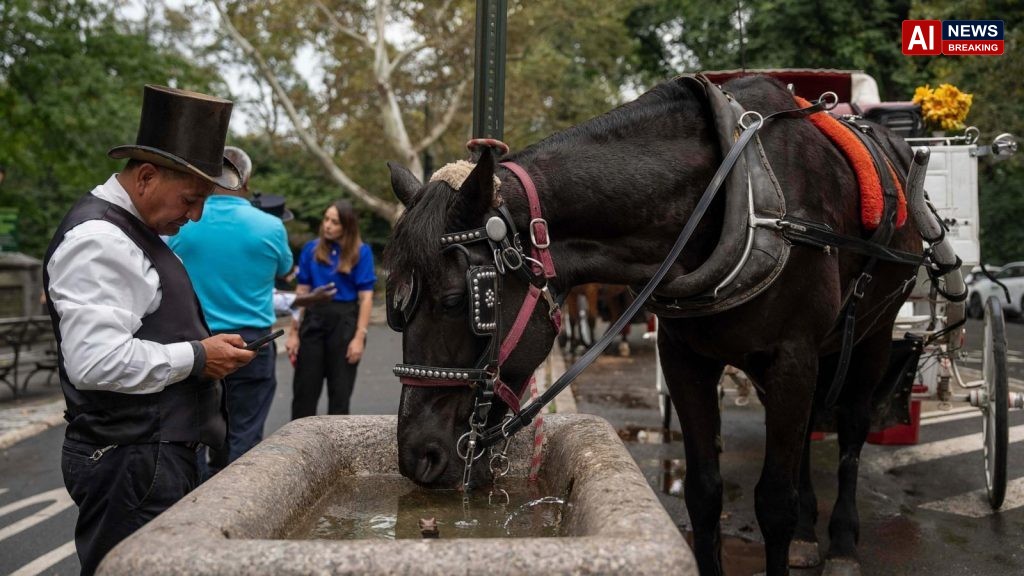
Central Park's horse-drawn carriage drivers sue NYC over incoming ban - AI News Breaking
central parks horsedrawn carriage:
New York’s iconic horse‑drawn carriage rides through Central Park have become the subject of a fresh legal battle, as a group of drivers filed a lawsuit on Tuesday seeking to halt the city’s newly enacted ban. The plaintiffs, representing dozens of carriage operators, argue that the legislation – signed by Mayor Zohran Mamdani only hours earlier – violates their constitutional rights and threatens the livelihoods of families who have worked in the industry for generations. Their filing in the United States District Court for the Southern District of New York requests an immediate injunction, asking a judge to prevent the law from taking effect while the case proceeds.The ordinance, part of a broader animal‑welfare initiative championed by the mayor’s administration, calls for the complete phase‑out of horse‑drawn carriages in Central Park by the end of 2025..
It also mandates the removal of all carriage stalls and the revocation of permits that allow drivers to operate within the park’s boundaries. City officials say the move follows a long‑standing campaign by animal‑rights groups who contend that the horses endure excessive heat, inadequate rest and unsafe working conditions in a densely populated tourist environment.Mayor Mamdani, who took office in January, defended the timing of the vote, noting that the city council had been deliberating the proposal for more than a year. “We have a responsibility to protect the welfare of animals in our public spaces,” he said in a press conference..
“This legislation reflects the will of New Yorkers who have repeatedly called for humane treatment of the horses that have become a beloved, yet problematic, part of our cultural landscape.” He added that the city would offer a transition fund to assist drivers in retraining for alternative employment.The carriage drivers’ lawsuit contends that the ban infringes upon the Fifth Amendment’s guarantee of due process and the Fourteenth Amendment’s equal protection clause. Their counsel, a veteran civil‑rights attorney, argued that the city failed to provide a fair hearing before stripping the operators of a long‑standing business model. “The drivers were denied a meaningful opportunity to be heard, and the city’s abrupt action disregards the economic realities facing these families,” the attorney said..
The filing also cites the Administrative Procedure Act, claiming the regulation was adopted without the requisite notice and comment period.In response, the city’s legal team filed a motion to dismiss, asserting that the ban is a lawful exercise of municipal police power aimed at protecting public health and safety. The city’s attorney highlighted that the ordinance includes provisions for compensation, including a $10,000 per driver stipend and access to job‑training programs administered through the Department of Labor. “The city is not taking property without just compensation,” the lawyer said..
“We are providing a reasonable transition package consistent with precedent in similar regulatory actions.”The case arrives amid a national debate over the place of horse‑drawn carriages in urban tourism. Cities such as San Francisco and Boston have already imposed strict restrictions or outright bans, citing animal‑welfare concerns, while others, including Philadelphia and Washington, D.C., have maintained regulated carriage districts. Advocacy groups like the Humane Society of New York have lauded New York City’s decision, calling it a “landmark victory” for the horses, which they say have suffered from heat stress and injuries on the park’s paved pathways.Opponents of the ban argue that the carriage industry contributes significantly to the city’s tourism economy, generating an estimated $2.5 million in annual revenue and providing employment for over 300 individuals, many of whom are immigrants..
The Carriage Drivers Association, which represents the plaintiffs, maintains that the horses are well cared for, pointing to veterinary records and the owners’ compliance with the city’s existing animal‑welfare regulations. “We have been part of New York’s cultural fabric for more than a century,” the association’s president said. “The abrupt removal of our services not only erodes a historic tradition but also disregards the bonds we have formed with the animals we love.”Legal scholars note that the outcome may hinge on how courts balance the city’s regulatory authority against the claimed property rights of the drivers..
In similar cases, judges have sometimes upheld bans when the government demonstrated a compelling interest, such as preventing animal cruelty, provided that adequate mitigation measures were in place. However, the plaintiffs’ emphasis on procedural deficiencies could complicate the city’s defense, especially if the court finds that the rulemaking process failed to meet federal standards.If the injunction is granted, the city would be forced to suspend enforcement of the ban pending a full trial, potentially extending the carriage presence in Central Park for at least another year. Conversely, a denial could accelerate the phase‑out schedule, compelling drivers to seek alternative employment or relocate to other boroughs where the ordinance does not apply..
The decision is expected to be heard within the next six weeks, and both sides have indicated readiness for a protracted legal contest.Regardless of the legal outcome, the dispute underscores the evolving relationship between New York’s historic attractions and contemporary concerns about animal welfare, economic equity and urban planning. As the city moves forward, officials say they will continue to monitor the situation and explore additional measures to support displaced workers. For now, the future of the horse‑drawn carriage rides that have long dotted the park’s scenic avenues remains uncertain, suspended between the city’s legislative ambition and the drivers’ fight to preserve a way of life..
Updated: November 19, 2026
The ban pits New York’s moral branding as a humane metropolis against a legacy industry that still fuels a modest tourism niche, exposing how “progress” can become a legal flashpoint when cultural nostalgia meets animal‑rights activism.
If the city’s procedural shortcuts are deemed unconstitutional, it could set a precedent that forces