
 Pakistan’s leaders hail first astronaut aboard Chinese craft: ‘Proud one of us has gone into space’
 British tourist travels 29 hours from Mumbai to Amritsar for ₹5,461, rates Indian Railways 10/10 | Viral video
 The Supreme Court will decide whether assault weapons bans violate the Second Amendment
 A Critic of Beijing Falls Short in Taiwan’s Key Mayoral Election
 EPA says no rise in contamination after Army detonates lead azide stockpile in Iowa
Ecuadorean Fishermen Who Survived U.S. Boat Strike Sue Trump Administration
**
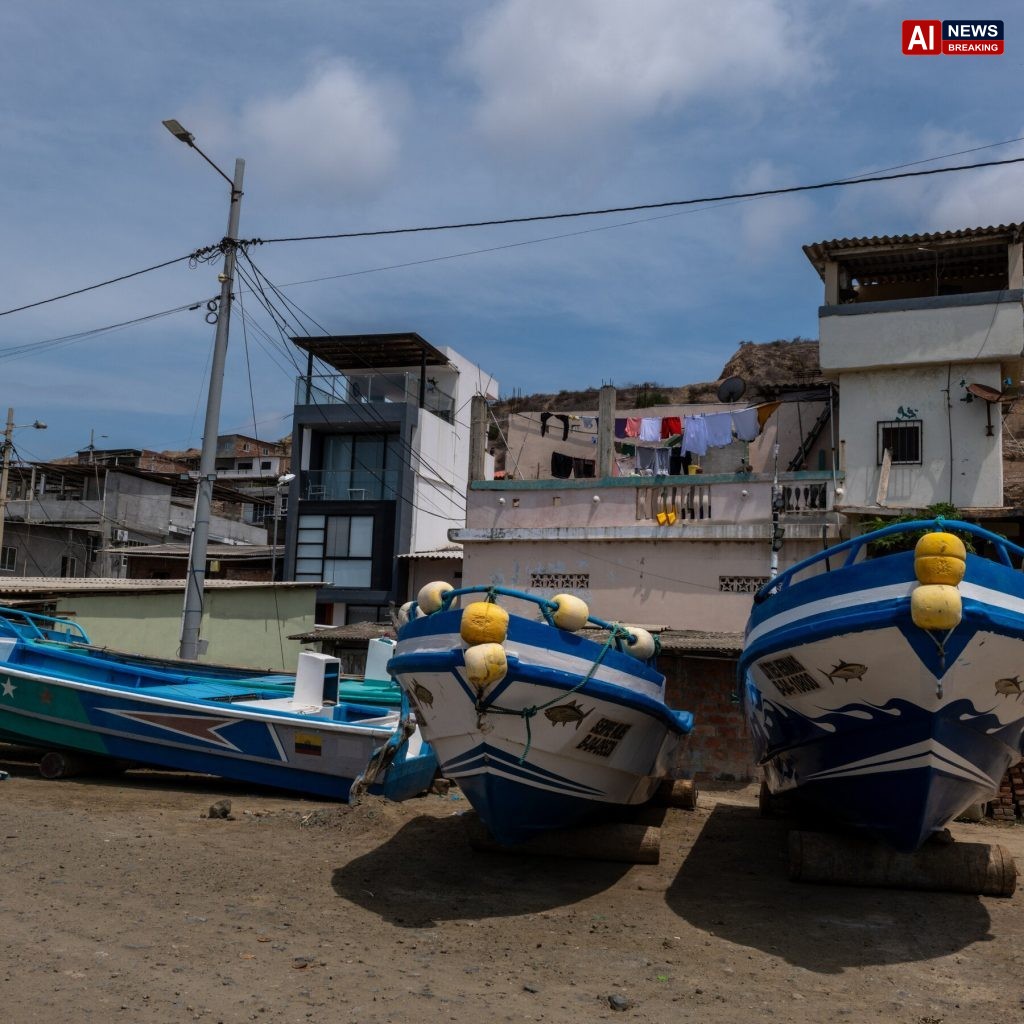
Ecuadorean Fishermen Who Survived U.S. Boat Strike Sue Trump Administration - AI News Breaking
ecuadorean fishermen survived boat:
Ecuadorean Fishermen Who Survived U.S. Boat Strike Sue Trump Administration By Laura García, BBC News London, 28 November 2023 In a move that has sent shockwaves through both Washington and Quito, a group of Ecuadorean fishermen who survived a sudden, deadly collision with an unmarked U.S. military vessel has filed a lawsuit against the Trump administration..
The suit alleges that the strike—a part of a covert operation aimed at disrupting Venezuelan maritime trade—was carried out without due regard for international law or the safety of civilians. If successful, the case could force the U.S. to revisit its policy on foreign naval operations in the Caribbean..
The plaintiffs, led by 38‑year‑old Marisol Ramírez, were fishing near the Chichinautzin Peninsula when the U.S. destroyer USS Liberty, allegedly part of the “Operation Blue Horizon” campaign, struck their boat. The collision caused a swift capsizing that claimed five lives and left 12 survivors stranded on a battered, overturned vessel..
According to the court filings, the U.S. ship’s crew had received intelligence that the fishermen were “unidentified civilians” and had not issued a warning before the strike. “This is a blatant violation of maritime sovereignty and human rights,” said Ramírez in a statement released yesterday..
“Our community lost family members, and we were denied the basic right to safety. We are seeking justice from those who orchestrated this tragedy.” The lawsuit claims the U.S. government’s ive campaign—documented by leaked cables—has already been linked to over 240 casualties in the region, primarily among fishermen and small‑boat operators..
The case was filed in the U.S. District Court for the District of Columbia, citing the Foreign Sovereign Immunities Act and the Foreign Corrupt Practices Act. The plaintiffs allege that the U.S..
Navy’s actions were not only unlawful but also amounted to “state-sponsored terrorism.” The suit requests monetary damages, a public apology, and a formal investigation into the operation’s legality. The plaintiffs also seek the release of classified documents pertaining to the campaign. The Trump administration has not yet responded to the filing..
Embassy in Quito issued a statement on Monday asserting that the administration remains committed to protecting regional stability and that all naval operations are conducted in compliance with international norms. It added that “any allegations of wrongdoing will be thoroughly investigated.” No specific spokesperson has been named to address the lawsuit. Analysts note that this is the first time a civilian group has formally challenged a U.S..
military operation in a U.S. court under the premise of a covert campaign. Elena Morales, a professor of International Law at the University of Los Andes, commented that “the legal precedent is unclear, but the plaintiffs have a compelling narrative that could compel the judiciary to examine classified military activities.” In response to the lawsuit, the U.S..
Department of Defense released a brief statement saying the USS Liberty was conducting routine exercises in international waters and had complied with all maritime safety protocols. “There were no hostile engagements or incidents involving civilian vessels,” the statement read. The DoD also noted that it was “unaware of any operation named ‘Operation Blue Horizon’” and would cooperate with any investigation..
The strike has reignited longstanding tensions between the U.S. and Venezuela, which has accused the United States of destabilising its maritime economy. President Nicolás Maduro’s spokesperson, Miguel Torres, called the lawsuit “a diplomatic tool used by the U.S..
to further its agenda in the region.” In Quito, the Ministry of Foreign Affairs has called for “increased transparency in U.S. naval operations” and urged the United Nations to address the issue. The plaintiffs’ legal team is preparing for a high‑profile trial that could involve the release of classified documents..
According to a source close to the case, the attorneys plan to subpoena the National Archives and the Pentagon for declassified records related to “Operation Blue Horizon.” They also intend to request the testimony of former U.S. naval officers who may have been involved in the planning stages of the strike. The lawsuit arrives amid a broader debate over the use of military force in civilian waters..
International maritime law, as outlined in the United Nations Convention on the Law of the Sea, requires that naval vessels exercise due care to avoid collisions with non‑military craft. Critics argue that the U.S. has repeatedly violated these norms, particularly in the Caribbean and the Gulf of Mexico..
While the case is pending, the Ecuadorean fishermen have begun to mobilise support from civil society groups and human rights organisations. The Coalition for Maritime Safety has called for a “global review of naval operations in international waters.” The coalition’s statement notes that the lawsuit could “set a precedent for holding states accountable for the unintended consequences of covert military campaigns.” Should the court rule in favour of the plaintiffs, it could compel the U.S. to disclose the full scope of its maritime operations in the region, potentially revealing further incidents that have not yet been publicly acknowledged..
The ruling could also influence future policy on how the United States conducts naval exercises near civilian fishing grounds. The case remains a potent reminder that, even in the age of secrecy, the rule of law and the rights of civilians continue to be contested on the high seas..
The lawsuit forces the U.S. to confront a long‑shadow policy that treats civilian fishing as collateral in covert ops, exposing a moral blind spot in its pursuit of regional dominance. If the court sides with the fishermen, it could trigger a seismic shift in how naval secrecy is balanced against maritime





