Pakistan’s leaders hail first astronaut aboard Chinese craft: ‘Proud one of us has gone into space’
 British tourist travels 29 hours from Mumbai to Amritsar for ₹5,461, rates Indian Railways 10/10 | Viral video
 The Supreme Court will decide whether assault weapons bans violate the Second Amendment
 A Critic of Beijing Falls Short in Taiwan’s Key Mayoral Election
 EPA says no rise in contamination after Army detonates lead azide stockpile in Iowa
Prince William says Gen Z is the torchbearer of the global movement for change
**

Prince William says Gen Z is the torchbearer of the global movement for change - AI News Breaking
prince william says torchbearer:
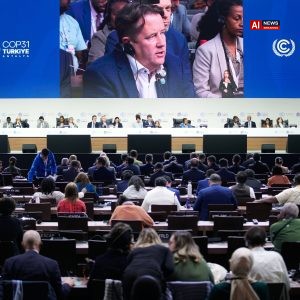
Prince William, the Duke of Cornwall and Cambridge, used a high‑profile speaking engagement in London to argue that Generation Z is poised to become the leading force behind a worldwide push for social and environmental reform. Speaking at a conference organised by the United Nations Development Programme, the royal highlighted the demographic’s distinctive digital fluency, heightened awareness of climate risk and a willingness to challenge entrenched power structures. “The torch has been passed,” he said, “and it is now in the hands of a generation that grew up with the planet’s fragility on their doorstep.” The duke’s remarks were part of a broader narrative that seeks to position younger people not only as victims of policy inertia but as active architects of a more sustainable future.In his remarks, William cited several recent examples of youth‑led initiatives that have garnered international attention..
Among them was the emergence of climate‑focused startups in Africa, student‑driven policy proposals in Europe and a wave of community‑based renewable projects in Latin America. He also noted that the energy transition is no longer a peripheral issue for governments but a central pillar of national security strategies, particularly in regions vulnerable to extreme weather. By linking the concerns of Gen Z to the strategic calculations of states, the duke sought to underline the political relevance of the generation’s activism.The conversation turned to the role of philanthropy and private sector innovation in supporting youth‑led change..
William praised the Earthshot Prize, a competition launched by Prince William’s own Earthshot Foundation, for its focus on “solutions that are scalable, nature‑positive and inclusive.” The award’s 2023 cohort included a project from the Himalayan kingdom of Bhutan that uses traditional forest‑management practices to restore high‑altitude ecosystems. Bhutan, which famously measures progress through Gross National Happiness rather than gross domestic product, has become a touchstone for alternative development models. Its winning entry demonstrated how indigenous knowledge can be blended with modern scientific monitoring to safeguard watersheds and carbon stores.Another winner of the Earthshot Prize was Mahindra Last Mile Mobility, an Indian subsidiary of the Mahindra Group that develops electric three‑wheelers for use in densely populated cities..
The company’s solution, which combines battery‑swap technology with a network of solar‑powered charging stations, aims to reduce emissions from urban freight while creating jobs for young people in the informal transport sector. The venture’s success, according to the prize jury, lies in its ability to address both climate and socioeconomic challenges simultaneously. It also reflects a growing trend of Asian firms leveraging low‑cost electrification to meet the needs of rapidly urbanising populations.The duke’s comments were met with cautious optimism from experts who see the generational shift as a genuine driver of policy change..
Dr Anita Patel, a senior fellow at the Institute for Sustainable Development, warned that enthusiasm must be matched by concrete institutional support. “Young people are demanding systemic transformation, but without the political will to translate ideas into legislation, many of these pilots remain isolated experiments,” she said. Patel highlighted the need for robust financing mechanisms, such as green bonds and climate‑adjusted credit lines, to scale successful projects beyond their initial locales.Critics, however, argued that the emphasis on Gen Z risks oversimplifying the complex web of factors that shape climate action..
A report released last month by the European Policy Centre suggested that while youth activism has raised public awareness, it has not yet produced a measurable shift in emissions trajectories at the national level. The analysis pointed to a “policy‑implementation gap” where ambitious targets are often diluted by economic considerations and lobbying pressures. The report called for a more nuanced approach that integrates youth perspectives with the expertise of seasoned policymakers and industry leaders.The discussion also touched on the digital dimension of Gen Z’s activism..
With platforms such as TikTok, Instagram and emerging metaverse spaces, young people can mobilise audiences at unprecedented speed. Yet scholars caution that the same tools can be weaponised to spread misinformation and polarise debates. Professor Luis Martínez, a media studies specialist at the University of Barcelona, noted that the echo‑chamber effect can amplify fringe narratives, potentially undermining the credibility of legitimate climate science..
He advocated for media‑literacy programmes that empower young users to critically assess content while preserving the democratic potential of online mobilisation.In the context of the Earthshot Prize, the selection panel emphasized the importance of cross‑generational collaboration. Jury chair Sir David Attenborough, the celebrated naturalist, remarked that “the most effective solutions arise when the wisdom of elders meets the energy of youth.” He cited the Bhutan project’s partnership with a university research team and Mahindra’s collaboration with local driver cooperatives as exemplars of inclusive design. The panel’s criteria explicitly favoured initiatives that demonstrated community ownership and long‑term viability, signalling a move away from top‑down models that have often faltered in the past.Financial backers of the Earthshot Prize, including major philanthropic foundations and corporate sponsors, indicated a willingness to channel additional resources toward the winners..
The Mahindra venture, for instance, secured a further $25 million in venture capital earmarked for expanding its solar‑charging infrastructure across Southeast Asia. Bhutan’s forest‑restoration program received a grant from the Global Environment Facility to develop a monitoring system using satellite imagery and community‑based data collection. These investments illustrate how prize‑winning ideas can attract the capital needed to transition from pilot to mainstream deployment.The duke concluded his address by urging governments to embed youth representation in decision‑making bodies, from local planning committees to international climate negotiations..
He referenced the recent inclusion of a Gen Z delegate in the United Nations Climate Change Conference’s youth advisory group as a positive step, but noted that “tokenism is not enough.” William called for “real power‑sharing arrangements” that grant young people a seat at the table when budgets are allocated and policies are drafted. He suggested the creation of a permanent inter‑generational council within the UN framework to monitor progress on the Sustainable Development Goals and ensure accountability across successive administrations.While the speech resonated with many who view the younger generation as a catalyst for change, the true test will be whether the enthusiasm translates into measurable outcomes. The Earthshot Prize’s winners, including Bhutan and Mahindra Last Mile Mobility, now stand as case studies for how innovative ideas can be scaled with the right mix of public and private support..
As the global community confronts escalating climate impacts, the pressure on policymakers to heed the demands of Gen Z intensifies. Whether the torch that Prince William described will illuminate a path to a resilient, low‑carbon future remains to be seen, but the dialogue it has sparked underscores a growing consensus that the next decade will be defined by the actions—or inactions.
Updated: November 17, 2026
Prince William’s framing of Gen Z as the “new torchbearers” risks turning youthful zeal into a performative narrative if governments still gatekeep power—young voices will only translate into climate gains when policy structures shift, not just when activists flood social media. The real test lies in embedding those activists