Pond heron found dead in Coimbatore tests positive for avian influenza
 Pakistan’s leaders hail first astronaut aboard Chinese craft: ‘Proud one of us has gone into space’
 British tourist travels 29 hours from Mumbai to Amritsar for ₹5,461, rates Indian Railways 10/10 | Viral video
 The Supreme Court will decide whether assault weapons bans violate the Second Amendment
 A Critic of Beijing Falls Short in Taiwan’s Key Mayoral Election
Eurovision Asia
**
Geopolitics Looms Over Eurovision, but Not Its Asian Edition - AI News Breaking
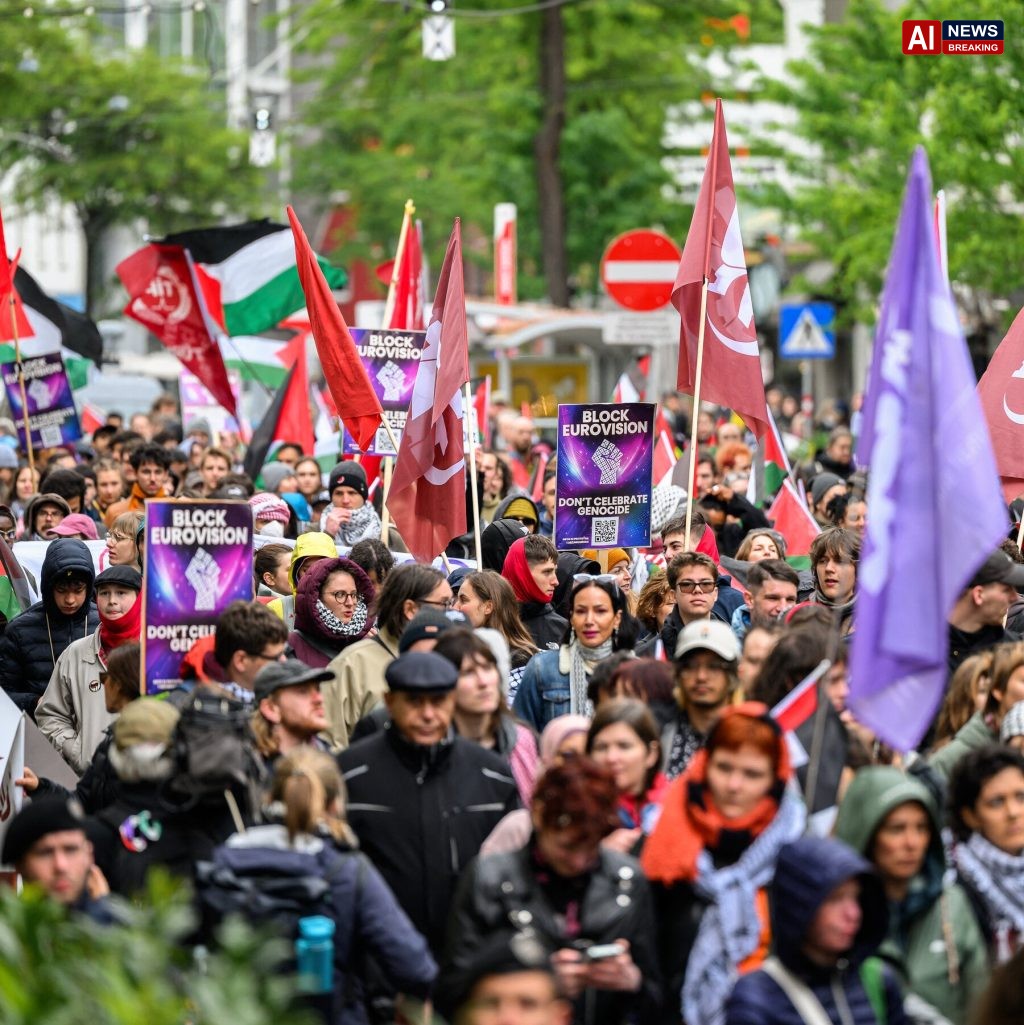
The Eurovision Song Contest, long celebrated for its flamboyant performances and pan‑European camaraderie, has increasingly found itself at the centre of diplomatic disputes. From the 2021 Ukrainian entry being withdrawn after a Russian‑backed broadcaster threatened to pull its own participation, to the 2023 controversy over Israel’s inclusion amid heightened Middle‑East tensions, the competition’s claim of being “apolitical” has been tested repeatedly. Yet while the European edition wrestles with these challenges, the newer Asian version – Eurovision Asia – appears to have sidestepped the geopolitical minefield, at least for now.The original contest, inaugurated in 1956, has always carried an undercurrent of soft power, allowing nations to showcase culture, technology and, subtly, political narratives through music..
Over the decades, the event has mirrored broader continental shifts: the fall of the Berlin Wall, the expansion of the European Union, and the rise of populist movements across the continent. In recent years, the proliferation of social media has amplified every lyrical nuance, staging decision and voting pattern, turning the contest into a daily news cycle where commentators dissect possible messages in the colour of a stage costume or the choice of a backing vocalist.The most emblematic episode of political friction emerged in 2022 when the Ukrainian delegation performed a song that included a visual reference to the ongoing conflict with Russia. The Russian broadcaster, VGTRK, threatened to withdraw from the competition unless Ukraine was disqualified, prompting the European Broadcasting Union (EBU) to issue a firm statement reaffirming its rule that “no political content is permitted during the live broadcast.” The incident highlighted the delicate balance the EBU must maintain: upholding the contest’s artistic integrity while navigating the expectations of member states whose governments may be in direct conflict.A similar tension surfaced in 2023 when several Middle‑Eastern broadcasters lodged formal complaints over Israel’s participation..
The complaints centred on the perception that Israel’s entry, a pop‑rock number with lyrics about unity, could be interpreted as a political statement amidst ongoing regional strife. The EBU’s response was swift, reiterating that the contest’s rules prohibit overt political messages, and that voting would remain based solely on artistic merit. Nonetheless, the episode sparked a broader debate about whether a contest that celebrates diversity can truly remain insulated from the political realities of its participants.Amid these controversies, the contest’s voting system – a combination of professional juries and public televotes – has also become a flashpoint for accusations of bloc voting and diplomatic reciprocity..
Analysts have noted patterns where neighboring countries consistently award each other high points, prompting calls for reforms to ensure a level playing field. The EBU has introduced measures such as anonymised jury scores and stricter oversight of televoting processes, but skeptics argue that cultural affinity will always influence audience preferences, making the notion of a completely neutral contest an illusion.While the European edition grapples with these complexities, the Asian offshoot, inaugurated in 2024, has managed to avoid similar flashpoints. Launched under the auspices of the Asia-Pacific Broadcasting Union (ABU), Eurovision Asia brings together participants from a diverse set of nations ranging from Japan and South Korea to the United Arab Emirates and Kazakhstan..
The inaugural show, staged in Singapore, featured 24 acts and was praised for its high‑production values, innovative stage design, and a seamless blend of traditional and contemporary musical styles.One factor contributing to Eurovision Asia’s smoother launch is the ABU’s pre‑emptive approach to political sensitivities. In the months leading up to the contest, the union held a series of closed‑door workshops with national broadcasters, emphasizing the importance of non‑political content and establishing a clear set of guidelines that mirrored the EBU’s rulebook but added an explicit clause barring any references to ongoing territorial disputes. This proactive stance appears to have resonated with participating broadcasters, many of whom are accustomed to navigating complex regional dynamics in their own programming.Moreover, the voting mechanism for the Asian edition has been deliberately structured to minimise the perception of bloc voting..
Instead of a simple public televote, the contest employs a hybrid model where a regional panel of independent music professionals, drawn from countries not represented in the competing lineup, accounts for 50 % of the final score. The remaining half is derived from a digitally secured, anonymised public vote limited to one vote per mobile device, reducing the risk of coordinated voting campaigns. Early analyses of the results suggest a more evenly distributed point allocation, with several non‑traditional music markets achieving top‑ten placements.Cultural diplomacy also plays a distinct role in the Asian context..
Many participating nations view the contest as an opportunity to project soft power and foster tourism, rather than as a battleground for geopolitical posturing. Japan’s entry, a synth‑pop homage to its post‑war cultural renaissance, was lauded for its subtle nod to historical resilience without overtly referencing any current diplomatic disputes. Similarly, the United Arab Emirates presented a fusion of Arabic folk instrumentation with contemporary pop, showcasing the nation’s modernisation agenda while sidestepping regional conflicts.Nevertheless, experts caution that Eurovision Asia’s relative calm may be temporary..
The region remains rife with unresolved tensions – from the South China Sea disputes to the India‑Pakistan border standoff – and the contest’s growing popularity could inevitably draw it into the same vortex that has ensnared its European counterpart. Scholars at the International Institute for Media Studies note that as viewership expands and commercial stakes increase, the incentive for governments to leverage the platform for soft‑power messaging will rise. They advise the ABU to maintain vigilant oversight and to be prepared for potential controversies.In the meantime, the contrast between the two contests offers a compelling case study on how institutional design and pre‑emptive governance can shape the interplay between culture and politics..
While the European Eurovision continues to wrestle with the reality that music cannot be entirely divorced from the sociopolitical climate of its participants, Eurovision Asia demonstrates that with clear guidelines, diversified voting structures and an emphasis on cultural exchange, a large‑scale music competition can, at least in its early stages, keep the spotlight on artistic performance rather than diplomatic maneuvering. As both events evolve, their respective experiences will likely inform each other, providing valuable lessons on preserving the spirit of unity through song amid a world where politics is never far behind..
Updated: November 14, 2026
Eurovision’s clash with geopolitics shows that even a glitter‑filled stage can’t mute national narratives, but Asia’s pre‑emptive rule‑crafting proves a contest’s architecture can at least delay the inevitable politicisation.
If the Asian edition’s hybrid voting and explicit bans hold