
 Pakistan’s leaders hail first astronaut aboard Chinese craft: ‘Proud one of us has gone into space’
 British tourist travels 29 hours from Mumbai to Amritsar for ₹5,461, rates Indian Railways 10/10 | Viral video
 The Supreme Court will decide whether assault weapons bans violate the Second Amendment
 A Critic of Beijing Falls Short in Taiwan’s Key Mayoral Election
 EPA says no rise in contamination after Army detonates lead azide stockpile in Iowa
Everyone is a friend: Trump’s meetings in Asia show his varied approaches to shifting world order
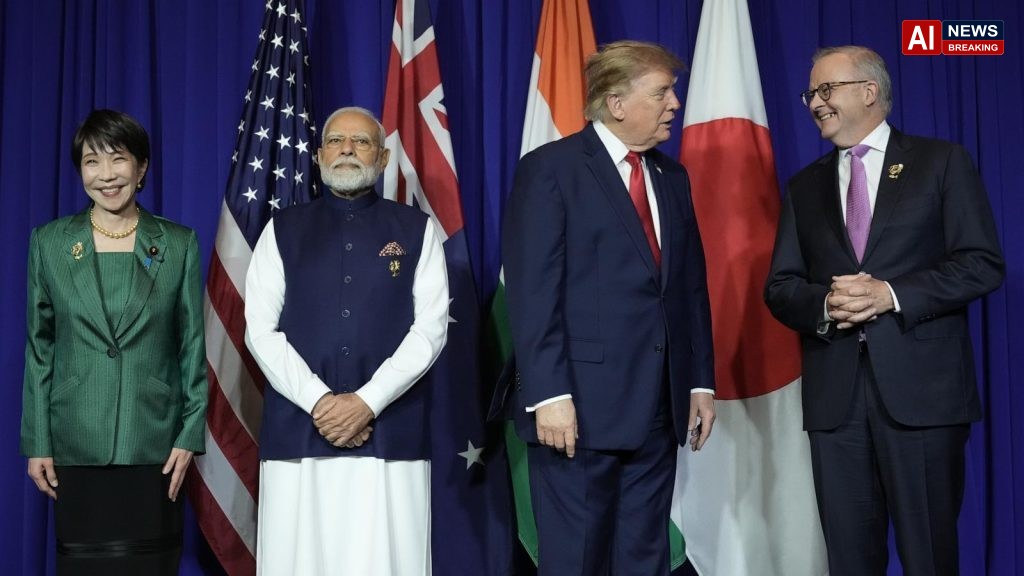
Everyone is a friend: Trump's meetings in Asia show his varied approaches to shifting world order - AI News Breaking
everyone friend trumps meetings:
President Donald Trump’s recent trip to Asia has drawn attention not only for the high‑profile diplomatic engagements it facilitated but also for the nuanced ways in which the former president approached the rapidly evolving geopolitical landscape. Over the course of a fortnight, Trump sat down with leaders from several key countries—India, Japan, and South Korea—each encounter offering a distinct perspective on the challenges and opportunities presented by a shifting global order.In New Delhi, Trump met with Prime Minister Narendra Modi, an encounter that underscored the enduring partnership between the United States and India. The former president, whose own political career has been marked by a focus on “America First,” praised Modi’s leadership style as “uncomplicated and straightforward,” noting that it mirrored his own approach to governance..
The discussion touched on a range of topics from trade disputes to counterterrorism, and the two leaders agreed on a renewed focus on expanding bilateral trade, with particular emphasis on technology and renewable energy. Trump’s comments about the importance of “fairness” in trade were interpreted by some observers as a nod to his ongoing battle against perceived unfair practices in the global economic arena.A few days later, in Tokyo, Trump was seated with Prime Minister Fumio Kishida. The meeting was framed around the increasingly pressing issue of North Korean missile tests and the broader security framework in the region..
While the former president acknowledged the “significant threat” posed by North Korea, he also emphasized the need for a “balanced” approach that involved diplomatic pressure as well as a “strong defense posture.” The meeting was notable for the informal tone that Trump adopted, frequently referencing his personal experiences with the Japanese people and expressing admiration for Japanese culture. The discussion also covered the future of the U.S. military presence in Japan, with both parties affirming their commitment to maintaining a robust deterrent against regional threats.South Korea offered a different dynamic..
When Trump met President Yoon Suk‑yeol in Seoul, the former president’s focus shifted toward economic cooperation, especially regarding semiconductor technology—a critical area for both countries. Trump praised Yoon’s leadership for “getting results,” while also highlighting the importance of a “fair and honest” trade relationship between the United States and South Korea. The conversation included a brief mention of the potential for increased investment in semiconductor manufacturing in the United States, a move that could reduce reliance on foreign suppliers.Across these meetings, a recurring theme emerged: Trump’s willingness to adapt his rhetoric and priorities to fit the host country’s expectations while still maintaining a core focus on national advantage..
This flexible approach reflects a broader trend in the current international system, where traditional power blocs are increasingly challenged by emerging multipolar actors. While Trump’s style is unmistakably distinct—marked by an informal tone, a focus on direct engagement, and a sometimes confrontational stance—his willingness to meet with diverse leaders indicates an awareness of the need for collaborative strategies in addressing global challenges.The diplomatic engagements also highlighted the changing nature of the global economy. Trade agreements and technology deals have become central to the United States’ foreign policy, especially as it seeks to counterbalance China’s growing influence..
In both India and Japan, Trump’s emphasis on “fair trade” and “protecting intellectual property” resonated with local concerns about trade imbalances. These conversations underscored how the United States is seeking to strengthen alliances not only through military commitments but also through economic partnerships that can provide a more balanced distribution of power.At the same time, the meetings offered insight into how the former president navigates the delicate balance between cooperation and competition in the Asia-Pacific region. While Trump’s rhetoric sometimes appeared to echo his earlier “America First” policies, he also emphasized the importance of maintaining alliances that can act as a counterweight to China’s regional ambitions..
The visits to Japan and South Korea reinforced the idea that the United States remains committed to a strong security presence in the region, while also acknowledging the need for open dialogue with allies about shared concerns such as North Korea’s nuclear program.In addition to high‑level strategic discussions, the meetings were also marked by a series of symbolic gestures. Trump’s visits to cultural landmarks, his participation in local customs, and his efforts to engage with the media were all carefully orchestrated to create a positive image of the United States in Asia. By blending personal charm with substantive policy proposals, Trump was able to establish a rapport with each leader, fostering a sense of trust that is essential for effective diplomacy in an increasingly complex global environment.The implications of these engagements extend beyond the immediate bilateral relations..
As the United States and its allies grapple with the challenges posed by rapid technological change, cyber threats, and a shifting balance of power, the meetings provide a template for how diplomatic leaders can navigate a multipolar world. Trump’s approach, with its mix of directness and flexibility, offers a model that could be adapted by current and future leaders seeking to build alliances that are both robust and responsive to emerging threats.Looking ahead, the outcomes of Trump’s meetings in Asia will likely influence the United States’ broader foreign policy trajectory. By engaging directly with leaders who are central to the region’s political and economic dynamics, Trump has demonstrated that even a former president can play a significant role in shaping international relations..
The real test, however, lies in translating the discussions into concrete actions—whether through trade agreements, joint security initiatives, or technological partnerships—that can help maintain stability and promote shared prosperity in an increasingly interconnected world..
Updated: November 20, 2026
Former President Trump’s two‑week Asia tour saw him meet India, Japan and South Korea, striking deals on trade, technology and security while projecting an “America First” stance that adapted to each host’s priorities. His blend of personal charm, direct rhetoric and focus on fair trade and defense cooperation underscores a broader U.S. push to counter China’s influence and reinforce alliances in a shifting multipolar world.






