
 Pakistan’s leaders hail first astronaut aboard Chinese craft: ‘Proud one of us has gone into space’
 British tourist travels 29 hours from Mumbai to Amritsar for ₹5,461, rates Indian Railways 10/10 | Viral video
 The Supreme Court will decide whether assault weapons bans violate the Second Amendment
 A Critic of Beijing Falls Short in Taiwan’s Key Mayoral Election
 EPA says no rise in contamination after Army detonates lead azide stockpile in Iowa
Gen Z mobil
**
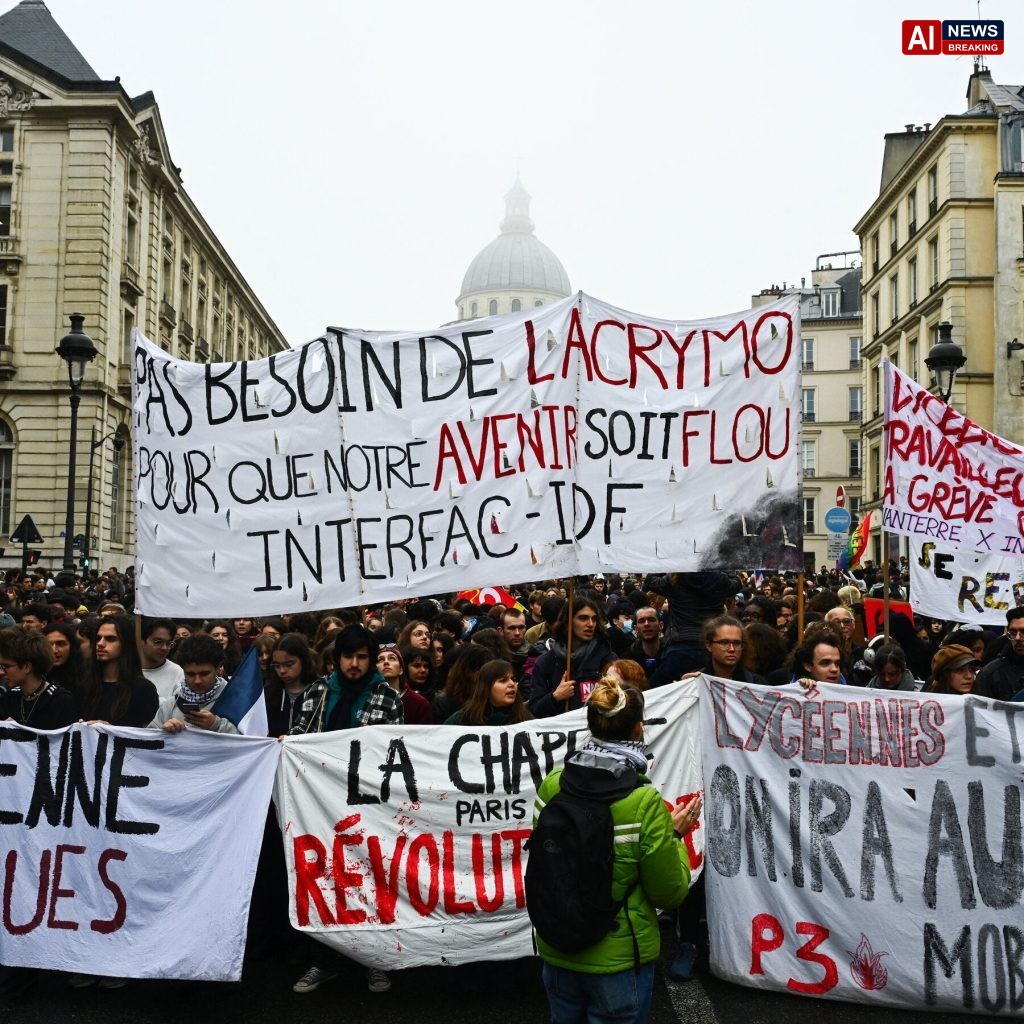
Gen Z mobil - AI News Breaking
In recent weeks a surge of street protests and electoral surprises has drawn attention to a younger demographic that is reshaping politics in unprecedented ways. Across the continent, from Berlin to Budapest, the voices of Generation Z – those born between the mid‑1990s and the early 2010s – have become a powerful catalyst for change. Their collective action is not confined to a single ideology; instead, it spans the political spectrum, energising movements on both the far left and the far right.The pattern is clear..
In Brussels, a coalition of climate‑focused activists staged a massive march that turned into a call for a new European Green Deal. Meanwhile, in Warsaw, a group of nationalist students demonstrated for stricter immigration controls and a return to traditional values. In both instances, the same demographic group, yet different causes, mobilised large numbers of participants..
This phenomenon shows that the generational identity of “Gen Z” has outgrown any single party line, becoming a cross‑cutting force that can swing public opinion and elections.A key factor in this shift is the digital environment. Generation Z grew up with smartphones, social media and a constant flow of information. Platforms such as TikTok and Instagram provide real‑time organization tools, enabling rapid coordination and message amplification..
When a political slogan is shared by a million users, it can translate into a crowd in a city square or a surge in online petition signatures. This connectivity has made it possible for young activists to reach far beyond the borders of their home countries, fostering a shared sense of urgency that transcends national boundaries.The role of social media is not only logistical. It also shapes the content that resonates with Gen Z..
Visual storytelling, short videos and memes make complex political arguments more digestible. Political parties that harness these formats gain visibility and credibility among the younger electorate. Consequently, political analysts observe a noticeable rise in parties that tailor their messages to the aesthetics and concerns of Gen Z..
Whether it is a left‑wing party promoting universal basic income or a right‑wing group demanding stricter border control, the visual and emotional language that captures the attention of young people can be decisive.The electoral impact of this demographic is already visible. In the United Kingdom, the Labour Party’s youth wing mobilised thousands of students for the 2021 local elections, helping the party reclaim several council seats. At the same time, a fringe nationalist group capitalised on the same energy, turning a small protest in Manchester into a nationwide campaign that eventually influenced the policy debate on immigration..
These events underline how Gen Z can act as a fulcrum in political contests, tipping the balance in favour of the party that best captures their aspirations or fears.Economic insecurity is a common thread that fuels Gen Z’s engagement. Many members of this cohort entered adulthood during a period marked by global recession, high student debt and a volatile job market. Their frustration over economic prospects has turned into a broader critique of existing political structures..
This discontent has manifested in a range of actions, from street marches demanding affordable housing to online petitions calling for a fairer tax system. The economic dimension therefore provides a unifying narrative for both left‑leaning and right‑leaning factions that promise to address the “forgotten” generation’s needs.Climate change is another driver of mobilisation. Gen Z is among the most vocal advocates for environmental action, with many arguing that the planet’s future hinges on today’s policy choices..
This urgency has spurred protests and civic engagement on a scale unmatched by previous generations. While left‑wing groups typically frame climate action within a broader social justice agenda, right‑wing factions often appeal to economic growth and national sovereignty as pathways to environmental protection. In both contexts, Gen Z’s demand for immediate solutions is a common denominator.The polarisation of politics in Europe has amplified the impact of Gen Z..
Traditional parties, struggling to adapt to a rapidly changing social fabric, have been replaced by newer, more ideologically focused entities. This has created a vacuum that Gen Z is eager to fill, often with radical solutions. For instance, in Italy, the youth wing of a far‑right party organized a nationwide demonstration that drew attention to the country’s refugee policies..
Meanwhile, in Spain, a group of left‑wing activists staged a sit‑in at the Spanish Parliament demanding a constitutional overhaul to include a legal right to the environment. These events illustrate the diversity of causes that resonate with the same demographic group.The media’s coverage of Gen Z protests has also played a significant role. Journalists, aware of the influence of online platforms, have shifted their reporting style to include more user‑generated content..
By incorporating livestreams, social media posts and personal narratives, news outlets have provided a more immediate and relatable representation of the events. This, in turn, has increased public interest and participation, creating a feedback loop that reinforces the visibility and influence of Gen Z.International cooperation has become another hallmark of Gen Z activism. Youth organisations in different countries often share strategies, slogans and even joint campaign plans..
In the wake of the Paris Agreement, a network of European student groups coordinated protests that were simultaneously staged in Paris, Berlin, Prague and Madrid. Such coordinated action demonstrates that Gen Z is not only politically engaged but also capable of building transnational alliances. This connectivity has the potential to influence policy at the European level, especially as institutions grapple with issues that demand coordinated responses.However, the rise of Gen Z activism is not without challenges..
The same digital tools that enable rapid mobilisation can also spread misinformation and radicalise opinions. In some cases, fringe elements have exploited social media to spread extremist rhetoric, drawing criticism from mainstream media and political leaders. There is also the risk that the political parties that engage Gen Z will be tempted to adopt more polarising stances to maintain support, potentially deepening societal divisions.Policymakers are increasingly aware of these dynamics..
Governments across Europe have started to create youth advisory councils and platforms that allow young people to contribute to policy design. In Germany, a parliamentary committee dedicated to youth issues was established to channel the concerns of Gen Z into legislative debate. Likewise, in France, the National Assembly launched an online portal where students can submit policy proposals, many of which have already been considered for formal legislation..
These initiatives are a recognition that engagement rather than suppression is the most effective way to manage the influence of this demographic.The future of European politics will likely continue to be shaped by Gen Z. Their ability to harness digital tools, their willingness to confront entrenched political structures and their demand for tangible change create a dynamic that transcends traditional partisan boundaries. Whether they lean left or right will depend on which party can best translate their aspirations – whether it is a desire for economic security, environmental protection or cultural identity – into coherent, actionable policies.
European politics are increasingly pivoting on Generation Z, whose social‑media‑driven protests span the ideological spectrum and can swing elections. Governments now seek to channel this restless cohort’s energy into policy through youth advisory bodies and digital platforms.
Gen Z’s cross‑partisan fervour shows that parties no longer win by ideology alone; they win by speaking the generation’s urgent language—short, visual, and mobilising instantly.
Their digital‑age activism turns policy debates into real‑time, global campaigns, forcing traditional politicians to pivot





