
 The Supreme Court will decide whether assault weapons bans violate the Second Amendment
 A Critic of Beijing Falls Short in Taiwan’s Key Mayoral Election
 EPA says no rise in contamination after Army detonates lead azide stockpile in Iowa
 Israeli Strike Kills 2 Workers at Gaza Clinic, Doctors Without Borders Says
 McQueen Pre-Fall 2027
How an Iranian Ally Gained the Upper Hand in Yemen’s War
**
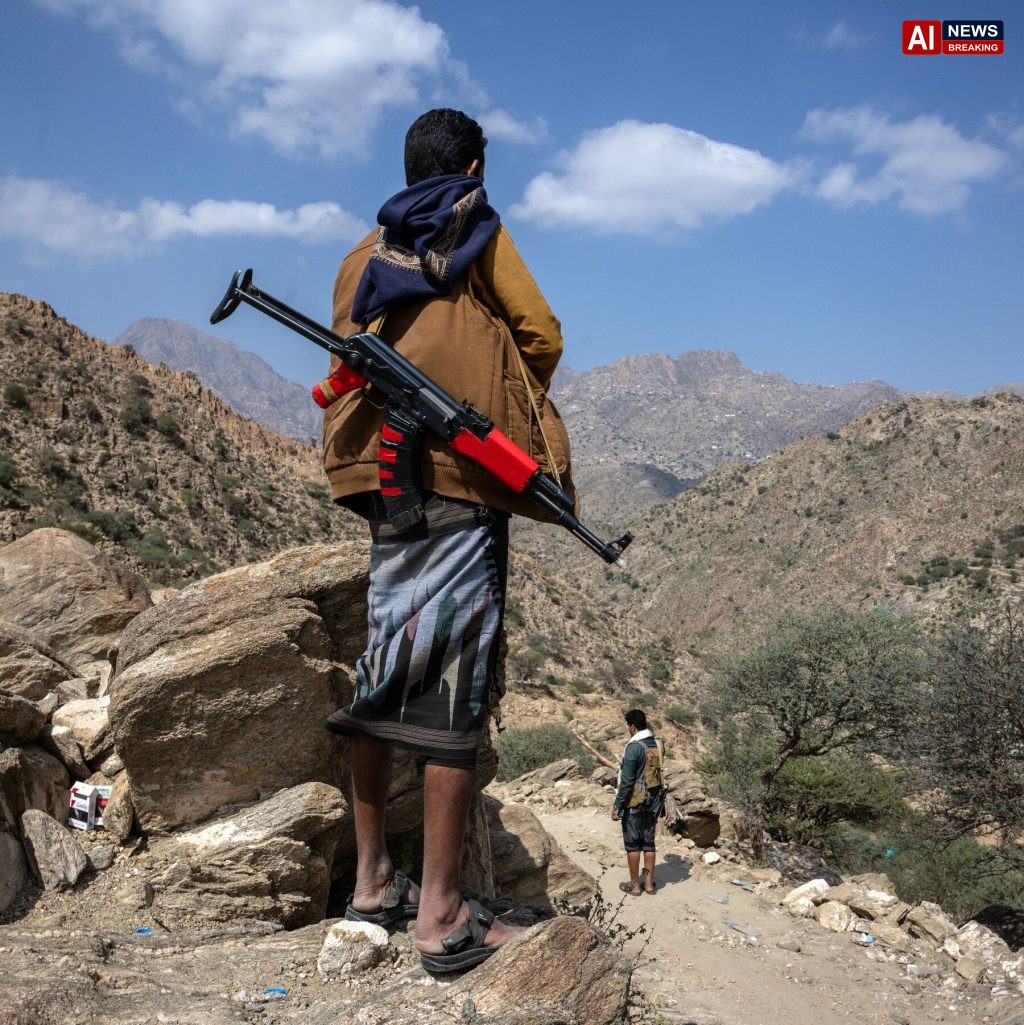
How an Iranian Ally Gained the Upper Hand in Yemen’s War - AI News Breaking
iranian ally gained upper:
The conflict in Yemen, now entering its ninth year, has taken a decisive turn as the Iran‑backed Houthi movement consolidates control over vast swathes of the country, challenging the coalition led by Saudi Arabia and its Yemeni allies. Recent advances, including the capture of the strategic port of Hodeidah and the establishment of supply lines across the Red Sea corridor, have shifted the balance of power in a war that has long been defined by asymmetrical tactics and humanitarian catastrophe. While the coalition’s aerial campaign continues to pound Houthi positions, the insurgents’ ground gains suggest a new phase in which they are no longer merely a guerrilla force but a de‑facto governing authority over significant territory.The seizure of Hodeidah in early June marked a watershed moment..
Once the lifeline for the majority of Yemen’s imports, the port’s loss has crippled the flow of humanitarian aid, fuel and commercial goods, exacerbating a crisis already described by the United Nations as the world’s worst humanitarian disaster. The Houthis, who have long claimed the city as a symbolic prize, secured it after weeks of intense fighting that saw coalition airstrikes intensify but fail to halt the ground offensive. Observers note that the city’s fall underscores the coalition’s diminishing capacity to project power on the ground, a limitation partly caused by the logistical strain of sustaining operations far from Saudi bases.Underlying the Houthi resurgence is a steady flow of support from Tehran, which has supplied weapons, training and financial assistance for more than a decade..
Satellite imagery and intercepted communications have revealed the arrival of sophisticated missile systems, including the ballistic Qaher‑1 and the surface‑to‑air Ya‑Khan, enabling the rebels to threaten both naval and aerial assets. This external backing has allowed the Houthis to transition from hit‑and‑run raids to more conventional assaults, integrating artillery, armored vehicles and coordinated infantry attacks that have overwhelmed coalition outposts previously deemed secure.The coalition’s response has been a blend of intensified air raids and limited naval blockades, aimed at restricting the Houthis’ ability to receive further Iranian supplies. However, the efficacy of these measures is increasingly questioned..
International watchdogs have reported that despite the blockade, shipments of weapons and spare parts continue to arrive via clandestine routes across the Red Sea and through land corridors in Oman and the United Arab Emirates. Moreover, the coalition’s reliance on air power has drawn criticism for its indiscriminate impact on civilian infrastructure, with recent strikes damaging hospitals, schools and water treatment facilities in the Al‑Hodeidah governorate.Humanitarian organisations warn that the shifting front lines are compounding an already dire situation. The United Nations Office for the Coordination of Humanitarian Affairs (OCHA) estimates that more than 24 million Yemenis now require aid, with food insecurity affecting nearly 80 percent of the population..
The loss of Hodeidah’s port has forced aid convoys to take longer, riskier routes through the interior, increasing exposure to landmines and armed groups. In addition, the heightened fighting has displaced thousands of families, swelling the ranks of internally displaced persons (IDPs) and straining already overstretched shelters in the capital, Sana’a, and in the southern city of Aden.Political ramifications are also unfolding. The Houthis’ territorial gains have emboldened their diplomatic overtures, with Tehran and the movement seeking to negotiate a settlement that would legitimise their control over the north-western provinces..
Recent back‑channel talks in Oman have hinted at a possible ceasefire framework that could involve a phased withdrawal of coalition forces in exchange for a political transition that includes Houthi representation in a unified Yemeni government. While Saudi officials have publicly dismissed such initiatives as premature, internal sources suggest that Riyadh is reassessing its strategy in light of the mounting cost of the conflict, both in terms of finances and regional reputation.The United States, a key backer of the Saudi coalition, has signalled a shift in policy, urging a reduction in hostilities and greater emphasis on diplomatic solutions. In a statement released last week, the State Department highlighted “the urgent need to protect civilians and to create conditions for a sustainable political settlement.” Washington’s call for a ceasefire aligns with broader international pressure, including from the European Union and the United Nations, which have warned of sanctions should the coalition continue to target civilian infrastructure..
Nevertheless, the United States continues to provide limited logistical support to Saudi forces, a stance that reflects the complex balance between counter‑Iranian objectives and the desire to avoid further destabilisation of the region.Economic analysts note that the conflict’s evolution is reshaping regional trade patterns. The Red Sea, a vital artery for global oil shipments, has seen an uptick in naval incidents attributed to Houthi missile launches, prompting shipping companies to reroute vessels around the Cape of Good Hope. This detour adds weeks to transit times and raises freight costs, with knock‑on effects on global commodity prices..
Moreover, the loss of Hodeidah’s commercial throughput has forced the Yemeni government, already weakened by years of war, to depend more heavily on foreign aid and remittances, deepening its fiscal vulnerability.Local dynamics within Yemen are also being reconfigured. Tribal leaders in the north‑west, historically wary of both the central government and Houthi expansion, are now faced with a choice: align with the insurgents to preserve security and access to services, or risk marginalisation by resisting a force that now controls key supply routes. Early reports indicate a growing number of tribal militias have entered informal agreements with Houthi commanders, exchanging protection for a share of tax revenues collected at border crossings..
This pragmatic accommodation, while stabilising certain areas, further entrenches the Houthis’ administrative reach and complicates future reconciliation efforts.The trajectory of the war remains uncertain, yet the recent developments underscore a pivotal moment in which the Houthi movement has transitioned from a peripheral rebel group to a dominant military actor in Yemen. Their ability to capture strategic objectives, sustain supply lines despite coalition blockades, and leverage Iranian backing has altered the calculus for all parties involved. As diplomatic overtures gain momentum, the international community faces a delicate task: to balance pressure on the coalition to cease civilian‑targeted attacks, to engage Tehran in curbing its proxy engagements, and to foster a political solution that addresses the aspirations of Yemen’s diverse factions while averting a further humanitarian collapse..
Updated: November 25, 2026
Yemen’s war has entered a new phase as Iran‑backed Houthis seize the vital port of Hodeidah and expand ground control, undermining the Saudi‑led coalition’s ability to project power. The loss of the lifeline port deepens the humanitarian crisis and fuels diplomatic pushes for a ceasefire and political settlement.






