
 Pakistan’s leaders hail first astronaut aboard Chinese craft: ‘Proud one of us has gone into space’
 British tourist travels 29 hours from Mumbai to Amritsar for ₹5,461, rates Indian Railways 10/10 | Viral video
 The Supreme Court will decide whether assault weapons bans violate the Second Amendment
 A Critic of Beijing Falls Short in Taiwan’s Key Mayoral Election
 EPA says no rise in contamination after Army detonates lead azide stockpile in Iowa
IMF lifts India growth forecast to 6.8%
** The International Monetary Fund has upgraded India’s medium‑term potential growth to 6.8%, emphasizing that the country must create high‑skill, well‑paid jobs and boost productivity through infrastructure, education, and regulatory reforms to fully capture its demographic dividend.
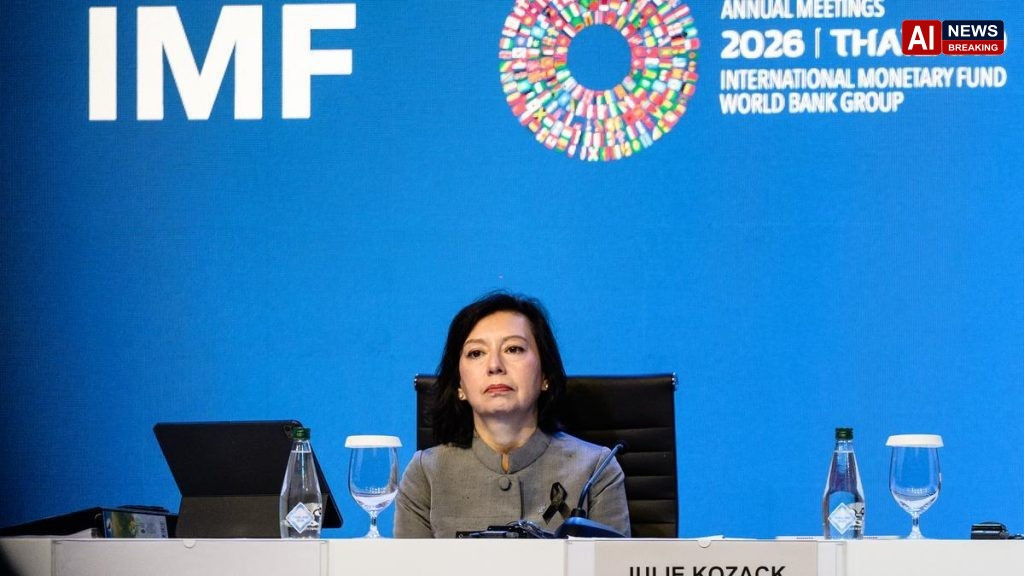
India needs to create high-quality jobs, increase productivity growth: IMF - AI News Breaking
The International Monetary Fund has warned that India’s future economic performance hinges on the creation of high‑quality employment and a sustained rise in productivity, a message reiterated in the Fund’s October World Economic Outlook. While the IMF lifted its estimate of India’s medium‑term potential growth to 6.8 per cent from a previous 6.5 per cent, it cautioned that without a robust response to a tightening labour market the country could fall short of that target. The report, released on 12 October, highlighted the dual challenge of expanding the workforce while ensuring that new jobs are sufficiently skilled and well‑paid to support a rising standard of living.India’s demographic dividend, long touted as a catalyst for growth, is now approaching a turning point..
The nation’s working‑age population is set to peak around 2027, after which the ratio of dependents to workers will begin to climb. The IMF underscored that the window for harnessing this dividend is narrowing, and that policy makers must act decisively to translate the sheer size of the labour pool into productive output. “A surge in low‑skill, low‑pay jobs would not only erode the dividend but also risk social unrest,” the Fund’s staff noted, echoing concerns raised by domestic think‑tanks and the World Bank.Productivity growth, the other pillar of the Fund’s outlook, has remained stubbornly low in recent years..
Data from the National Statistical Office show that labour productivity in manufacturing rose by just 2.5 per cent annually between 2015 and 2022, well below the 5‑6 per cent range required to sustain a 6‑7 per cent growth trajectory. The IMF attributed this lag to a mix of structural bottlenecks: inadequate infrastructure, limited access to advanced technology, and a regulatory environment that still hampers competition in key sectors such as telecom, energy and logistics. The Fund called for an accelerated reform agenda aimed at reducing red tape, enhancing the ease of doing business and fostering greater private‑sector investment in research and development.Education and skill development were identified as critical levers for improving labour quality..
Although enrolment in secondary education now exceeds 90 per cent, the transition to higher‑skill training remains weak. The IMF’s analysis pointed to a mismatch between the skills taught in vocational institutes and the needs of modern industries, particularly in digital services, advanced manufacturing and green technologies. It recommended expanding apprenticeship programmes, incentivising private companies to partner with educational institutions, and upgrading curricula to include data analytics, artificial intelligence and sustainable engineering.Infrastructure deficits also feature prominently in the Fund’s assessment..
The World Economic Forum’s Global Competitiveness Report 2023 ranked India 74th out of 141 economies for overall infrastructure, with transport and electricity scoring especially low. The IMF argued that without substantial upgrades to ports, railways and power grids, productivity gains will be hard to achieve. It cited the government’s recent push for a national logistics corridor and the ambitious target of 450 gigawatts of renewable capacity by 2030 as positive steps, but warned that implementation delays and financing gaps could blunt their impact.Fiscal policy, according to the IMF, must balance the need for public investment with the imperative of maintaining macro‑economic stability..
India’s fiscal deficit narrowed to 5.9 per cent of GDP in 2023‑24, yet it remains above the Fund’s 4.5 per cent benchmark for emerging markets. The report suggested a gradual path to deficit reduction through rationalising subsidies, broadening the tax base and improving public‑sector efficiency. It also emphasized that fiscal space should be preserved for strategic spending on education, health and infrastructure, which are essential for long‑term productivity gains.Monetary conditions were addressed as a supporting factor for the growth agenda..
The Reserve Bank of India has kept policy rates relatively accommodative, with the repo rate at 6.50 per cent as of September 2024. The IMF noted that while inflation has moderated, supply‑side pressures—particularly in food and energy—remain volatile. It urged the central bank to maintain a vigilant stance, ensuring that price stability does not come at the expense of credit availability for small and medium‑sized enterprises, which are key job creators.External factors also weigh on the outlook..
Global trade tensions, climate‑related shocks and the ongoing slowdown in major economies could dampen demand for Indian exports. The IMF highlighted that diversification of export markets and a shift towards higher‑value added goods would enhance resilience. In this regard, the growth of the services sector, especially in information technology and business process outsourcing, offers a buffer, but it too requires continuous upskilling and investment in digital infrastructure.The Fund concluded with a set of policy recommendations aimed at bridging the gap between potential and actual growth..
Central among them is the need for a comprehensive “jobs and productivity” strategy that integrates labour market reforms, skill development, infrastructure upgrades and a supportive fiscal and monetary framework. It called on the government to set clear, time‑bound targets for productivity in key industries, to monitor progress through transparent data collection, and to engage with the private sector in co‑designing solutions.India’s policymakers now face a delicate balancing act: they must sustain the momentum of recent economic reforms while deepening the quality of those reforms to address structural constraints. The IMF’s upgraded growth projection offers a modest vote of confidence, yet it also underscores that the country’s trajectory is not predetermined..
As the working‑age population edges toward its peak, the effectiveness of policies aimed at creating well‑paid, skill‑intensive jobs and boosting productivity will determine whether India can convert its demographic advantage into a durable engine of prosperity..
Updated: November 13, 2026
India’s growth ceiling now hinges less on adding heads to the workforce and more on turning the existing talent pool into high‑pay, tech‑savvy engines—otherwise the demographic dividend will morph into a fiscal burden.
If reforms can simultaneously unclog infrastructure bottlenecks and align vocational training with digital






