The Supreme Court will decide whether assault weapons bans violate the Second Amendment
 A Critic of Beijing Falls Short in Taiwan’s Key Mayoral Election
 EPA says no rise in contamination after Army detonates lead azide stockpile in Iowa
 Israeli Strike Kills 2 Workers at Gaza Clinic, Doctors Without Borders Says
 McQueen Pre-Fall 2027
India’s Retail Inflation Crosses 6 in October: Food Prices Trigger Fresh Economic Warning for Modi Government
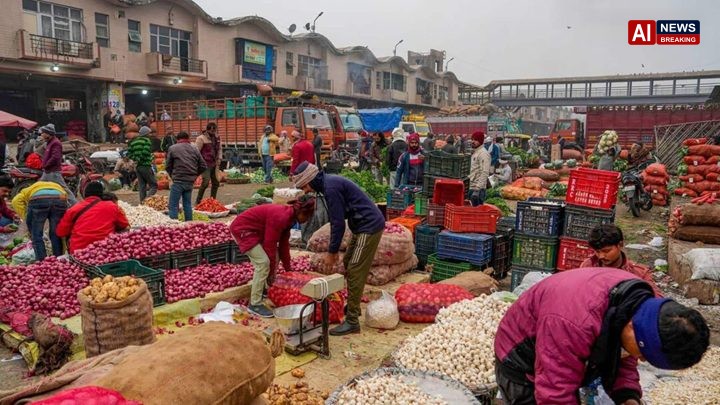
indias retail inflation crosses:
India News | Economy | Inflation | RBI | AI News Breaking Editorial Analysis
India’s retail inflation has crossed the Reserve Bank of India’s upper tolerance limit, raising fresh concerns about household budgets, food affordability and the country’s economic outlook. Consumer Price Index (CPI)-based inflation increased to 6.09% in October 2026, compared with 5.54% in September, according to provisional data released by the Ministry of Statistics and Programme Implementation on November 12.
The latest figures present a significant challenge for economic policymakers because inflation has moved above the RBI’s permitted tolerance band of 2% to 6%. More importantly, food inflation accelerated to 8.94%, indicating that the pressure on consumers is not limited to a few isolated products.
For millions of Indian households, the impact of inflation is experienced through everyday purchases rather than economic indicators. Vegetables, cooking ingredients, groceries, transport and other essential expenses determine how much money remains available for education, healthcare, savings and other household requirements.
Key Highlights
- India’s retail inflation increased to 6.09% in October 2026 from 5.54% in September.
- Food inflation accelerated to 8.94%, compared with 7.74% in September.
- Rural inflation stood at 6.63%, while urban inflation reached 5.41%.
- Onion inflation reached 116.22% year-on-year, while garlic inflation stood at 60.74%.
- The latest inflation reading has crossed the RBI’s upper tolerance limit of 6%.
Inflation Crosses the RBI’s Upper Tolerance Limit
The October inflation reading is particularly important because the RBI operates under an inflation-targeting framework that requires it to maintain consumer inflation at 4%, with a tolerance range of 2% on either side.
A reading of 6.09% means inflation has moved marginally above the upper boundary. Although one monthly reading does not automatically determine a change in monetary policy, it places additional pressure on policymakers to examine the causes and persistence of rising prices.
The increase from September’s 5.54% also indicates that the inflationary pressure has intensified rather than eased.
The latest figures use the revised Consumer Price Index series with a 2024 base year. Comparisons with older inflation data should therefore take account of the change in the statistical series.
Food Inflation Becomes the Biggest Concern
The most worrying component of the October report is food inflation.
Food inflation increased to 8.94% from 7.74% in September. The increase is especially important for lower- and middle-income households, which generally spend a substantial share of their income on essential food products.
Onion prices recorded year-on-year inflation of 116.22%, while garlic prices increased by 60.74%. Ginger inflation reached 48.32%, and lemon prices recorded inflation of 47.30%.
However, the price movement was not uniform across all vegetables. Potato prices declined by 14.24%, while cauliflower prices fell by 10.57%.
This divergence shows why individual market observations should not be confused with the overall inflation rate. Household expenses depend on the complete consumption basket, including food grains, vegetables, fuel, housing, transport and services.
Rural India Faces Greater Inflationary Pressure
The October data reveal an important difference between rural and urban inflation.
Rural retail inflation reached 6.63%, compared with 5.41% in urban areas. Rural food inflation stood at 9.09%, while urban food inflation was 8.68%.
This gap deserves particular attention because rural households often have more limited access to diversified employment opportunities and may be more exposed to agricultural income fluctuations.
Higher food prices can affect agricultural workers, small farmers, rural consumers and households dependent on fixed or irregular incomes.
The situation also creates a policy challenge. Agricultural producers may benefit from higher prices for certain commodities, but consumers who purchase those commodities face increased expenditure. The objective should be to ensure remunerative prices for farmers without allowing avoidable supply disruptions and excessive consumer inflation.
What Does This Mean for the RBI?
The latest inflation figure complicates the RBI’s monetary policy calculations.
When inflation rises persistently, the central bank may consider maintaining higher interest rates or tightening monetary conditions to control price pressures. However, monetary policy cannot directly increase the supply of onions, garlic, vegetables or other agricultural products.
If the primary source of inflation is supply-side disruption, raising interest rates alone may not solve the problem.
Higher borrowing costs could also affect home loans, business credit, automobile financing and investment activity.
The RBI will therefore need to assess whether the October increase is temporary or part of a more persistent inflationary trend. Future food prices, crude oil movements, exchange-rate developments, monsoon-related agricultural conditions and demand trends will be important factors.
The Modi Government’s Economic Challenge
The latest inflation report creates a political as well as economic challenge for the Narendra Modi-led government.
Economic growth, infrastructure development, manufacturing expansion and investment are important indicators of national progress. However, ordinary households judge economic performance through their purchasing power.
A family whose income remains unchanged while grocery and essential expenses rise may not experience the benefits of headline GDP growth.
The government must therefore focus on improving agricultural supply chains, reducing post-harvest losses, strengthening cold-storage infrastructure, improving transport connectivity and preventing artificial shortages.
Timely market interventions can help stabilise prices, but such measures need to be carefully designed to avoid harming farmers through sudden restrictions or unpredictable procurement policies.
The challenge is not simply to bring down inflation figures. It is to ensure that consumers can afford essential goods while farmers receive fair returns for their produce.
The Global Factor: Oil, Currency and Imported Inflation
India’s exposure to international energy markets is another important consideration.
A sustained increase in crude oil prices can raise transportation, logistics, fertiliser and manufacturing costs. If international oil prices rise while the rupee weakens, the domestic cost of imported energy may increase further.
Such pressures can eventually affect the prices of goods and services throughout the economy.
However, the contribution of global oil prices to October’s inflation reading should not be assumed without a detailed component-level analysis. The immediate concern in the latest report is the acceleration in food inflation.
What Should Consumers Expect Next?
The direction of inflation over the coming months will depend on whether food prices moderate and whether the broader price pressures continue.
A sustained decline in vegetable prices, improved agricultural arrivals and better supply-chain management could help bring inflation down.
Conversely, continued increases in essential commodities, higher energy costs or currency weakness could keep inflation elevated.
Consumers should also distinguish between inflation and the absolute price level. Even if inflation declines, prices do not necessarily return to their previous levels. A lower inflation rate generally means prices are rising more slowly, not that goods have become cheaper.
AI News Breaking Editorial Analysis: Economic Growth Must Reach the Household Kitchen
India’s economic development cannot be measured exclusively through GDP growth, stock market performance, infrastructure investment or international recognition.
The real test of economic progress is whether ordinary citizens can afford food, education, healthcare, housing and transportation without sacrificing their savings or accumulating excessive debt.
The October inflation report is a warning that deserves serious attention. A 6.09% retail inflation rate and 8.94% food inflation rate create a difficult environment for households, particularly those with limited income flexibility.
The government must strengthen supply-side management, improve agricultural infrastructure and ensure transparent monitoring of essential commodity prices. The RBI, meanwhile, must carefully balance price stability with the need to support economic growth.
India’s economy may continue to expand, but growth will have limited meaning for families if rising living costs steadily reduce their purchasing power.
The central economic question is no longer just how fast India is growing. It is whether ordinary Indians can afford the cost of that growth.
AI News Breaking Editorial Analysis | 13 November 2026