
 Pond heron found dead in Coimbatore tests positive for avian influenza
 Pakistan’s leaders hail first astronaut aboard Chinese craft: ‘Proud one of us has gone into space’
 British tourist travels 29 hours from Mumbai to Amritsar for ₹5,461, rates Indian Railways 10/10 | Viral video
 The Supreme Court will decide whether assault weapons bans violate the Second Amendment
 A Critic of Beijing Falls Short in Taiwan’s Key Mayoral Election
In Interview, Sonia Gandhi Recalls Love and Loss in India
**
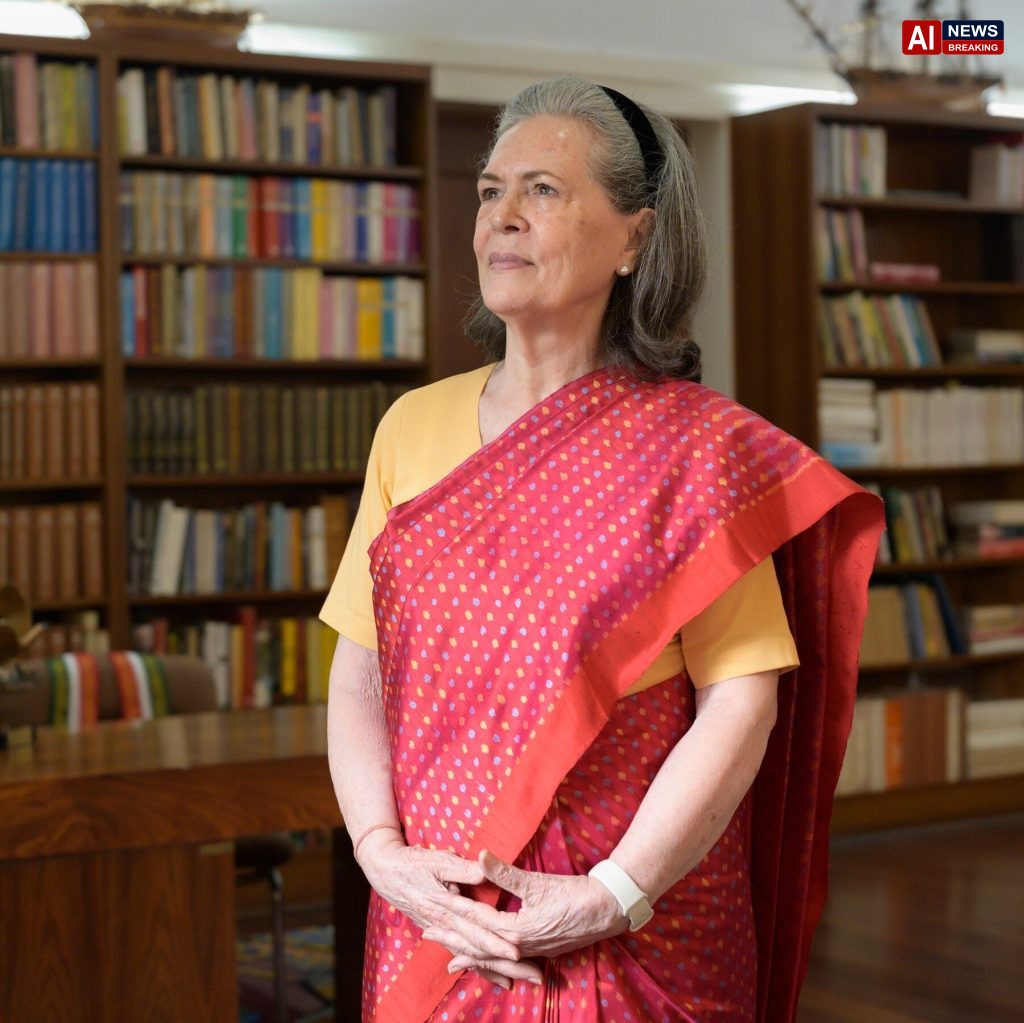
In Interview, Sonia Gandhi Recalls Love and Loss in India - AI News Breaking
interview sonia gandhi recalls:
Sonia Gandhi, the Italian‑born widow of former Prime Minister Rajiv Gandhi and matriarch of the Nehru‑Gandhi political dynasty, has opened up about the personal toll of public life in a newly published memoir and accompanying television interview. The 82‑year‑old former Congress president, who has been a dominant figure in Indian politics for more than three decades, reflected on the love that bound her to a family that became synonymous with the nation’s aspirations and tragedies, and on the stark reality of loss that has marked her journey since the 1980s.The memoir, titled “A Life in Service”, traces Gandhi’s arrival in India as a young linguist from Bellinzona, Switzerland, through her marriage to Rajiv Gandhi in 1968, and her gradual immersion into a political landscape defined by both idealism and violence. In the interview, recorded in Delhi’s historic Parliament House, Gandhi spoke candidly about the moment she first set foot in the country’s capital, describing the awe she felt at the sight of the iconic Rashtrapati Bhavan and the weight of the expectations that followed her name..
“I was a stranger in a new land, but I quickly realised that the Gandhi name carried a promise of service to the nation,” she said.Central to the narrative is the brutal assassination of Rajiv Gandhi in 1991, an event that Gandhi described as “the most devastating night of my life”. She recounted how the news broke while she was attending a party in Chennai, and how the shock reverberated through the corridors of power, altering the course of Indian politics. The memoir details how she was thrust into a leadership vacuum, forced to make swift decisions about the Congress party’s future while grappling with personal grief..
“I was asked to lead a party that had lost its torchbearer. The grief was personal, but the responsibility was national,” she said.Equally poignant are her reflections on the murder of her mother‑in‑law, Indira Gandhi, in 1984, an event that reshaped the nation’s political fabric and deepened the familial trauma that has haunted the Gandhi lineage. Gandhi recalled the day she learned of the former prime minister’s death, noting that the nation was plunged into turmoil and that the aftermath saw widespread communal violence..
“It was a period of unimaginable sorrow, and I still carry the memory of that night as a reminder of how fragile democracy can be,” she observed.While the memoir emphasizes loss, it also highlights Gandhi’s perseverance in rebuilding the Congress party after successive electoral setbacks. She detailed the strategic decisions that led to the 1998 formation of the United Progressive Alliance (UPA), a coalition that eventually returned the Congress to power in 2004 under her son, Rahul Gandhi’s leadership. The interview shed light on internal party dynamics, including her cautious approach to succession planning and the delicate balance she sought between honoring the legacy of the past and adapting to a changing electorate..
“We had to reinvent ourselves without losing the core values that the Nehru‑Gandhi family stood for,” she explained.Gandhi also addressed the criticism that has followed her tenure, particularly accusations of dynastic politics and allegations of centralised decision‑making. She acknowledged that the family name has both opened doors and erected barriers, noting that “people often question whether my leadership is a result of merit or lineage.” In response, she pointed to the party’s electoral victories in 2004 and 2009, and to policy initiatives such as the National Rural Employment Guarantee Act, as evidence of governance that resonated with ordinary citizens.The memoir does not shy away from personal anecdotes that humanise a figure often seen through a political lens. Gandhi recounted evenings spent with Rajiv listening to Western classical music, the shared love for poetry, and the simple pleasure of cooking traditional Italian dishes for her Indian relatives..
She also described the challenges of raising two children, Rahul and Priyanka, amid relentless media scrutiny, and the bittersweet experience of watching them navigate the political arena. “My role was never just as a politician; I was also a mother who wanted her children to grow up with a sense of purpose and humility,” she said.In the interview, Gandhi reflected on the evolving nature of Indian politics, remarking that the rise of social media and regional parties has transformed electoral campaigns. She expressed cautious optimism about the country’s democratic institutions, while warning against complacency..
“India’s strength lies in its diversity and its capacity to absorb dissent. We must protect the space for debate, even when it is uncomfortable,” she asserted.Analysts note that the timing of the memoir’s release, ahead of the upcoming general elections, could influence public discourse on the Congress party’s future. Some observers view the candidness of Gandhi’s recollections as an attempt to re‑establish a moral authority within a fragmented opposition..
Others suggest that the personal narrative may serve to humanise a figure whose public persona has often been the subject of polarising debate.Regardless of political calculations, Gandhi’s reflections provide a rare window into the personal dimensions of a life lived at the intersection of family, politics, and national destiny. Her account underscores how the Nehru‑Gandhi legacy continues to shape India’s political narrative, even as the country confronts new challenges. As the nation approaches another electoral cycle, the memoir may serve both as a historical testimony and as a reminder of the human cost behind the headlines that dominate Indian public life..
Sonia Gandhi’s new memoir and televised interview lay bare the personal grief and political pressures that have defined her three‑decade stewardship of the Congress party, from the assassinations of Rajiv and Indira Gandhi to the party’s resurgence under the UPA. She uses the candid recollections to argue that the Nehru‑Gandhi legacy remains a moral compass for India’s democracy even as the nation heads toward another election.
Sonia Gandhi’s memoir reminds us that a political dynasty is built on personal sacrifice, not just policy wins—her grief‑laden leadership shows how family wounds can both galvanise and fracture a party.
By candidly framing her struggles, she subtly shifts the narrative from “dynasty politics” to a






