
 Pakistan’s leaders hail first astronaut aboard Chinese craft: ‘Proud one of us has gone into space’
 British tourist travels 29 hours from Mumbai to Amritsar for ₹5,461, rates Indian Railways 10/10 | Viral video
 The Supreme Court will decide whether assault weapons bans violate the Second Amendment
 A Critic of Beijing Falls Short in Taiwan’s Key Mayoral Election
 EPA says no rise in contamination after Army detonates lead azide stockpile in Iowa
Israeli Political Leaders Decry ‘Jewish Terrorism’ After West Bank Attacks
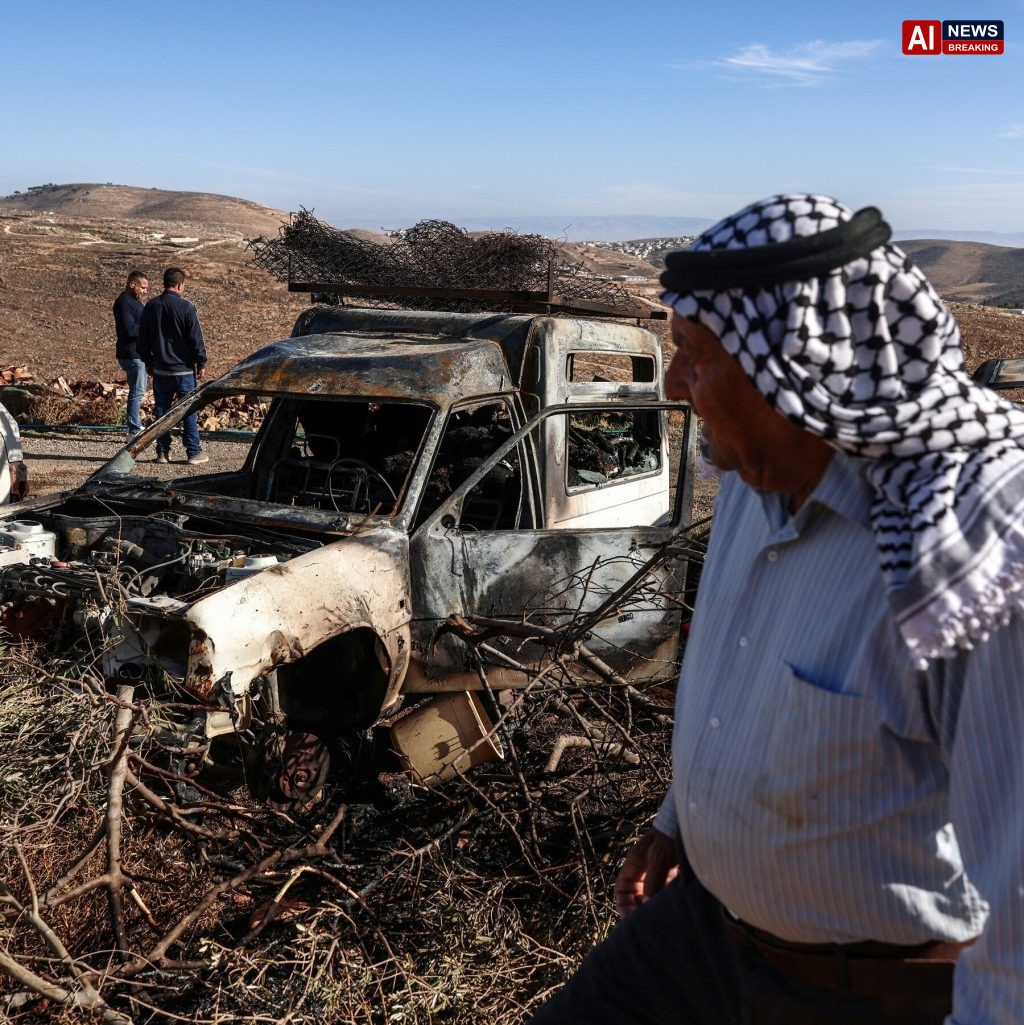
Israeli Political Leaders Decry ‘Jewish Terrorism’ After West Bank Attacks - AI News Breaking
Extremist settlers carried out a series of violent raids in Palestinian villages over the weekend, prompting Israeli political leaders to denounce the attacks as “Jewish terrorism” and to call for a robust response from the government. The incidents, which occurred in the West Bank towns of Salfit, Tubas and Qalqilya, involved armed groups entering homes, setting property ablaze and threatening residents, according to reports from local officials and eyewitnesses. The violence came amid a tense period of Israeli domestic politics, with opposition parties increasingly critical of Prime Minister Benjamin Netanyahu’s handling of security and settlement policies.In a televised press conference on Sunday evening, opposition leaders from the Labor Party and the Blue and White coalition called the raids a “terrorist campaign carried out by those who claim to be the defenders of Israel.” They described the settlers’ actions as “an affront to the rule of law and a direct challenge to the state’s commitment to human rights.” The leaders urged the government to deploy security forces to secure the affected villages and to investigate the perpetrators, insisting that any delays would erode public confidence and fuel further unrest..
“We cannot allow our people to be subjected to such violence under the guise of religious or nationalist rhetoric,” the opposition spokesperson said, echoing concerns that the attacks would deepen the divide between Israeli society and the Palestinian community.Netanyahu’s response to the outbreak of violence was a brief statement from his office, in which he praised the “brave defenders of the state” and denied that the attacks were directed at the Israeli population. He added that the Israeli military would “take the necessary measures to secure the borders and maintain peace.” The Prime Minister’s spokesperson also noted that the government had already increased the number of security checkpoints and patrols in the West Bank in anticipation of the upcoming elections. While the administration maintained that it had no direct link to the settlers, it also highlighted its plans to strengthen intelligence operations in the region to prevent future incidents.The attacks sparked a debate on the role of extremist settler groups within the broader Israeli settlement movement..
Analysts point out that while the Israeli government officially discourages violence against Palestinians, it has historically failed to take decisive action against settler militancy. The incidents came at a time when the settlement enterprise is under scrutiny both domestically and internationally, as the United Nations and various human rights organizations continue to condemn Israeli expansion in the West Bank as illegal under international law. In this context, the opposition’s denouncement of the attacks as “Jewish terrorism” is a significant departure from the more muted criticism that has traditionally characterized Israeli media coverage of settler violence.The violence also coincided with a surge in protests across Israel, as citizens gathered in Jerusalem’s Independence Hall to demand a “government that respects human rights and upholds the rule of law.” Protesters carried placards that read, “No to terrorism, no to apartheid, yes to peace.” The demonstrators demanded that the government take immediate steps to curb settler violence, including stronger legal repercussions for those who attack Palestinians..
Police presence was heightened in the city’s main streets, and the Interior Ministry announced a new policy to monitor extremist rhetoric on social media platforms that could incite violence.The Palestinian Authority, led by President Mahmoud Abbas, condemned the raids as “state-sponsored terror and a direct violation of the ceasefire agreements.” The Authority called for an international investigation into the incidents and urged the United Nations to intervene in order to prevent further escalation. In a statement released on the same day, Abbas called on the Israeli government to “immediately put an end to the policy of incitement and to stop allowing extremist elements to operate with impunity.” He also warned that continued attacks would lead to a “resurgence of armed resistance” across the West Bank, a scenario that both sides would likely find unacceptable.The Israeli Defense Forces (IDF) issued a statement saying that the military was “monitoring the situation closely” and that it had not yet deployed additional troops to the affected areas. The IDF’s spokesperson noted that the military’s priority was to “prevent the escalation of violence” and to “protect all civilians, regardless of their nationality or religion.” The statement was seen by many as an attempt to balance the need for security with the political sensitivities surrounding the settlement issue..
Critics, however, argued that the IDF’s lack of visible presence in the immediate aftermath of the attacks was a failure to uphold Israel’s security obligations and a signal of governmental indifference toward Palestinian victims.In the aftermath of the weekend’s violence, the Israeli Parliament held a special session to discuss the settlers’ role in the security dynamics of the West Bank. The session was marked by heated exchanges, with opposition members accusing the government of “turning a blind eye to the terror that is unfolding daily.” The ruling coalition, however, defended the status quo, arguing that the settlement policy was essential for national security and that the government had already implemented measures to reduce tensions. A joint committee was formed to review the existing legal framework governing settler activity, with a mandate to recommend changes that would strengthen accountability for violent conduct.The political fallout from the attacks extends beyond Israel’s borders, as neighboring Arab states have responded with cautionary statements..
Saudi Arabia’s foreign ministry expressed concern over “the increasing instability in the region” and urged all parties to pursue a peaceful resolution. Meanwhile, Turkey’s ambassador to Israel called for “concrete steps” to address the security concerns of both Israeli and Palestinian communities. The international community’s reaction underscores the delicate balance Israel must maintain between domestic security and the broader implications of its settlement policy on regional stability.As the political debate continues, many Israeli citizens remain uncertain about the future direction of the country’s settlement policy and the implications for its relationship with the Palestinians..
Some view the calls for a forceful response as a necessary step toward restoring order, while others see it as an escalation that risks further alienating the Palestinian population. The events of the past weekend have illuminated the deep fissures within Israeli society, highlighting the urgent need for a comprehensive strategy that addresses both security concerns and the rights of all communities living in the contested territories..
Updated: November 23, 2026





