Pond heron found dead in Coimbatore tests positive for avian influenza
 Pakistan’s leaders hail first astronaut aboard Chinese craft: ‘Proud one of us has gone into space’
 British tourist travels 29 hours from Mumbai to Amritsar for ₹5,461, rates Indian Railways 10/10 | Viral video
 The Supreme Court will decide whether assault weapons bans violate the Second Amendment
 A Critic of Beijing Falls Short in Taiwan’s Key Mayoral Election
Israel’s New Parliament Gathers With No Government in Sight
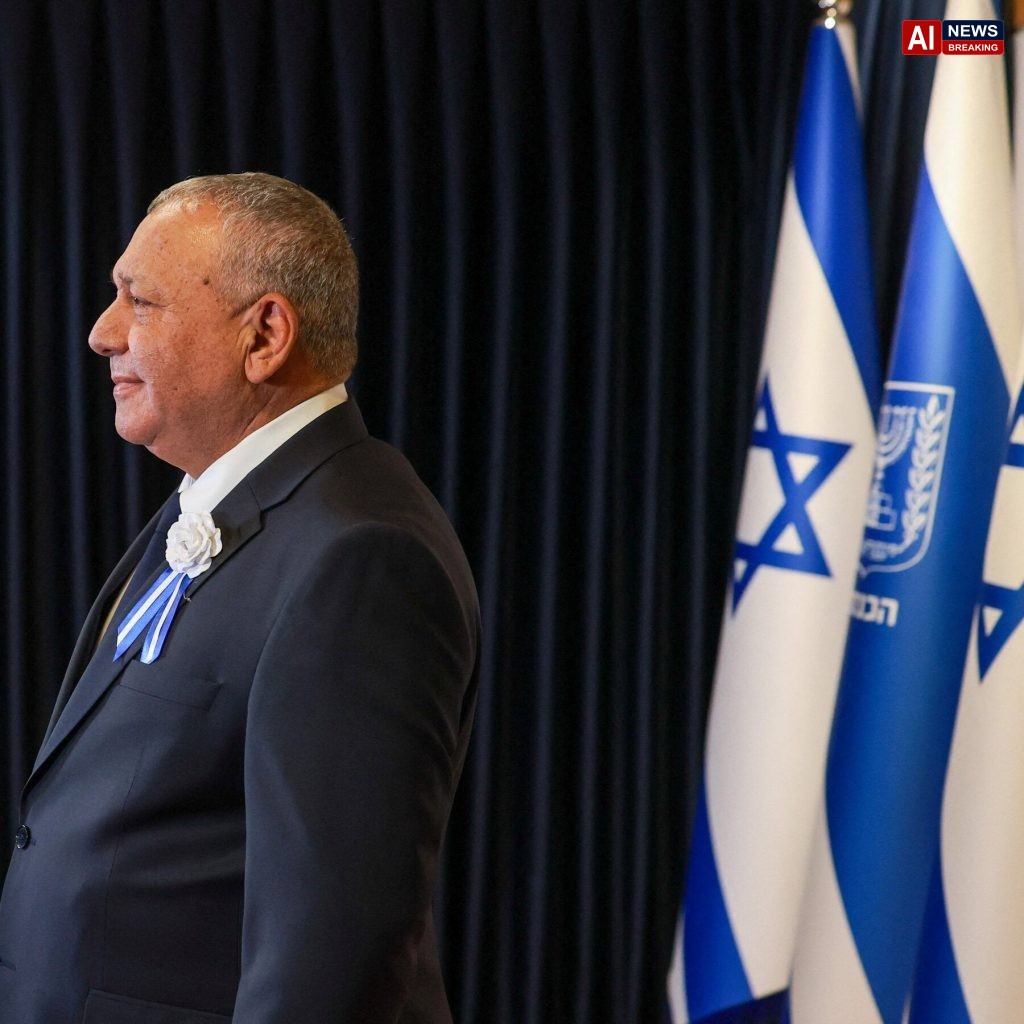
Israel’s New Parliament Gathers With No Government in Sight - AI News Breaking
israels parliament gathers government:
The newly elected members of Israel’s Knesset have convened for the first time on Sunday, a scene that carries the weight of a nation on the brink of significant political realignment. The 120‑member legislature, whose new composition was announced by the Interior Ministry on Monday, reflects a dramatic shift in the political landscape, with the opposition coalition led by Gadi Eisenkot now holding a majority. Yet, as the parliament opens its doors, no government has been formally formed, leaving the country in a state of suspended authority while coalition talks unfold behind closed doors.The electoral results, which were released at 6.30 a.m..
local time, marked a stark departure from the previous arrangement. The governing bloc that had dominated politics for nearly two years was reduced to a minority, winning only 44 seats. In contrast, the opposition coalition—comprising several right‑wing and religious parties—secured 48 seats, a narrow but decisive advantage that gives it the power to elect the new Prime Minister..
The remaining 28 seats are held by the smaller, centrist parties that will play a decisive role in forming the new government.The Knesset’s opening session, held on the steps of the historic parliament building in Jerusalem, was attended by a mix of seasoned politicians and newcomers. Among them were a record number of first‑time representatives, many of whom come from diverse backgrounds and represent a younger generation of Israeli politics. Their presence underscores the sense that the nation is looking for fresh voices and new solutions to its most pressing challenges, from the economy to security and beyond.In a departure from previous sessions, the speaker of the Knesset, Yuli Edelstein, introduced the new members with an emphasis on procedural neutrality..
He reminded them that the next few days would be dominated by the process of forming a cabinet, a task that, according to Israeli law, must be undertaken by the person who can command a majority in the Knesset. The speaker’s remarks were a quiet acknowledgement that while the opposition holds a numerical advantage, the path to forming a stable coalition remains fraught with negotiation and compromise.Eisenkot, the leader of the opposition, has been a central figure in the post‑war political debate. His party, which draws significant support from the ultra‑orthodox community, has long advocated for a more conservative approach to national security and a cautious stance on settlement expansion..
His new role as the presumptive prime minister places him at the centre of a delicate balancing act: he must unite a coalition that spans from hard‑line religious parties to more moderate right‑wing elements, while also addressing the concerns of the secular electorate.The coalition talks are already in motion. Sources familiar with the negotiations suggest that the key points of contention revolve around the size and role of the military budget, the future of the West Bank settlements, and the approach to the Israeli-Palestinian peace process. The new government will need to secure the support of several smaller parties that are willing to negotiate on these issues, but whose participation is contingent upon guarantees that will preserve the integrity of the state’s democratic institutions.While the opposition holds a majority, the new government will still require the approval of the President, who will formally ask a candidate to form a cabinet..
The President’s decision will be guided not only by the numerical majority but also by the stability of the coalition. In the event that a coalition cannot be agreed upon within a set period, the Knesset may be dissolved, prompting another election and potentially a return to the status quo.The economic implications of this political uncertainty are already being felt. The Israeli Shekel fell in the early hours of the day, reflecting market uncertainty about the new government’s fiscal policies..
Analysts warn that prolonged negotiation could dampen investor confidence, affecting everything from foreign investment to the cost of borrowing. Meanwhile, the public’s patience is waning, with protests in several cities calling for decisive action and an end to what they perceive as a period of political paralysis.The international community is watching closely. The United States, a key ally, has signaled its readiness to support a stable coalition that respects democratic norms and the rule of law..
European leaders have also called for a swift resolution, emphasizing the importance of continuity in Israel’s security policy, especially in light of recent tensions in the region.As the day progressed, a sense of cautious optimism began to emerge among the Knesset members. Despite the absence of a formal government, the collective focus on coalition building hinted at a willingness to move beyond partisan politics. In interviews, several lawmakers spoke about the need for “a government that represents all Israelis,” a sentiment that may resonate with a public weary of political gridlock.The coming days will test the resilience of Israel’s parliamentary system..
The opposition’s majority provides a clear mandate, yet the fragmented nature of the parties involved means that compromise will be essential. Should the coalition succeed, it will mark a new chapter in Israeli politics—one that could reshape policy priorities, redefine the balance between religious and secular interests, and potentially alter the country’s stance on regional affairs. Should negotiations stall, the risk of another election looms, a prospect that many fear will further erode public confidence in the political process..
Updated: November 10, 2026
Insight: The opposition’s narrow majority signals a decisive shift, but the fragmented coalition means any new cabinet will be a patchwork that could either stabilize or further fracture Israeli politics. Investors already feel the tremors; a swift, inclusive government will be the only antidote to eroding confidence and fiscal uncertainty.