
 Pond heron found dead in Coimbatore tests positive for avian influenza
 Pakistan’s leaders hail first astronaut aboard Chinese craft: ‘Proud one of us has gone into space’
 British tourist travels 29 hours from Mumbai to Amritsar for ₹5,461, rates Indian Railways 10/10 | Viral video
 The Supreme Court will decide whether assault weapons bans violate the Second Amendment
 A Critic of Beijing Falls Short in Taiwan’s Key Mayoral Election
Karnataka Minister Eshwar Khandre asks officials to blacklist Larsen & Toubro for ‘delaying’ works
Rural Development Minister Eshwar Khandre has asked Karnataka’s Water Resources, Public Works and Procurement departments to place L&T on a blacklist after the firm failed to meet timelines on three flagship drinking‑water schemes, prompting a clash between accountability demands and concerns over project disruption.
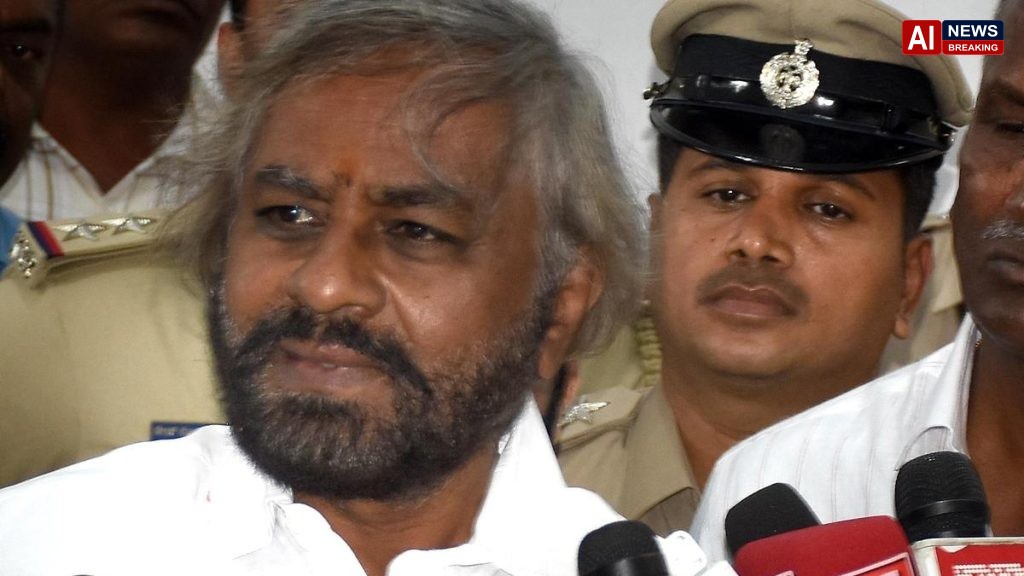
Karnataka Minister Eshwar Khandre asks officials to blacklist Larsen & Toubro for ‘delaying’ works - AI News Breaking
Rural Development and Panchayat Raj Minister Eshwar Khandre has formally instructed senior officials of the Karnataka state government to place Larsen & Toubro Limited (L&T) on a blacklist, citing what he described as “unacceptable delays” in the execution of several drinking‑water schemes across the state. The directive, issued on Monday, was communicated through an official circular to the Water Resources Department, the Public Works Department and the Karnataka State Procurement Corporation, and it calls for an immediate review of all pending contracts with the multinational engineering firm. Khandre’s move comes after a series of complaints from local panchayats and community groups that the projects, some of which were launched under the state’s ambitious “Jal Jeevan” program, have failed to meet scheduled milestones.The controversy centres on three flagship projects in the districts of Dharwad, Raichur and Bellary, where L&T was awarded contracts in 2021 to construct gravity‑fed pipelines, overhead storage tanks and ancillary filtration units intended to serve an estimated 2.4 million residents..
According to the minister’s statement, the original timelines—set at 24 months for completion—have been breached by more than eight months, with only 58 percent of the contracted work reportedly finished. Khandre argued that such lag not only undermines the state’s commitment to provide safe drinking water but also inflates costs, as prolonged construction periods increase labor and material expenses.L&T, which has a long‑standing presence in Karnataka’s infrastructure sector, responded to the allegations through a press release on Tuesday, denying any “deliberate” slowdown. The company attributed the setbacks to a combination of factors beyond its control, including unexpected monsoon‑related disruptions, delays in the supply of critical pipe‑fittings due to global shortages, and pending clearances from the Forest Department for certain alignments..
In its statement, L&T’s regional director for South India, Anil Deshmukh, pledged to expedite remaining work and offered to submit a revised project schedule within ten days of the minister’s request. The firm also emphasized its “zero‑tolerance” policy towards contractual breaches and said it would cooperate fully with any audit ordered by the state.The Karnataka government has not yet disclosed whether it will initiate a formal inquiry or an independent audit of the projects in question. However, the minister’s order to blacklist L&T signals a willingness to invoke the provisions of the Karnataka Public Procurement Act, which allows the state to bar firms from future tenders for a period ranging from one to five years if they are found guilty of “gross negligence” or “willful default.” Such a sanction would have far‑reaching implications for L&T, whose portfolio in the state includes not only water supply schemes but also highway construction, airport expansion and renewable‑energy installations.Industry analysts note that while blacklisting is a severe step, it is not unprecedented in India’s procurement landscape..
The Competition Commission of India has, in recent years, highlighted the need for “fair play” in public contracts, urging state governments to penalise firms that repeatedly miss deadlines or compromise on quality. Nonetheless, experts caution that punitive measures must be balanced against the risk of deterring reputable contractors from bidding on large‑scale public works, especially in a sector where technical expertise and financial capacity are scarce. “A blanket ban could backfire if not underpinned by a transparent, evidence‑based process,” said Dr..
Meera Singh, a senior fellow at the Centre for Policy Research in New Delhi.Local residents, many of whom have been waiting for reliable tap water for years, expressed mixed reactions to the minister’s announcement. In Dharwad, a spokesperson for the community water users’ association, Ramesh Bhat, welcomed the move, stating that “the people have been living with intermittent supply and contaminated sources for too long; accountability is essential.” Conversely, in Bellary, where the project is near completion, village headwoman Sushma Rao warned that “if the contract is abruptly terminated, the unfinished works could stall further, leaving us with half‑built infrastructure.” Such divergent views underscore the delicate balance policymakers must strike between enforcing contractual compliance and ensuring continuity of essential services.The political backdrop to the controversy adds another layer of complexity. Karnataka’s ruling coalition, led by the Bharatiya Janata Party, has faced criticism from opposition parties over alleged mismanagement of water resources, especially in drought‑prone regions..
The opposition has seized on the L&T episode to demand greater transparency in the awarding of contracts, arguing that “favoured firms often enjoy unchecked access to public funds.” In response, the minister emphasized that the blacklist recommendation is “procedurally sound” and rooted in documented performance gaps, not political considerations.Legal experts point out that any decision to blacklist L&T will likely be subject to judicial scrutiny. Under the Indian Contract Act and the Arbitration and Conciliation Act, contractors have the right to contest punitive actions if they believe the allegations are unfounded or the process lacks due‑process safeguards. L&T’s legal counsel, senior advocate Arvind Mehta, indicated that the company is prepared to “mount a robust defence” and will seek “interim relief” to prevent immediate exclusion from ongoing tenders while the matter is adjudicated.Meanwhile, the Karnataka Water Resources Department has initiated an internal review to assess the extent of the delays and to identify bottlenecks in project execution..
A senior engineer, Sunil Kumar, disclosed that preliminary findings suggest “coordination lapses between the design and execution teams” and that “some site‑specific challenges were not anticipated during the tendering phase.” The department plans to submit a comprehensive report to the minister by the end of the month, which could form the basis for either a remedial action plan or the enforcement of the blacklist.As the situation unfolds, the broader implications for public‑private partnerships in India remain uncertain. The L&T episode serves as a reminder that while private sector participation can accelerate infrastructure development, robust monitoring mechanisms are essential to safeguard public interest. Whether Karnataka’s decisive stance will lead to improved project delivery or unintended setbacks in water provision will depend on how quickly the government can resolve the contractual dispute, ensure continuity of essential services, and maintain confidence among both contractors and the citizens they serve..
Updated: November 11, 2026
Karnataka’s swift move to blacklist L&T signals a new political calculus: penalising delays is being weaponised to restore voter confidence in water delivery, even at the risk of alienating the few firms capable of handling such large‑scale projects.
If the sanction proceeds without a transparent






