
 Tamil Nadu CM orders Chennai flood‑prevention review.
  India and Bangladesh work
  Shikhar Mohan in India A squad for last two four-dayers against New Zealand A
  Belagavi police arrest two MES leaders.
  Arms Race Intensifies in Korea as the North Is Emboldened by Russia Alliance
 Major US firms funding groups challenging Voting Rights Act
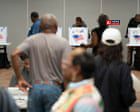
Top US firms that backed Voting Rights Act donate to groups working to undermine it - AI News Breaking
major firms funding groups:
The landscape of American electoral integrity has become increasingly complex, revealing a stark contradiction between corporate public stances and private financial behaviors. A significant number of leading United States corporations, which previously endorsed the urgent need to protect and expand voting rights, are now providing substantial financial support to political organizations actively engaged in efforts to dilute those same protections. This discrepancy has drawn sharp criticism from civil rights advocates and ethical analysts, who argue that the internal logic of these corporate strategies is fundamentally flawed..
The Voting Rights Act of 1965, a landmark piece of federal legislation that prohibits racial discrimination in voting, remains a cornerstone of American democracy. However, its enforcement mechanisms have been repeatedly challenged in recent years, leading to a surge in legislative and litigation efforts aimed at curbing its scope.The revelation of this contradictory behavior stems from new data shared with journalists by the Center for Political Accountability, a nonpartisan watchdog organization dedicated to monitoring political spending and financial disclosures. Their analysis indicates that more than a dozen major companies, including prominent names such as Airbnb, DoorDash, Target, and Zillow, signed a bipartisan letter in 2021 urging Congress to strengthen the Voting Rights Act..
At the time, these corporations framed their support as a moral imperative and a business necessity, arguing that robust voting rights ensure fair markets and social stability. Yet, according to the watchdog’s findings, these same entities have continued to contribute financially to groups that are working to undermine the legislation they once championed.The financial channels through which these contributions flow are often opaque, relying on the structure of 527 organizations, which are tax-exempt groups that can raise unlimited funds for political advocacy but are prohibited from explicitly endorsing candidates. These organizations have become powerful forces in state-level elections, particularly in their support for Republican Attorneys General..
These legal officials play a critical role in defending state election laws and are frequently at the forefront of legal battles challenging federal voting protections. By funneling money to groups that support these attorneys, corporations are indirectly financing the legal infrastructure that seeks to weaken the Voting Rights Act.The Center for Political Accountability’s research highlights the specific mechanisms of this influence. The data provided exclusively to The Guardian shows that the contributions are not always direct donations to candidates, but rather payments to expenditure committees and super PACs that run advertisements and fund legal defense funds..
This indirect method allows corporations to maintain a degree of plausible deniability, separating their public relations departments from their political action committees. However, the net effect is clear: the financial resources provided by these companies are enabling the very political actors who are drafting legislation designed to restrict access to the ballot box.Airbnb, for instance, has been vocal in its public communications about diversity, equity, and inclusion, positioning itself as a socially responsible entity. Its signing of the 2021 letter was widely reported as a commitment to civil rights..
Yet, the financial records show contributions to groups that have lobbied against automatic voter registration and early voting measures, both of which are considered essential components of a robust Voting Rights Act framework. This duality creates a confusing message for employees, consumers, and investors who may believe in the company’s stated values. The dissonance between public rhetoric and private funding raises serious questions about the sincerity of corporate social responsibility claims.Similarly, Target has long marketed itself as a supporter of progressive social causes..
Its involvement in the 2021 letter was consistent with its brand identity. However, the financial data reveals contributions to political action committees that support candidates who have introduced bills to impose stricter voter ID laws and reduce polling places in minority communities. These legislative efforts have been described by voting rights experts as modern-day Jim Crow laws, designed to suppress turnout among Democratic and minority voters..
The financial backing of such initiatives by a company that publicly advocates for inclusion is seen by critics as a betrayal of its core principles.The role of the Republican Attorneys General Association, or RAGA, is central to understanding this dynamic. RAGA is a group that coordinates legal strategies for Republican state attorneys general. In recent years, it has become a primary vehicle for challenging the Voting Rights Act in federal courts..
By supporting RAGA and affiliated 527 groups, corporations are contributing to a coordinated legal strategy that seeks to overturn precedents set by decades of civil rights litigation. The financial support helps cover the costs of hiring top-tier legal teams, funding research, and launching public relations campaigns that frame voting rights protections as government overreach.DoorDash and Zillow, two tech giants that have grown rapidly in the digital economy, are also implicated in this trend. Their contributions to political groups that undermine voting rights highlight the growing influence of the technology sector in American politics..
Unlike traditional industries, tech companies have often avoided direct political engagement, preferring to remain above the fray. However, as they face increased regulatory scrutiny, they have become more active in political financing. The decision to support groups that challenge the Voting Rights Act may be seen as a strategic move to cultivate relationships with conservative lawmakers who are generally less likely to impose strict regulations on technology platforms.The implications of these financial contributions extend beyond abstract policy debates..
They have tangible effects on the ability of millions of Americans to exercise their right to vote. Restrictions on mail-in voting, the closure of polling places in urban and rural communities, and the implementation of strict ID requirements all disproportionately affect low-income voters, students, and people of color. By funding the groups that promote these measures, corporations are actively participating in the restructuring of the American electoral system..
This restructuring often results in lower voter turnout among groups that traditionally support democratic candidates, thereby influencing election outcomes.Civil rights organizations have expressed outrage at these findings, calling for greater transparency in corporate political spending. They argue that consumers have a right to know how their favorite brands are influencing the political process. The contradiction between public support for voting rights and private funding for their erosion undermines trust in corporate institutions..
It suggests that business interests, rather than moral considerations, may be the primary driver of corporate political behavior. This perception has led to increased pressure on companies to align their political spending with their public statements.The Center for Political Accountability emphasizes that the data provided is complete and verifiable. The organization’s researchers meticulously tracked millions of dollars in political spending, linking corporate contributions to specific political outcomes..
Their work underscores the importance of monitoring political finance in an era where money plays an increasingly dominant role in shaping public policy. The findings serve as a warning to corporations that wish to maintain a reputation for integrity. In a democratic society, transparency and consistency are essential for building trust with the public.As the election cycle progresses, the issue of corporate political spending is likely to remain a contentious topic..
Voters and activists are becoming more adept at using data to hold companies accountable for their political actions. The revelation that major firms undermine the Voting Rights Act through hidden financial channels has added fuel to the fire..
Updated: August 24, 2026
This isn’t just political posturing but a calculated bet that friendly lawmakers matter more than public credibility. By funding the erosion of the very rights they champion, these brands expose their values as marketing, not morality.