Pakistan’s leaders hail first astronaut aboard Chinese craft: ‘Proud one of us has gone into space’
 British tourist travels 29 hours from Mumbai to Amritsar for ₹5,461, rates Indian Railways 10/10 | Viral video
 The Supreme Court will decide whether assault weapons bans violate the Second Amendment
 A Critic of Beijing Falls Short in Taiwan’s Key Mayoral Election
 EPA says no rise in contamination after Army detonates lead azide stockpile in Iowa
Miami embraces its Vice City alter ego, seizing buzz around ‘GTA VI’ release
**
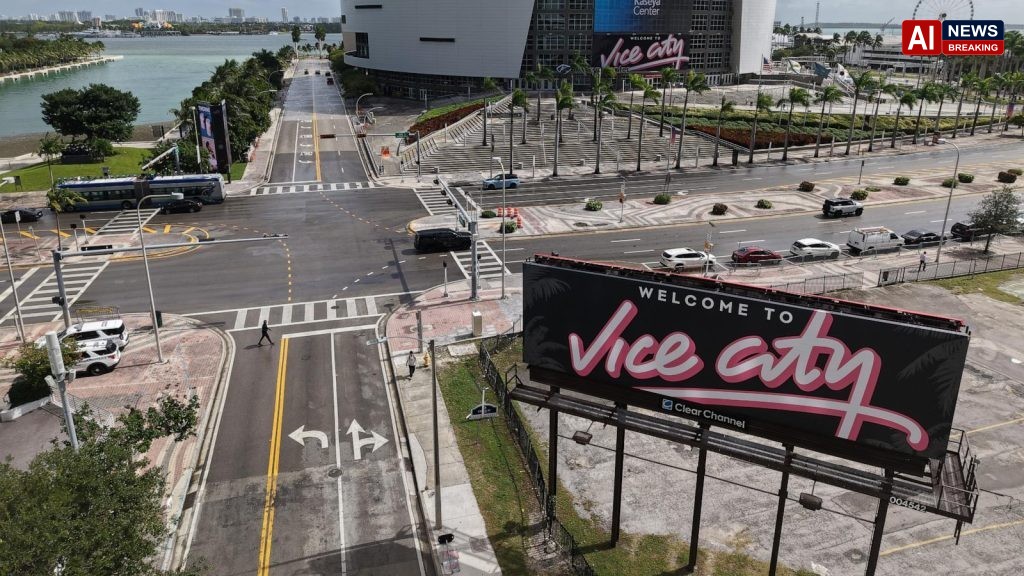
Miami embraces its Vice City alter ego, seizing buzz around ‘GTA VI’ release - AI News Breaking
miami embraces vice city:
Miami is once again finding itself in the spotlight of a virtual world, as Rockstar Games prepares to launch the next instalment of its Grand Grand Theft Auto franchise, widely expected to be set in a meticulously rendered version of the city that inspired its iconic 2002 title Vice City. The buzz surrounding the release has prompted a wave of activity across the South‑Florida metropolis, from tourism boards to local businesses, each eager to harness the cultural and economic ripple effects that a major video‑game launch can generate.The city’s relationship with the franchise is not new. When Vice City first hit shelves, its neon‑lit streets, pastel‑washed architecture and sun‑splashed beaches resonated with gamers worldwide, cementing Miami’s image as a playground of excess and ambition..
That fictionalised version, while heavily stylised, borrowed heavily from real‑world landmarks – the Ocean Drive stretch, the Art Deco Historic District and the bustling downtown core – and in turn fed back into Miami’s own branding, reinforcing its reputation as a hub of nightlife, glamour and, at times, controversy.Industry analysts predict that the upcoming release could surpass those earlier cultural impacts, given the exponential growth of the gaming market and the franchise’s proven track record of breaking sales records. NPD Group data shows that Grand Theft Auto titles consistently dominate weekly sales charts, with the most recent release, GTA V, still moving millions of units a year after launch. If the new game follows this trajectory, the associated media coverage could translate into a substantial surge in interest in Miami as a travel destination, particularly among younger demographics who consume entertainment through digital platforms.City officials have already begun to position Miami to benefit from this attention..
The Greater Miami Convention & Visitors Bureau has released a series of promotional materials that subtly reference the game’s aesthetic, highlighting “sun‑soaked streets, iconic architecture and a vibrant nightlife” without overtly naming the franchise. Meanwhile, the Miami‑Dade County tourism board has engaged with local influencers to create content that juxtaposes real‑world locations with their in‑game counterparts, aiming to drive foot traffic to sites that gamers will recognise from the virtual world.Local businesses are also preparing for what they hope will be a boon in sales. Hotels along Collins Avenue report an uptick in reservation inquiries that mention the game, while boutique retailers in the Wynwood Arts District have begun stocking merchandise that blends Miami’s street art vibe with subtle nods to Grand Theft Auto’s visual language..
Even the city’s famed food trucks are experimenting with menu items named after in‑game locations, such as “Los Santos Tacos” and “Vice City Smoothies,” hoping to capture the imagination of both residents and tourists.However, the enthusiasm is tempered by concerns over the franchise’s long‑standing reputation for glorifying violence, crime and illicit activities. Community leaders and advocacy groups have voiced apprehensions that a heightened focus on a game that centres on criminal enterprises could cast a shadow over the city’s image. The Miami Police Department, while acknowledging the economic potential, has reiterated its commitment to public safety and urged residents to separate the fictional narrative from the realities of everyday life in the city.Academic circles are watching the phenomenon with interest, noting the interplay between digital media and urban branding..
Dr Elena Morales, a professor of media studies at Florida International University, observes that “the symbiotic relationship between a city’s cultural cachet and its representation in popular media can amplify both tourism and civic identity, but it also risks oversimplifying complex social dynamics.” She adds that Miami’s embrace of its virtual counterpart could serve as a case study in how municipalities navigate the fine line between capitalising on pop‑culture trends and preserving authentic community narratives.The economic stakes extend beyond tourism. The video‑game industry itself has become a significant contributor to the broader creative economy, with ancillary sectors such as streaming, esports and merchandising experiencing rapid growth. Miami’s burgeoning tech scene, already buoyed by recent investments in blockchain and digital media startups, stands to attract further venture capital if the city can position itself as a hub for game‑related innovation..
City Councilmember Carlos Rodriguez has hinted at the possibility of incentives for developers who choose to set future projects in Miami, echoing similar initiatives in other U.S. cities that have successfully leveraged entertainment franchises to foster local tech ecosystems.Yet, not all residents share the optimism. Some community organisations worry that the focus on a glamorous, hyper‑stylised version of Miami may eclipse the city’s ongoing challenges, including affordable housing shortages, rising inequality and the impacts of climate change..
In a recent town hall, a coalition of neighbourhood groups called for a balanced approach, urging the city to allocate any increased tax revenue from tourism and related activities toward social programmes that address these pressing issues.As the launch date approaches, the city’s streets are already humming with a mixture of anticipation and caution. Retail workers report a subtle shift in the atmosphere of storefronts, with customers discussing the game’s trailers and speculating about the next virtual landmark to be explored. Meanwhile, cultural institutions such as the Miami Art Museum are planning exhibitions that examine the intersection of video games and urban identity, aiming to provide a nuanced perspective that goes beyond mere hype.In the end, Miami’s embrace of its Vice City alter ego illustrates a broader trend in which real‑world locales and virtual worlds increasingly intersect, each shaping the other’s narrative..
Whether the forthcoming release will translate into lasting economic benefit or merely a fleeting surge of attention remains to be seen. What is clear, however, is that the city’s leaders, businesses and citizens will need to navigate the opportunities and challenges presented by this digital mirror, ensuring that the reflection it offers serves the diverse needs of Miami’s vibrant and complex community..
Updated: November 17, 2026
Miami’s bid to turn a pixelated fantasy into real‑world cash shows how cities are now courting digital fame as fiercely as tourism boards, turning virtual allure into a lever for venture capital and tech‑cluster growth.
Yet the glitter of the game risks eclipsing Miami’s deeper crises, forcing policymakers to