Pakistan’s leaders hail first astronaut aboard Chinese craft: ‘Proud one of us has gone into space’
 British tourist travels 29 hours from Mumbai to Amritsar for ₹5,461, rates Indian Railways 10/10 | Viral video
 The Supreme Court will decide whether assault weapons bans violate the Second Amendment
 A Critic of Beijing Falls Short in Taiwan’s Key Mayoral Election
 EPA says no rise in contamination after Army detonates lead azide stockpile in Iowa
Leaked Records Show Deutsche Bank Courting Russian Oligarchs
Internal emails from early 2023 show Deutsche Bank’s wealth‑management analysts strategizing ways to retain a “large Russian oligarch client population” even as Western sanctions tightened, prompting fresh regulator scrutiny and raising questions about the bank’s compliance framework.
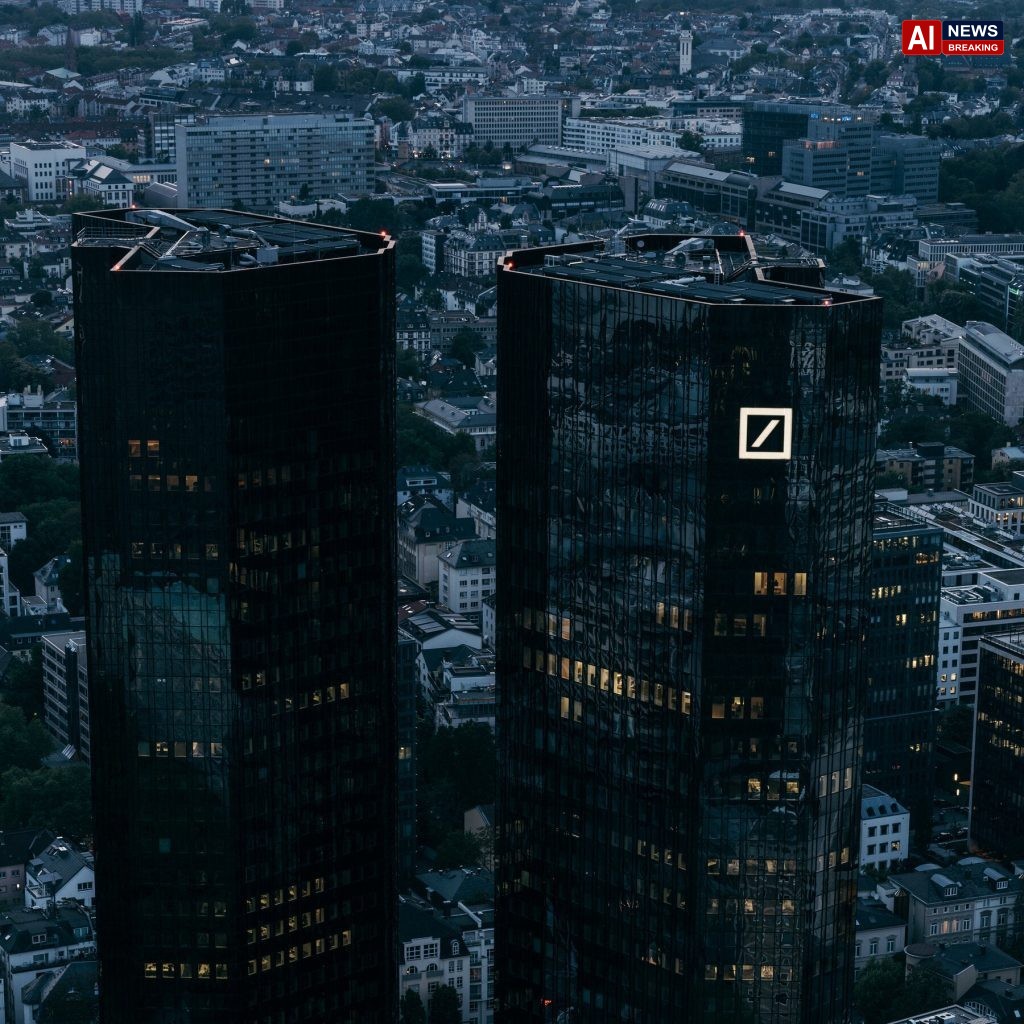
Leaked Records Show Deutsche Bank Courting Russian Oligarchs - AI News Breaking
Deutsche Bank has found itself at the centre of a fresh controversy after internal documents obtained by a newspaper reveal that the German lender was actively courting Russian oligarchs even as the prospect of new sanctions loomed. The records, which date from the first half of 2023, show that senior analysts at the bank were discussing strategies to retain and expand a “large Russian oligarch client population” while anticipating a tightening of Western financial restrictions on wealthy individuals linked to Moscow. The correspondence, obtained through a leak to the press, has prompted renewed scrutiny of the bank’s compliance practices and its exposure to politically persons (PEPs) in Russia.The emails and briefing notes indicate that Deutsche Bank’s wealth‑management division considered a range of measures to mitigate the risk of losing high‑net‑worth Russian clients..
One analyst wrote, “As you know we have a large Russian oligarchs client population, and we need to think about how we can protect our revenue streams while staying within the bounds of existing sanctions.” The language suggests a proactive approach to navigating the regulatory environment, rather than a purely defensive posture. The documents also reference internal risk‑assessment models that graded clients based on their perceived exposure to sanctions, with higher‑scoring individuals earmarked for additional due‑diligence checks.The timing of the leaked material coincides with a wave of sanctions announced by the United States, the European Union and the United Kingdom in response to Russia’s ongoing military activities in Ukraine. Those measures have targeted a swathe of Russian banks, energy firms and individuals deemed to be close to the Kremlin..
In parallel, Western financial institutions have been pressured to tighten their anti‑money‑laundering (AML) controls and to sever ties with clients who could be implicated in illicit activity. Deutsche Bank, which has previously been fined for AML failures, faced a €10 million penalty in 2022 for weaknesses in its monitoring of high‑risk customers.Bank officials have responded to the revelations by emphasizing the robustness of their compliance framework. In a statement released on Tuesday, Deutsche Bank’s head of global compliance said the bank “continues to apply rigorous due‑diligence procedures and adheres to all applicable sanctions regimes.” The spokesperson added that the bank had “already taken decisive steps to terminate relationships with clients who fail to meet our standards” and that the internal discussions reflected “a legitimate business analysis of how to manage legitimate client relationships within a rapidly evolving regulatory landscape.” No comment was forthcoming from the bank’s wealth‑management division regarding the specific emails.Regulators in Germany and across the EU have signalled that they will examine the bank’s handling of Russian clients more closely..
The Federal Financial Supervisory Authority (BaFin) announced that it would launch a supervisory review of Deutsche Bank’s AML controls, focusing on its processes for identifying and managing politically persons. In a separate statement, the European Central Bank warned that “any institution that fails to adequately address the heightened sanctions risk could face further supervisory measures.” The review comes as other major banks, including HSBC and Barclays, have already disclosed the closure of accounts belonging to Russian oligarchs and the imposition of stricter onboarding checks.Industry analysts say the episode underscores the broader dilemma facing Western banks that have built significant revenue streams from Russian wealth. “The profitability of Russian private‑banking business has been attractive, but it comes with heightened compliance risk,” noted a senior analyst at a financial‑services consultancy..
“When sanctions regimes shift, banks are forced to make rapid decisions that can affect both their bottom line and their reputational standing.” The leaked documents suggest that Deutsche Bank was weighing those trade‑offs at a time when the regulatory climate was becoming increasingly unforgiving.The issue also about the effectiveness of existing sanctions in curbing the flow of capital to individuals with close ties to the Russian state. Critics argue that while asset freezes and travel bans target high‑profile figures, sophisticated wealth‑management firms can sometimes navigate loopholes by re‑routing investments through subsidiaries or by offering services that fall outside the strict definition of “banking.” Human‑rights groups have called for greater transparency in how banks assess the political affiliations of their clients, urging regulators to tighten the definition of “beneficial owner” to close potential gaps.Deutsche Bank’s shareholders have expressed concern over the possible impact on the bank’s reputation and financial performance. In a recent investor call, the chief financial officer warned that “any material exposure to sanctioned entities could result in write‑downs, fines or loss of business,” and pledged to keep the board informed of any developments..
Market analysts noted that the bank’s shares have been under pressure, falling roughly 5 percent since the leak was reported, reflecting investor wariness about potential legal and regulatory fallout.The bank’s history with Russian clients is not new. Following the annexation of Crimea in 2014, Deutsche Bank faced criticism for maintaining ties to Russian corporations and individuals that were later sanctioned. At that time, the bank was fined by BaFin for inadequate monitoring, prompting a revamp of its compliance procedures..
However, the new documents suggest that despite previous setbacks, the institution continued to pursue the segment as a strategic priority, highlighting the persistent allure of high‑net‑worth Russian capital for global banks.As the investigation unfolds, the focus will likely turn to whether Deutsche Bank’s internal risk assessments complied with both domestic and international sanction regimes, and whether any breaches can be demonstrated. If regulators determine that the bank facilitated prohibited transactions or failed to act on red‑flag information, it could face further fines, restrictions on its operations, or even a ban on providing services to certain Russian individuals. For now, the bank’s leadership maintains that it is cooperating fully with supervisory authorities and that its compliance frameworks are being continuously strengthened to meet the evolving sanctions environment..
The episode serves as a stark reminder of the tightrope that financial institutions walk when balancing lucrative client relationships against the imperatives of global security and regulatory compliance..
Updated: November 17, 2026
Leaked internal emails show Deutsche Bank’s wealth‑management team was devising ways to retain and expand its Russian oligarch clientele even as sanctions tightened, prompting regulators to scrutinise its AML and PEP controls. The bank insists its compliance framework remains robust, while investors and watchdogs warn the strategy could expose it to fines and reputational damage.
Insight: Deutsche Bank’s willingness to engineer “sanction‑proof” pathways for Russian oligarchs signals that profit motives still outweigh the reputational risk calculus, foreshadowing tougher regulator crackdowns that could cripple its wealth‑management unit.
If the bank’s internal risk scores become de‑facto sanction‑evasion blueprints, it may set a precedent that forces the entire Euro‑zone banking elite to abandon the high‑yield but politically toxic Russian client tier altogether.