Pakistan’s leaders hail first astronaut aboard Chinese craft: ‘Proud one of us has gone into space’
 British tourist travels 29 hours from Mumbai to Amritsar for ₹5,461, rates Indian Railways 10/10 | Viral video
 The Supreme Court will decide whether assault weapons bans violate the Second Amendment
 A Critic of Beijing Falls Short in Taiwan’s Key Mayoral Election
 EPA says no rise in contamination after Army detonates lead azide stockpile in Iowa
Microsoft’s Global Outage and Fixes: What We Know
**
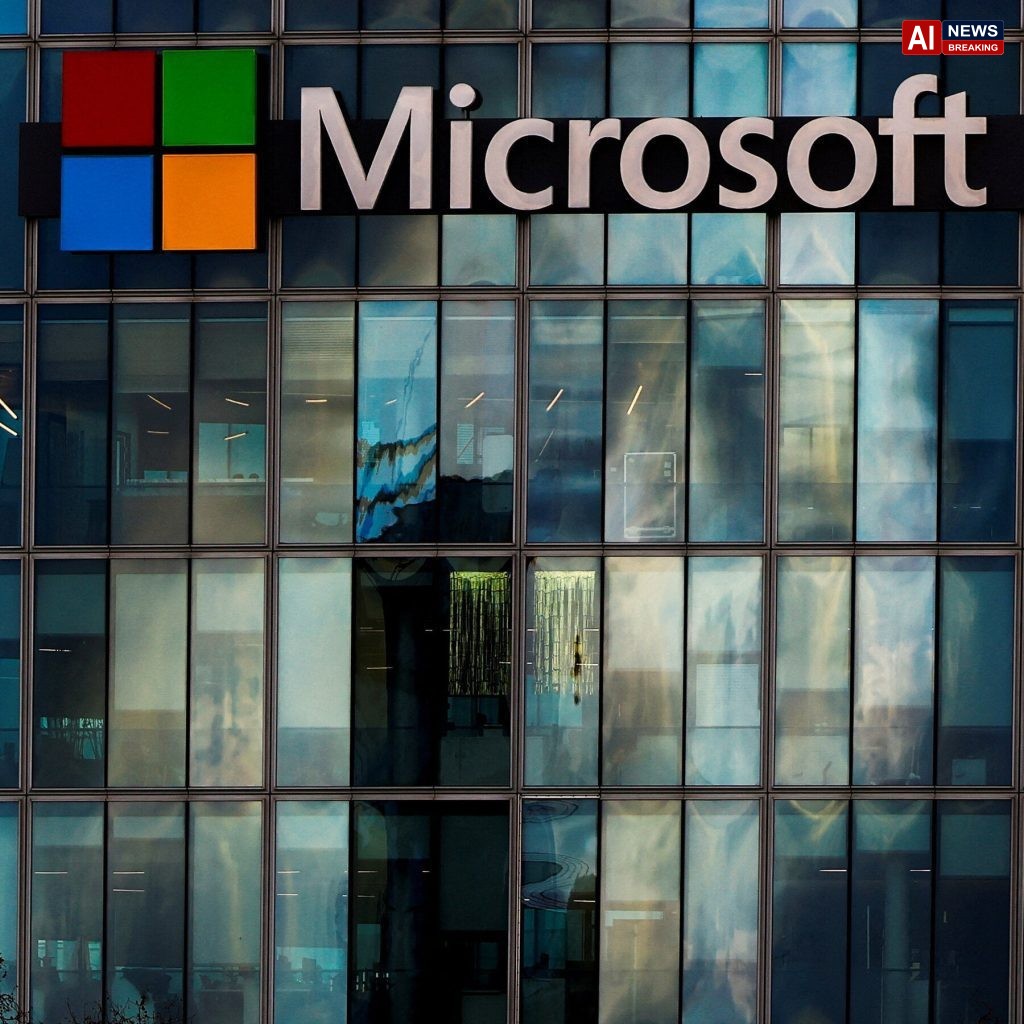
Microsoft’s Global Outage and Fixes: What We Know - AI News Breaking
microsofts global outage fixes:
Microsoft said on Tuesday that progress was “encouraging” as the company worked through a second day of widespread outages that hit its email, messaging and a range of other cloud services. The disruption, which began early on Monday, left millions of users unable to access Outlook, Teams, SharePoint and a host of other applications that underpin both corporate workflows and personal communications. By mid‑afternoon on Tuesday, internal teams reported that a majority of the affected services were back online, although some users continued to experience intermittent connectivity issues and delayed synchronization.The problem appears to have stemmed from a failure in the Azure Active Directory (AAD) authentication system, which Microsoft uses to verify user credentials across its suite of products..
When the authentication service went down, users were unable to sign in, and the cascade effect prevented downstream services from functioning. Engineers traced the root cause to a corrupted data store that fed the directory service, a situation compounded by an automated deployment that introduced a misconfiguration. The company’s initial response involved rolling back the deployment and attempting to rebuild the corrupted data, a process that took several hours and required coordination across multiple data centres worldwide.Microsoft’s chief executive, Satya Nadella, addressed the outage in a brief video message, acknowledging the impact on customers and partners and pledging to “learn from this incident to improve our resilience.” He emphasized that the company’s priority was to restore service as quickly as possible while safeguarding data integrity..
In the same statement, Nadella highlighted that the outage did not affect the underlying data stored in customers’ accounts, which remained intact despite the authentication glitch. The message was accompanied by a detailed timeline posted on Microsoft’s status page, outlining each step taken by the incident response team from the moment the anomaly was detected.The outage prompted a wave of reactions on social media, with users ranging from small business owners to large enterprises sharing screenshots of error messages and voicing frustration over missed meetings and delayed projects. Some organisations reported that the disruption forced them to revert to alternative communication channels, such as personal email accounts or third‑party collaboration tools, underscoring the extent to which many businesses have become dependent on Microsoft’s cloud ecosystem..
Analysts noted that the incident highlighted the risks inherent in heavy reliance on a single vendor for critical infrastructure, a point that has been raised repeatedly in discussions about digital sovereignty and supply‑chain resilience.Technical details released by Microsoft indicate that the corrupted data store was part of a distributed database that replicates authentication tokens across regions. The failure triggered a “split‑brain” scenario where some nodes believed users were authenticated while others rejected the same credentials, leading to inconsistent behaviour across the platform. To address this, engineers executed a coordinated failover, redirecting traffic to healthy nodes while they reconstructed the damaged database from backup snapshots..
The process was complicated by the need to maintain data consistency and avoid duplicate or orphaned accounts, a challenge that extended the restoration timeline.In addition to the technical remediation, Microsoft announced several immediate measures to prevent a recurrence. These include stricter validation checks on automated deployments, expanded monitoring of replication health, and a review of the change‑management procedures that govern updates to core services. The company also pledged to increase transparency around its incident response, promising to publish a post‑mortem analysis that will detail the root cause, the effectiveness of the response, and the steps being taken to harden the platform against similar failures.Customers affected by the outage have been invited to submit support tickets for any lingering issues, and Microsoft’s support teams have been working around the clock to address concerns ranging from missed calendar appointments to lost draft emails..
Some enterprises have reported that while core functionality has returned, certain ancillary features—such as custom integrations built on the Microsoft Graph API—remain partially degraded. The company has assured users that these secondary services will be restored in a phased manner as stability is confirmed.The incident arrives at a time when Microsoft’s cloud business, Azure, is under intense scrutiny from investors and regulators alike. Recent earnings reports have shown robust growth, but analysts caution that any perception of fragility in the platform could impact market confidence..
The outage has therefore become a focal point in broader debates about the concentration of cloud services among a handful of providers and the importance of diversification strategies for corporate IT departments. While Microsoft’s market share remains dominant, the event serves as a reminder that even the most mature platforms are vulnerable to complex systemic failures.Industry experts suggest that the episode will likely accelerate discussions around contingency planning and multi‑cloud strategies. “Organizations need to ask themselves whether they can afford to have a single point of failure for critical communications,” said a senior analyst at a leading consultancy..
“The Microsoft outage is a case study in why redundancy and regular testing of disaster‑recovery procedures are essential.” Some firms have already begun to evaluate alternative solutions, though the scale of migration from entrenched Microsoft environments poses logistical and financial challenges.As the situation stabilises, the focus shifts to the lessons learned and the longer‑term implications for both Microsoft and its customers. The company’s quick turnaround in restoring most services has been praised, yet the episode has gaps in monitoring and change‑control processes that could have broader repercussions if left unaddressed. For now, users are welcomed back to their inboxes and chat rooms, but the memory of a day without Outlook or Teams will linger, prompting a reassessment of how critical digital tools are managed in an increasingly interconnected world..
Updated: November 13, 2026
Microsoft confirmed that a corrupted Azure Active Directory data store triggered a widespread outage of Outlook, Teams and other cloud services, but most functions were restored by Tuesday afternoon after rollback and data reconstruction. The incident has spurred calls for stronger deployment checks, greater monitoring and broader multi‑cloud strategies to guard against single‑point failures.
Insight: Microsoft’s Azure AD slip shows that even a cloud titan can become a single‑point failure, nudging enterprises toward multi‑cloud safety nets before a lost login costs a day’s productivity.
The quick fix restores confidence, but the real win will be how transparently Microsoft tightens deployment checks and shares