Pakistan’s leaders hail first astronaut aboard Chinese craft: ‘Proud one of us has gone into space’
 British tourist travels 29 hours from Mumbai to Amritsar for ₹5,461, rates Indian Railways 10/10 | Viral video
 The Supreme Court will decide whether assault weapons bans violate the Second Amendment
 A Critic of Beijing Falls Short in Taiwan’s Key Mayoral Election
 EPA says no rise in contamination after Army detonates lead azide stockpile in Iowa
Nabeel Rajab Dies at 62: Bahrain’s Prominent Human Rights Activist Leaves Behind a Legacy of Courage and Resistance
**
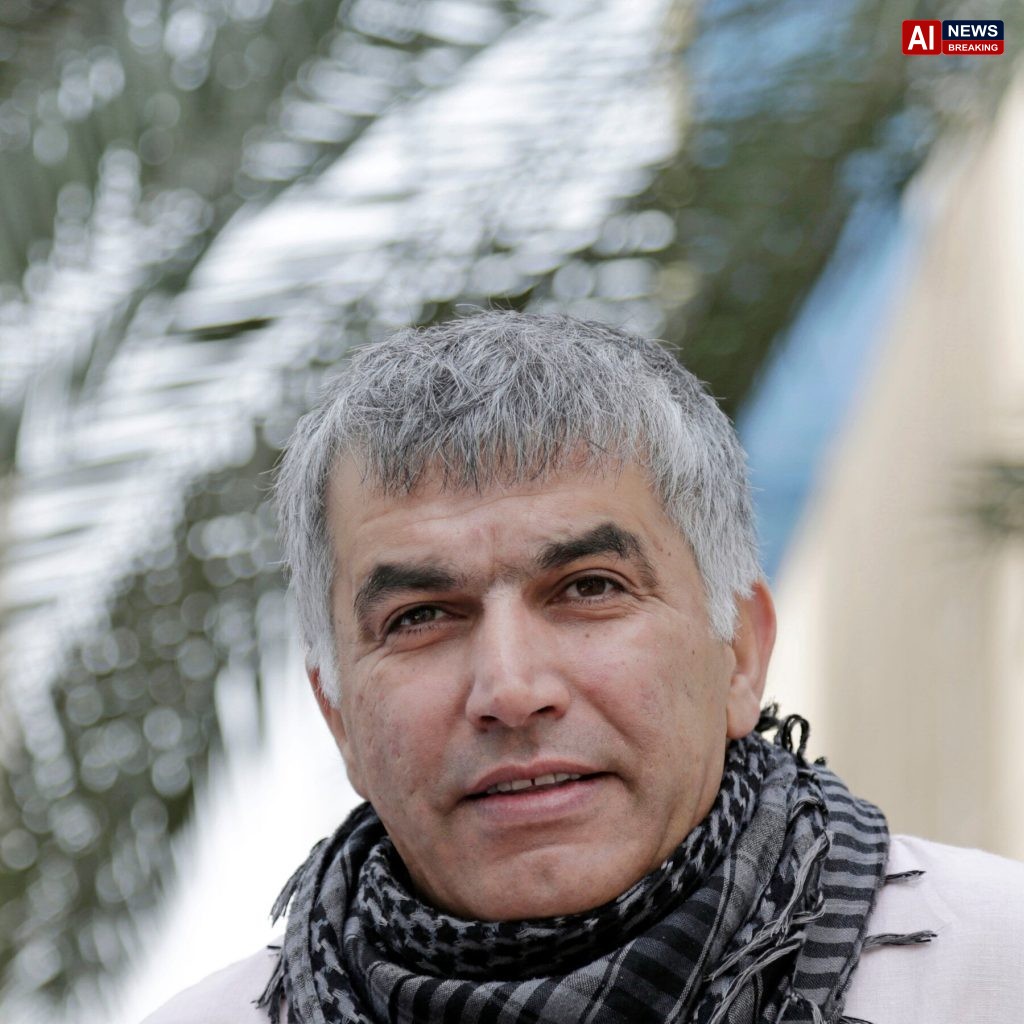
Nabeel Rajab - AI News Breaking
nabeel rajab dies bahrains:
Nabeel Rajab, Bahraini Human Rights Activist, Dies at 62 By BBC News Correspondent 17 November 2026 Nabeel Rajab, the most prominent Bahraini human‑rights campaigner of his generation, died in exile on Thursday at the age of 62. His death was confirmed by his family in London, where he had lived for the past two years after a series of imprisonments and travel bans forced him to leave Bahrain. The cause of death has not been disclosed, but doctors cited “multiple organ failure” following a prolonged battle with chronic illness..
Tributes poured in from activists worldwide, many recalling his fearless advocacy for democratic reforms in a kingdom long criticised for its repression. Born in the capital Manama in 1964, Rajab earned a degree in civil engineering before turning to journalism in the early 1990s. He quickly became a vocal critic of the Al‑Khalifa regime, writing columns that police brutality, arbitrary arrests and the systematic silencing of dissent..
In 2005 he co‑founded the Bahrain Centre for Human Rights (BCHR), a non‑governmental organisation that would become the focal point for documenting human‑rights violations and lobbying international bodies such as the United Nations and the European Union. His first major clash with the authorities came in 2009, when he was arrested for “spreading false news” after publishing a report on the torture of a political prisoner. Rajab spent 14 months in solitary confinement, emerging with a resolve that would define the rest of his career..
He later described the experience as a “crucible that forged my commitment to the cause of freedom,” a sentiment echoed by fellow activists who saw his perseverance as a rallying point for the movement. The Arab Spring of 2011 marked a turning point for Bahrain, as thousands took to the streets demanding an end to sectarian discrimination and the implementation of constitutional reforms. Rajab was at the forefront of the protests, organising peaceful sit‑ins and delivering speeches that called for dialogue rather than violence..
His leadership made him a household name, but also a prime target for the security services, who arrested him repeatedly on charges ranging from “inciting hatred” to “illegal assembly.” In March 2011 he was sentenced to three years in prison for “spreading false information” after accusing the government of using excessive force against demonstrators. Human‑rights organisations, including Amnesty International, declared him a prisoner of conscience, and the European Union called for his immediate release. Rajb Rajab’s second imprisonment began in 2014, when he was convicted of “defamation” after tweeting about the death of a protester in police custody..
The six‑month sentence was served in a high‑security prison, where he was reportedly denied access to his legal team and subjected to repeated interrogations. International pressure forced the authorities to release him early, but the ordeal left lasting scars and further entrenched his reputation as a symbol of Bahraini resistance. The most prolonged period of detention came in 2015, when a court sentenced Rajab to five years for “participating in an unauthorised gathering.” Throughout his incarceration, he continued to write letters smuggled out of the prison, detailing the conditions of confinement and calling on the United Nations to monitor Bahrain’s human‑rights record..
The letters were published by global media outlets, amplifying his voice even while he was physically silenced. After his release in 2019, Rajab faced a series of travel bans that effectively trapped him within Bahrain’s borders. In a bold move, he fled the country in early 2024, seeking medical treatment for a heart condition that had worsened under the stress of constant surveillance..
He settled in London, where he was granted asylum and continued to advise BCHR from abroad, using digital platforms to coordinate campaigns and mentor younger activists still operating inside Bahrain. His exile did not diminish his influence. In 2025 Rajab delivered a keynote address at the International Conference on Civil Liberties in Geneva, urging the United Nations Human Rights Council to adopt a binding resolution on political prisoners in the Gulf..
The speech was widely reported, prompting renewed scrutiny of Bahrain’s legal framework and leading to a modest, but symbolically important, easing of some travel restrictions for other detained dissidents. Friends and colleagues describe Rajab as a “relentless optimist,” someone who could find humor even in the bleakest moments of his imprisonment. “He never stopped believing that ordinary Bahrainis could shape their own future,” said Fatima Al‑Mansoor, a fellow activist and long‑time collaborator..
The pair co‑authored several reports that the systematic use of torture, and their partnership became a cornerstone of the human‑rights narrative that challenged the regime’s narrative of stability. The Bahrain government released a brief statement after his death, describing Rajab as “a disruptive element who repeatedly sought to undermine national unity.” The comment drew sharp rebukes from Western diplomats, who reminded Riyadh and Manama that “the right to peaceful dissent is enshrined in international law.” In the days following, the U.N. High Commissioner for Human Rights announced an intent to revisit Bahrain’s compliance with its treaty obligations, citing the “legacy of activists like Nabeel Rajab.” Funeral arrangements were kept private at the request of the family, but a memorial service was held at a church in London attended by dignitaries, journalists and members of the diaspora..
Flowers bearing the slogan “Freedom for Bahrain” were laid on the casket, echoing the banners that Rajab himself had carried during the 2011 protests. The gathering concluded with a.
Updated: November 17, 2026
Rajab’s death underscores how exile can simultaneously erase a voice from the streets yet amplify it on the global stage, turning personal sacrifice into a rallying cry for reform. The regime’s attempt to silence him only reinforced the narrative that Bahrain’s struggle is not a domestic quirk but a broader challenge to authoritarian