
 Pakistan’s leaders hail first astronaut aboard Chinese craft: ‘Proud one of us has gone into space’
 British tourist travels 29 hours from Mumbai to Amritsar for ₹5,461, rates Indian Railways 10/10 | Viral video
 The Supreme Court will decide whether assault weapons bans violate the Second Amendment
 A Critic of Beijing Falls Short in Taiwan’s Key Mayoral Election
 EPA says no rise in contamination after Army detonates lead azide stockpile in Iowa
Prince William Brings Climate Prize to India, in an Electric Rickshaw
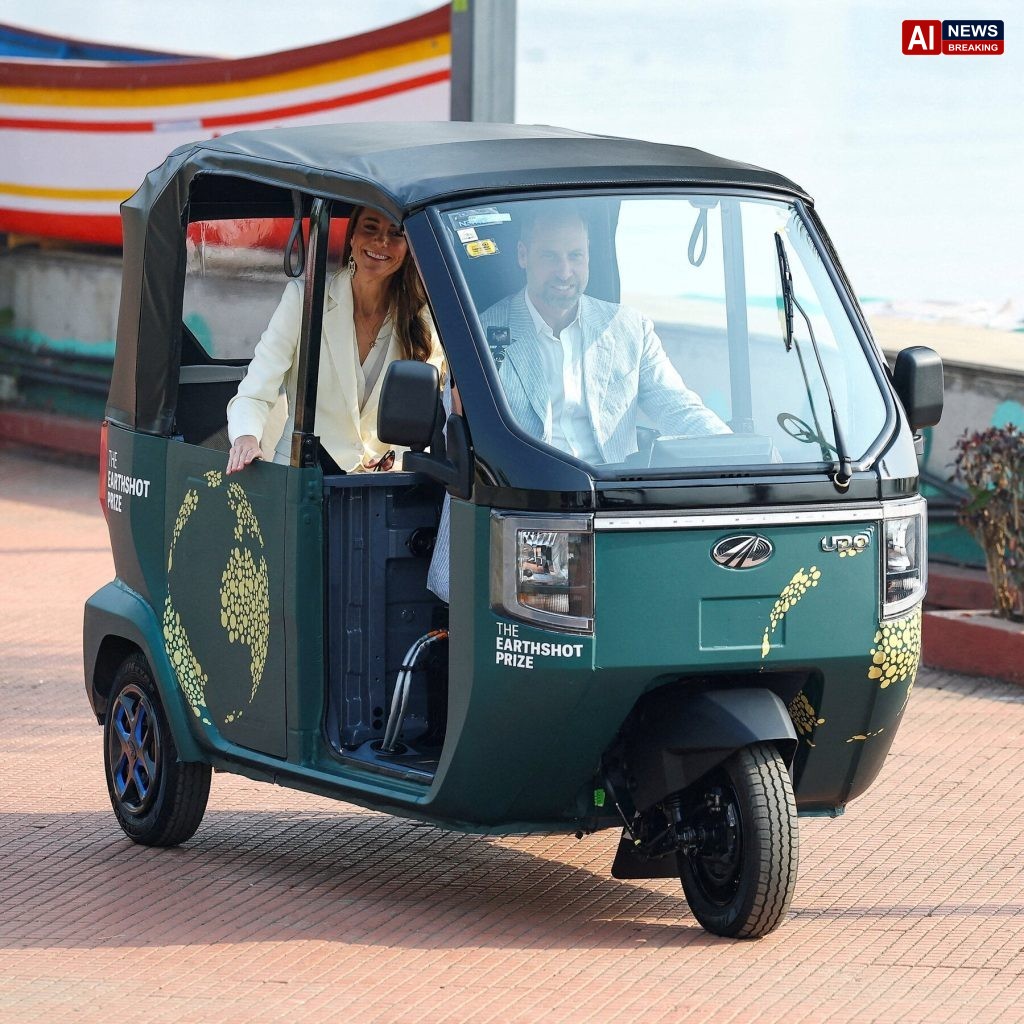
Prince William Brings Climate Prize to India, in an Electric Rickshaw - AI News Breaking
Prince William, the Duke of Cambridge, arrived in New Delhi on a striking electric rickshaw as part of a global campaign to promote sustainable transport and honour innovative climate solutions. The three‑wheeler, a product of a British engineering firm that has recently been shortlisted among fifteen finalists for an international climate prize, served both as a symbol of the monarch’s personal commitment and as a tangible demonstration of how low‑carbon mobility can be integrated into busy urban environments.The event, held at the heart of the city’s bustling Connaught Place, drew a crowd of journalists, local officials and members of the public. Attendees were invited to sit in the rickshaw’s compact cabin, which is powered by a lithium‑ion battery and boasts a range of roughly 100 kilometres on a single charge..
As the vehicle moved slowly through the lanes, the crowd could see how the design blends modern technology with the familiar silhouette of a traditional Indian auto‑rickshaw. The vehicle’s quiet operation and zero tail‑pipe emissions made it an instant conversation starter, and a number of local environmental groups praised the initiative as a concrete step towards decarbonising public transport.The rickshaw’s manufacturer, a UK‑based start‑up that specializes in electric vehicle solutions for emerging markets, was named one of fifteen finalists in the “Global Climate Innovation Award” announced by the United Nations Environment Programme last month. The award recognises projects that combine technological ingenuity with measurable environmental impact..
According to the company’s CEO, the rickshaw’s design incorporates a modular battery system that can be swapped out at dedicated hubs, reducing downtime and encouraging widespread adoption among small businesses that rely on rickshaws for daily operations.In a speech delivered from the rickshaw’s roof, Prince William highlighted the need for practical, scalable solutions to climate change. He noted that “the real challenge is not just to dream of a greener future, but to create tools that everyday people can use to get there.” The Duke’s comments were met with applause, as many in the audience recognised that the rickshaw could play a role in reducing India’s notorious traffic‑related emissions. The event also featured a briefing from the Delhi Transport Authority, which confirmed plans to pilot a fleet of electric three‑wheelers across selected districts over the next two years.The choice of a rickshaw was deliberate, according to officials..
“Rickshaws are an integral part of our transport network,” said a spokesperson for the Delhi government. “By electrifying them, we can cut emissions significantly while also improving air quality in the most congested areas.” The government has already launched a subsidy scheme for electric rickshaws, offering up to 30 per cent of the purchase cost to owners. The rickshaw that Prince William rode is fully eligible for such incentives, making the demonstration a public relations coup as well as a technological showcase.The event also served as a platform for the United Nations Environment Programme to outline its broader strategy for climate action in the Global South..
The programme’s director, who was present at the rickshaw launch, emphasized that “technological solutions must be matched with policy frameworks that enable rapid uptake.” He called on governments to streamline the installation of charging infrastructure and to provide training for mechanics and drivers, ensuring that the transition to electric vehicles does not leave behind those who rely on them for their livelihoods.While the rickshaw itself was a highlight, the event drew attention to a wider network of innovators behind the prize finalists. In addition to the British start‑up, the list includes projects ranging from solar‑powered desalination plants in Kenya to biodegradable packaging developed in Brazil. The diversity of entries underscored the UN’s recognition that climate solutions must be as varied as the challenges they address.Prince William’s involvement also drew parallels to previous royal engagements with environmental causes..
His participation in the 2022 “Climate Action Summit” in Nairobi, where he unveiled a new line of sustainable fashion, echoed the same ethos of personal commitment and public advocacy. The rickshaw ride was the latest example of the Duke’s efforts to bring high‑profile attention to climate action in a way that is both relatable and inspiring.The rickshaw, which was christened “Eco‑Drive” by the company, will now be displayed at the Delhi Museum for a limited time, allowing visitors to see its interior and learn about the technology that powers it. According to the museum curator, the exhibit will also feature interactive displays on how electric vehicles can reduce pollution and improve public health..
The display is expected to run through the end of the year, coinciding with the release of the final list of award recipients.In the days following the event, a series of articles and social media posts highlighted the rickshaw’s features, from its regenerative braking system to its user‑friendly interface that allows drivers to monitor battery status and route efficiency. Some experts expressed optimism that the model could be adapted for use in other cities with high levels of rickshaw traffic, such as Mumbai and Kolkata. They pointed out that the vehicle’s compact size and low operating cost could make it a viable alternative to diesel‑powered models that contribute heavily to urban smog.The rickshaw’s journey through Connaught Place was more than a symbolic gesture..
It was a live demonstration that the combination of innovative design, supportive policy, and public endorsement can accelerate the shift towards a low‑carbon future. As the world watches, the rickshaw’s quiet glide through one of India’s most crowded streets may well signal a turning point in the way cities approach sustainable transport and climate resilience..
This development highlights evolving dynamics and may have broader implications in the near term.






