
 Pakistan’s leaders hail first astronaut aboard Chinese craft: ‘Proud one of us has gone into space’
 British tourist travels 29 hours from Mumbai to Amritsar for ₹5,461, rates Indian Railways 10/10 | Viral video
 The Supreme Court will decide whether assault weapons bans violate the Second Amendment
 A Critic of Beijing Falls Short in Taiwan’s Key Mayoral Election
 EPA says no rise in contamination after Army detonates lead azide stockpile in Iowa
Paul Barril, French ‘Supergendarme’ Turned Mercenary, Has Died
**
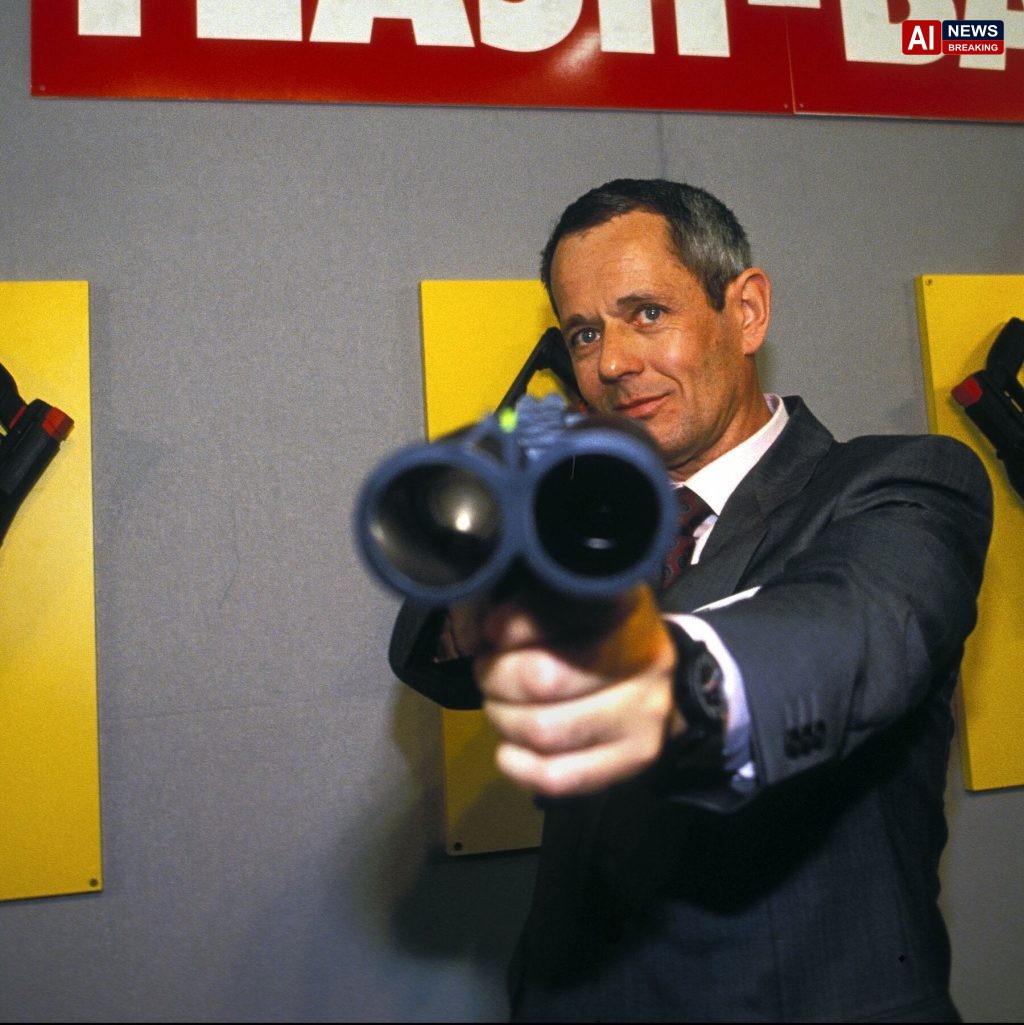
Paul Barril, French ‘Supergendarme’ Turned Mercenary, Has Died - AI News Breaking
paul barril french supergendarme:
Title: Paul Barril, French ‘Supergendarme’ Turned Mercenary, Has Died 1. Paul Barril, a former elite French gendarme whose name was synonymous with disciplined service, died on Tuesday at the age of 80. The former police officer, who had spent three decades in the Gendarmerie nationale’s most prestigious units, now finds his legacy marred by allegations that he sold arms and offered clandestine support to governments with questionable human‑rights records..
His death was announced by his family, who released a brief statement to French media, describing him as a devoted public servant and refusing to comment on the allegations. Barril’s career began in 1975 when he joined the Gendarmerie, quickly rising through the ranks to become a respected member of the elite Intervention Commando Group (GIGN). His reputation was built on swift, decisive action in counter‑terrorism operations across France, including the 1983 Bordeaux siege and the 1995 Lille hostage crisis..
By the time he retired in 2008, he was widely regarded as a “supergendarme” – a colloquial French term for officers with exceptional skill, dedication, and a reputation for unflappable composure under pressure. In the years that followed his retirement, Barril entered the private security sector, establishing a consulting firm that offered tactical training, strategic planning, and logistical support to foreign governments. The company, based in Paris, advertised services ranging from “counter‑insurgency” training to “surveillance and reconnaissance” operations..
While many former officers transition to such roles, Barril’s clientele and the nature of the services he supplied drew intense scrutiny from civil‑society watchdogs and human‑rights organisations. Human rights groups such as Amnesty International and Human Rights Watch published reports in 2015 and 2017 accusing Barril’s company of supplying weapons and expertise to regimes accused of widespread abuses. The allegations alleged that Barril had facilitated the procurement of small arms and ammunition for the governments of Equatorial Guinea and Myanmar, where his services allegedly contributed to violent crackdowns on peaceful protestors..
The reports highlighted a pattern of secrecy, with invoices and contracts hidden behind shell companies in the Netherlands and Cyprus. French authorities have yet to formally investigate Barril’s post‑retirement activities. A 2020 parliamentary inquiry into the private security sector noted a gap in regulatory oversight, citing Barril’s case as an example of how former military and police officers can slip into “shadow operations” abroad..
The inquiry recommended stricter licensing and reporting requirements for ex‑Gendarmerie personnel, but no concrete legislation has been adopted. Barril’s firm, meanwhile, maintained its public‑facing website, offering “counter‑terrorism consulting” to “international clients” while claiming its services were “strictly defensive.” 6. Barril’s defence team argued that any alleged arms sales were conducted through legitimate commercial channels, and that the company complied with all relevant export controls..
They highlighted that the French government had approved certain arms transfers to client states as part of broader diplomatic agreements. In a 2019 interview, Barril denied any wrongdoing, stating, “I have never sold anything that was not permitted under French law, and I have always acted in the interest of global security.” 7. The controversy intensified after the United Nations released a dossier in 2021 linking a group of French contractors to the surveillance of political activists in Myanmar..
The dossier, compiled by the UN Office of the High Commissioner for Human Rights, named Barril’s consultancy as one of the contractors providing “technical expertise for covert operations.” The report called for immediate investigation and suggested that the company had breached both French and international law, though it did not provide conclusive evidence of illegal arms transfers. Despite the controversy, Barril continued to maintain a public profile. He appeared at security conferences across Europe, lecturing on counter‑terrorism tactics and the evolution of asymmetric warfare..
He also authored several articles in security journals, arguing that private security firms play an essential role in bridging the gap between state and non‑state actors. His supporters claimed that his work was “necessary” in a world where state capacities are often stretched thin, whereas critics warned that such firms could undermine international human‑rights standards. The death of Barril about the long‑term accountability of former state officers who transition into the private security industry..
Lawmakers in France have called for comprehensive reforms, with some pushing for a mandatory “cool‑down” period before retired officers can engage in foreign security contracts. The French Ministry of the Interior, in a statement, reiterated that the country would “continue to monitor” the private security sector and reaffirmed its commitment to upholding national and international law. Barril’s family, which has declined to speak with journalists beyond the initial statement, indicated that their relative “lived a life of service” and was “proud of his contribution to France’s security.” A spokesperson for the family said they were “disappointed to see his legacy tarnished.” The statement, which also thanked the media for their coverage, added that the family would not be attending his funeral, citing privacy concerns..
Meanwhile, Barril’s former colleagues at the GIGN expressed mixed emotions. In a brief interview, a retired GIGN commander recalled Barril’s calm demeanor in the field and his mentorship of younger officers. He noted that “many of us were proud of his achievements, but we were also aware of the complexities of post‑service careers.” He further emphasized the need for the Gendarmerie.
Updated: November 12, 2026
Former elite French gendarme Paul Barril, known for his calm command in high‑profile counter‑terrorism operations, died at 80 after a controversial post‑retirement career supplying arms and covert support to regimes accused of human‑rights abuses. His death has prompted renewed calls in France for stricter oversight of retired police and military personnel who enter the private security sector.
Barril’s death forces France to confront a silent loophole: elite officers who leave state service can quietly arm repressive regimes, turning domestic expertise into foreign oppression. This case underscores the urgent need for a “cool‑down” law, lest a nation’s own security apparatus be repurposed to undermine






