
 Pakistan’s leaders hail first astronaut aboard Chinese craft: ‘Proud one of us has gone into space’
 British tourist travels 29 hours from Mumbai to Amritsar for ₹5,461, rates Indian Railways 10/10 | Viral video
 The Supreme Court will decide whether assault weapons bans violate the Second Amendment
 A Critic of Beijing Falls Short in Taiwan’s Key Mayoral Election
 EPA says no rise in contamination after Army detonates lead azide stockpile in Iowa
Piyush Goyal in Egypt: Both sides to discuss increasing cooperation in infra, manufacturing, logistics
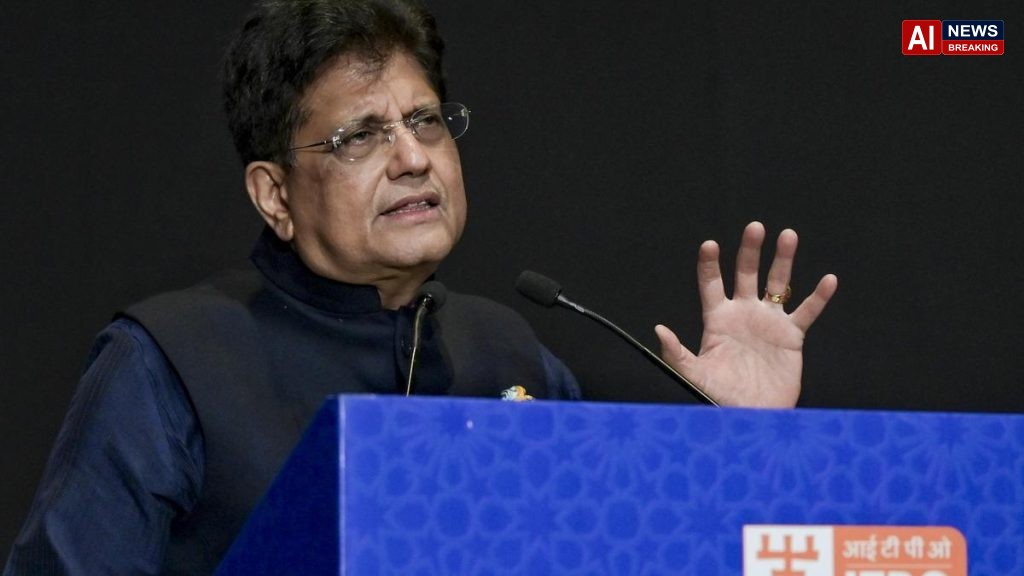
Piyush Goyal in Egypt: Both sides to discuss increasing cooperation in infra, manufacturing, logistics - AI News Breaking
piyush goyal egypt both:
Piyush Goyal in Egypt: Both sides to discuss increasing cooperation in infra, manufacturing, logistics Egypt’s strategic geographical location offers significant opportunities for Indian businesses to strengthen their presence in the country and access markets across Africa, the Middle East and Europe. The Indian Minister of Commerce, Piyush Goyal, visited Cairo this week, holding a series of meetings with Egyptian officials to explore avenues for deepening bilateral trade and investment, with a particular focus on infrastructure, manufacturing and logistics. The talks, which took place against the backdrop of Egypt’s ambitious “Vision 2030” programme, underscored a shared desire to build a more resilient and diversified economy..
In the early hours of Thursday, Goyal and his delegation arrived at the Cairo International Airport, where they were welcomed by a contingent of senior Egyptian officials, including the Minister of Trade and Industry, Ahmed Al-Salem. The ceremony was brief but symbolic, signalling the high level of interest from both governments in fostering closer ties. Goyal’s arrival was timed to coincide with the launch of the Egyptian–Indian Chamber of Commerce, a new platform designed to streamline business transactions and address regulatory hurdles..
The first round of discussions took place at the Egyptian Ministry of Trade and Industry, where Goyal met with Minister Al‑Salem to outline India’s investment priorities. “We are keen to support Egypt’s infrastructure ambitions, from railways to renewable energy,” Goyal told reporters. He highlighted the Indian government’s willingness to offer preferential tax treatment to Egyptian firms operating in India, a move that could spur mutual investment flows and create thousands of jobs on both sides..
A key theme of the talks was the development of logistics corridors that would link the Suez Canal to the Indian Ocean. Goyal explained that India’s logistics giant, Bharat Logistics, has been working on a joint venture with Egyptian partners to enhance cargo handling at the Port of Suez. The venture would involve the deployment of advanced tracking systems, automated customs clearance, and a dedicated freight rail line, which Egypt hopes will reduce shipping times to India by up to 30 per cent..
The Egyptian side expressed enthusiasm for India’s experience in the manufacturing sector, especially in the context of the “Make in India” initiative. Goyal stressed that India has the capacity to produce a wide range of goods, from electronics to textiles, at competitive prices. In response, Minister Al‑Salem announced a forthcoming memorandum of understanding that would allow Indian manufacturers to set up plants in Egypt’s newly created industrial zones, benefiting from tax breaks and streamlined land acquisition procedures..
During a lunch meeting with the Egyptian Minister of Energy, Goyal highlighted the potential for collaboration on renewable energy projects. Egypt has set a target of 20 per cent of its electricity from renewables by 2035, and India’s solar giant, Adani Solar, is keen to explore opportunities in the Egyptian desert. “We see a huge potential for solar and wind farms along the Sinai Peninsula, which can be a source of clean power for both Egypt and the wider region,” Goyal said..
An important outcome of the trip was the decision to set up a joint task force on trade facilitation. The task force, co-chaired by the respective ministries, will work on identifying bottlenecks in the customs and regulatory environment. “We aim to reduce clearance times for goods to less than 24 hours for most categories,” Goyal said, referencing India’s own customs reforms that have cut delays dramatically over the past decade..
In addition to high‑level talks, Goyal’s delegation visited the Cairo-based Indian Institute of Management to engage with academics and industry leaders. The visit underscored a commitment to knowledge sharing and capacity building. Students from the institute presented research on supply chain optimisation, which could be applied to Egyptian logistics networks..
Goyal noted that the partnership could also open pathways for joint doctoral programmes and research grants between the two countries. The Egyptian delegation expressed particular interest in India’s experience with micro‑, small and medium‑enterprise (MSME) development. Goyal outlined a proposal for a bilateral MSME fund that would provide low‑interest loans and technical assistance to entrepreneurs in both countries..
The fund would focus on sectors such as agri‑processing, textiles, and information technology, thereby creating a multiplier effect on employment and export capacity. The visit concluded with a formal signing ceremony at the Egyptian Foreign Ministry. The agreements cover a wide spectrum of areas, including trade promotion, investment incentives, logistics, renewable energy and MSME development..
The signing also included a cultural exchange clause, signalling an intention to strengthen people‑to‑people ties through scholarships, artistic collaborations and joint cultural festivals. While the meetings were largely constructive, Goyal acknowledged that challenges remain. Regulatory differences, currency fluctuations and political uncertainties in the region could impede the pace of progress..
Nonetheless, he expressed confidence that the agreements would lay the groundwork for sustained economic collaboration. The day’s events were widely covered by both Indian and Egyptian media, with commentators noting that this visit could herald a new era of Indo‑Egyptian partnership. Analysts point out that the collaboration could serve as a model for India’s broader strategy to engage with African and Middle Eastern economies, positioning it as a key player in the region’s economic renaissance..
In the weeks ahead, both governments are expected to set up working groups to implement the agreements and monitor progress. The next step will involve detailed technical workshops to iron out operational specifics, particularly regarding the logistics corridor and renewable energy projects. As the two nations move forward, the partnership promises to unlock new opportunities for growth, innovation and regional connectivity..
Updated: November 14, 2026
India’s push into Egypt signals a deliberate pivot from commodity trade to value‑chain integration, positioning the sub‑continent as a logistical hub between the Suez and the Indian Ocean. If the promised tax incentives and streamlined customs actually materialise, it could compel rival powers—especially China’s Belt and Road— to rethink their own entry strategies into Africa, forcing a recalibration of regional supply‑chain politics.






