
 Pakistan’s leaders hail first astronaut aboard Chinese craft: ‘Proud one of us has gone into space’
 British tourist travels 29 hours from Mumbai to Amritsar for ₹5,461, rates Indian Railways 10/10 | Viral video
 The Supreme Court will decide whether assault weapons bans violate the Second Amendment
 A Critic of Beijing Falls Short in Taiwan’s Key Mayoral Election
 EPA says no rise in contamination after Army detonates lead azide stockpile in Iowa
U.S. must respect India’s right to defend itself, maintain zero tolerance towards terrorism: Blinken
**
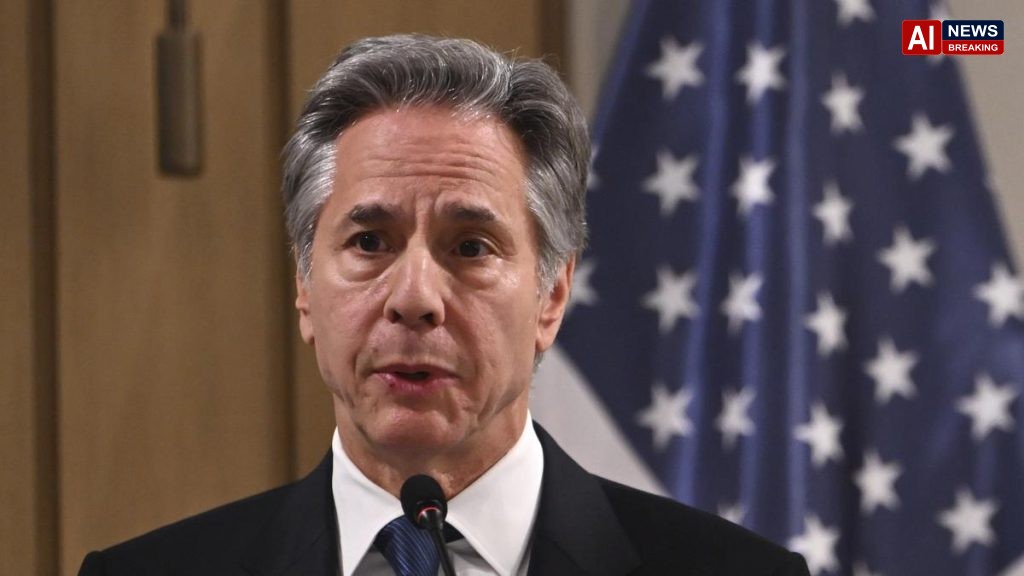
U.S. must respect India’s right to defend itself, maintain zero tolerance towards terrorism: Blinken - AI News Breaking
must respect indias right:
ary of State Antony Blinken on Tuesday reiterated that Washington must recognise India’s right to defend itself while maintaining a zero‑tolerance stance on terrorism, underscoring the deepening strategic partnership between the two democracies. Speaking at a joint press conference in New Delhi, Blinken highlighted the “global force” that India has become, noting that the shared interests of Washington and New Delhi now extend far beyond regional issues to encompass climate change, supply‑chain resilience and the promotion of a rules‑based international order. His remarks came amid heightened security concerns in South Asia and a renewed focus on counter‑terrorism cooperation..
The comments were made as part of a two‑day visit that included meetings with Prime Minister Narendra Modi, Defence Minister Rajnath Singh and senior officials from India’s Ministry of External Affairs. Blinken praised India’s recent legislative reforms aimed at tightening anti‑terror financing laws and expanding the capacity of its intelligence agencies. He stressed that these steps not only safeguard Indian citizens but also contribute to global stability, aligning with U.S..
objectives to curb the financing and movement of extremist networks worldwide. In response, Modi described the bilateral relationship as “truly global in nature,” citing joint initiatives such as the Quad, the Indo‑Pacific naval exercises, and collaborative research on renewable energy. commitment to respect India’s sovereign right to protect its borders, especially in light of recent cross‑border infiltration attempts along the Line of Actual Control and the western frontier..
The prime minister reiterated that any threat to India’s territorial integrity would be met with decisive action, a stance that the United States has publicly endorsed. Blinken also addressed the contentious issue of alleged Chinese support for militant groups operating in the region. He warned that states which sponsor terrorism undermine the very fabric of international peace and that the United States will hold such actors accountable..
While stopping short of naming any particular nation, the ary’s remarks were widely interpreted as a reference to Beijing’s alleged links to insurgent outfits in Kashmir and the northeastern states of India. He called for a multilateral approach, urging regional partners to share intelligence and coordinate law‑enforcement actions. delegation’s itinerary included a visit to the Indian Army’s Central Command headquarters, where senior officers briefed Blinken on ongoing counter‑insurgency operations..
They highlighted the use of advanced surveillance drones and AI‑driven analytics to track militant movements, technologies that the United States has pledged to share under existing defense agreements. The conversation also touched on the importance of civilian‑military coordination in disaster response, a recurring challenge in the Himalayan border zones prone to earthquakes and landslides. Economic ties formed another pillar of the discussion..
Both sides agreed to accelerate the implementation of the U.S.–India Trade and Investment Framework Agreement, aiming to reduce tariffs on critical goods such as pharmaceuticals, aerospace components and clean‑energy technologies. Blinken emphasized that a robust economic partnership bolsters security, noting that diversified supply chains reduce vulnerability to coercive economic practices. He welcomed India’s recent reforms to streamline foreign‑direct investment, which he said will encourage more American companies to establish a foothold in the subcontinent..
Human rights considerations were also on the agenda. Blinken affirmed that the United States supports India’s democratic institutions and civil liberties, while encouraging continued progress on issues such as gender equality, press freedom and the protection of minority communities. He pointed to recent legislative measures in India aimed at safeguarding journalists and strengthening whistleblower protections, describing them as “positive steps” that reinforce the rule of law..
The ary underscored that respect for human rights is integral to any long‑term partnership. The dialogue turned to climate change, with both nations acknowledging the urgent need to curb carbon emissions. India’s ambitious target of achieving net‑zero emissions by 2070 was welcomed, and the United States pledged technical assistance for renewable‑energy projects, including offshore wind farms and solar micro‑grids in rural areas..
Joint research initiatives were announced to develop hydrogen‑fuel technologies, positioning the partnership as a catalyst for a greener Indo‑Pacific. Blinken highlighted that climate security is now a core component of national security strategies worldwide. In the realm of technology, the two governments discussed expanding cooperation on cybersecurity and emerging tech standards..
They agreed to establish a bilateral task force to counter state‑sponsored cyber‑attacks, share threat intelligence, and develop norms for responsible behaviour in cyberspace. The United States also offered to assist India in building a resilient digital infrastructure, aiming to protect critical sectors such as banking, energy and health from malicious intrusions. This move reflects a broader strategic intent to counteract the growing influence of authoritarian tech models..
As the visit drew to a close, Blinken reiterated that the United States will “continue to stand with India” in its efforts to combat terrorism, emphasizing that any act of violence against civilians will be met with a coordinated international response. He called on regional actors to denounce extremist ideologies and to work collectively with law‑enforcement agencies to dismantle financing networks. The ary’s concluding remarks echoed a longstanding U.S..
policy: that the fight against terrorism must be unwavering and collaborative, with no tolerance for safe havens. The press conference ended with a joint statement declaring the U.S.–India partnership “stronger than ever” and “essential for a free, open and prosperous Indo‑Pacific.” It called for sustained dialogue on security, trade, climate and technology, and pledged to deepen cooperation through existing multilateral platforms such as the G20, the United Nations and the World Trade Organization. Observers noted that the language of the statement signals a shift from merely strategic to truly comprehensive engagement..
Analysts suggest that Blinken’s.
Updated: November 15, 2026
Blinken’s emphasis on India’s “global force” signals a U.S. pivot toward treating New Delhi not just as a regional balancer against China, but as a co‑architect of worldwide stability across security, climate and supply‑chains. The rhetoric upgrades the partnership from tactical alignment to a comprehensive






