Pond heron found dead in Coimbatore tests positive for avian influenza
 Pakistan’s leaders hail first astronaut aboard Chinese craft: ‘Proud one of us has gone into space’
 British tourist travels 29 hours from Mumbai to Amritsar for ₹5,461, rates Indian Railways 10/10 | Viral video
 The Supreme Court will decide whether assault weapons bans violate the Second Amendment
 A Critic of Beijing Falls Short in Taiwan’s Key Mayoral Election
United States abstains from Human Rights Council review.
**
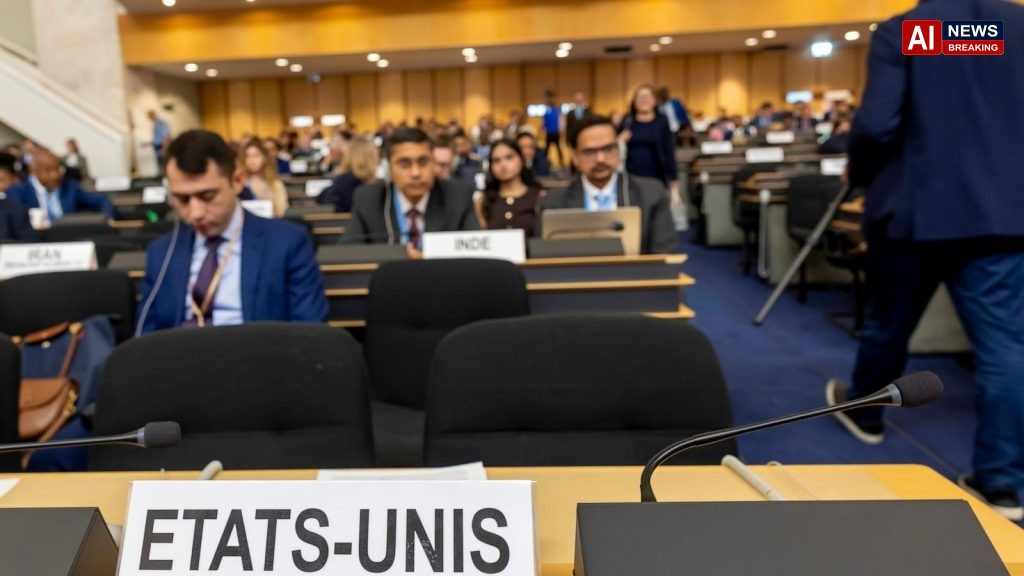
The US to become first nation to fully shun a UN Human Rights Council review - AI News Breaking
united states abstains human:
The United States is poised to become the first country to skip a regular review of its human rights record at the U.N.’s Human Rights Council, a move that has raised questions about the United States’ commitment to the international human rights framework. The decision follows a long-standing tradition of the United States opting out of certain Human Rights Council processes, a practice that has now been formalised by a policy shift announced by the Department of State. By declining to participate in the biennial Universal Periodic Review, Washington signals a change in its engagement with the Council’s procedural mechanisms..
The Universal Periodic Review is a cornerstone of the Human Rights Council’s work, allowing member states to present their human rights performance and receive recommendations from peers. Historically, the United States has participated in the review cycle, but it has often been criticised for its limited impact on domestic policy. The new decision to abstain represents a departure from this precedent and could have far-reaching implications for U.S..
Washington’s move is not entirely unprecedented. The United States has previously abstained from attending the Council’s annual sessions and has at times refused to submit reports on specific rights issues. The current policy change is seen by some experts as an effort to streamline diplomatic engagements and focus resources on bilateral rather than multilateral forums..
However, critics argue that this approach undermines the shared global accountability that the Council seeks to foster. The policy was announced by the State Department in a statement that highlighted the United States’ commitment to human rights through other avenues, such as domestic legislation and targeted aid programmes. Officials emphasized that the country remains engaged with the Council through observer status and occasional participation in thematic working groups..
The statement also noted that the decision was made in consultation with allies and partners who share concerns about the Council’s procedural inefficiencies. have expressed mixed reactions. Some have welcomed the move as a sign that the United States is taking a pragmatic stance, prioritising its strategic interests..
Others have warned that withdrawing could weaken the collective moral authority of the Council and set a dangerous precedent for other major powers. The United Nations’ ary-General has yet to issue a formal response to the United States’ announcement. The decision comes amid growing criticism of the Human Rights Council’s handling of high-profile cases, including allegations of political bias and uneven application of standards..
Human rights groups have argued that the Council’s mechanisms are essential for exposing violations and pressuring governments to enact reforms. They contend that the United States, as a global leader, has a responsibility to maintain its voice within these processes. In the domestic arena, the United States has faced scrutiny over its treatment of various vulnerable populations, from the ongoing debate over immigration policies to concerns about police conduct..
Critics of the decision point to these internal challenges as evidence that the country would benefit from external scrutiny rather than withdrawing. Proponents, however, argue that domestic reforms should be driven by internal mechanisms and that external reviews can sometimes be politicised. The policy shift also coincides with the United States’ broader strategy to reconfigure its role in multilateral institutions..
Following recent debates over the United Nations Human Rights Council’s effectiveness, Washington has been reassessing its participation in other international bodies, including the International Criminal Court and various climate accords. This recalibration reflects a desire to streamline foreign policy priorities and focus on bilateral agreements that align closely with national interests. Legal scholars have noted that the United States remains bound by certain international obligations that could be affected by the withdrawal..
framework allows member states to decline participation in specific reviews, it also places expectations on countries to adhere to universal human rights standards. abstention on its legal standing is still a subject of academic debate, with some scholars suggesting that the country will need to engage more robustly through other channels to maintain its reputation. European partners, particularly those in the European Union, have expressed concern that the withdrawal might erode the integrity of the Council’s review system..
Some Latin American countries, however, view the decision as a positive sign that the United States is taking a more balanced approach to multilateral diplomacy. The policy change has sparked discussions in Washington about how best to balance national interests with global responsibilities. In the weeks ahead, observers will monitor how the United States engages with the Council on a case-by-case basis..
While the policy announces a general withdrawal from the periodic review, it does not preclude participation in other Council activities. may continue to contribute to thematic working groups or special sessions on pressing issues such as gender equality and freedom of expression. The United Nations Human Rights Council will continue its work without the United States’ participation in the next Universal Periodic Review cycle..
This change may prompt a reassessment of the Council’s procedures and potentially lead to reforms aimed at addressing the concerns that led to the U.S. Whether this will strengthen or weaken the Council’s influence remains to be seen, but it undoubtedly signals a shift in the United States’ approach to international human rights oversight..
By skipping the U.N. review, Washington is betting that domestic reforms will outpace the political noise of multilateral scrutiny, a gamble that could erode its moral clout in an era when other powers are already pulling out. If the U.S. truly believes internal mechanisms trump external pressure