Pakistan’s leaders hail first astronaut aboard Chinese craft: ‘Proud one of us has gone into space’
 British tourist travels 29 hours from Mumbai to Amritsar for ₹5,461, rates Indian Railways 10/10 | Viral video
 The Supreme Court will decide whether assault weapons bans violate the Second Amendment
 A Critic of Beijing Falls Short in Taiwan’s Key Mayoral Election
 EPA says no rise in contamination after Army detonates lead azide stockpile in Iowa
Who Is the Mexican Drug Kingpin Known as El Chapo Isidro?
**
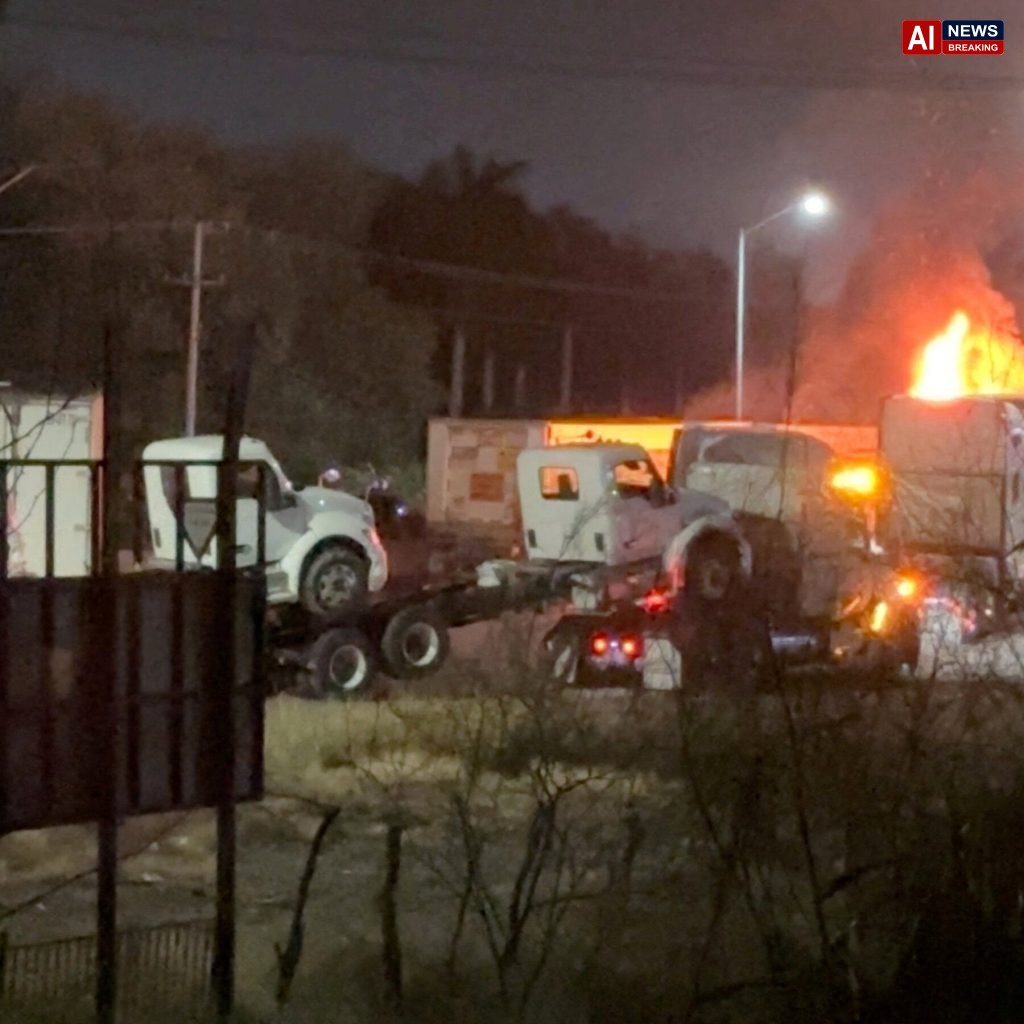
Who Is the Mexican Drug Kingpin Known as El Chapo Isidro? - AI News Breaking
Fausto Isidro Meza Flores, often referred to by the moniker “El Chapo Isidro,” has become a prominent name in recent headlines following his arrest in a coordinated operation that involved Mexican security forces and international intelligence agencies. The operation, which unfolded over several weeks in late February, culminated in his apprehension in the southern state of Guerrero, a region long associated with drug trafficking and organized crime.The investigation that led to Isidro’s capture began with a series of intelligence reports indicating that he had been coordinating shipments of cocaine and methamphetamine from the Pacific coast to major markets across the United States. According to officials, the drug kingpin had established an extensive network that included not only local distributors but also overseas partners, enabling a seamless supply chain that bypassed traditional interdiction routes..
The FBI’s inclusion of Isidro on its list of the ten most wanted fugitives underscored the transnational nature of his operations and the threat he posed to both national and international security.Isidro’s criminal trajectory is marked by a steady escalation from small-scale smuggling to the orchestration of large-scale trafficking rings. Early in his career, he operated out of the rural towns surrounding the port city of Acapulco, where he leveraged his familiarity with local terrain to evade law enforcement. Over time, he expanded his reach, forming alliances with rival cartels and consolidating control over strategic smuggling corridors..
His ability to adapt to changing enforcement tactics, including the use of advanced technology and clandestine communication methods, has been cited as a key factor in his ability to remain at large for so long.The operation that led to his arrest was the culmination of a joint effort between the Mexican Federal Police, the National Guard, and U.S. Sources indicate that the operation involved a blend of aerial surveillance, cyber intelligence, and undercover fieldwork that traced Isidro’s movements across state borders. The use of unmanned aerial vehicles to monitor known hideouts, coupled with real-time data sharing, allowed authorities to pinpoint his location with a degree of precision that had not been achieved in similar cases before.On 29 February, Mexican troops entered a compound in the municipality of Zihuatanejo, a location that had long been suspected as a safe house for high-ranking cartel members..
The compound, a sprawling estate with multiple layers of security, was heavily guarded by a network of armed men who had been loyal to Isidro for years. A brief but intense firefight ensued, resulting in the death of three individuals and the arrest of twenty others. Isidro himself was found in a locked room, where he was detained without the use of excessive force..
The authorities have confirmed that he was transported to a secure facility in Mexico City for interrogation and subsequent legal processing.The legal framework for his prosecution is anchored in Mexican criminal law, which stipulates that individuals charged with drug trafficking and organized crime offenses can be held in custody for up to six months while investigations are carried out. In addition to the domestic legal process, U.S. authorities have indicated that they intend to pursue extradition proceedings, citing evidence that Isidro’s operations had a significant impact on drug trafficking flows into the United States..
The extradition process will involve a review of the evidence gathered during the operation, as well as an assessment of his potential to cooperate with authorities in exchange for a reduced sentence.Isidro’s arrest has raised questions about the efficacy of Mexico’s ongoing anti‑drug strategy. While the nation has invested heavily in law enforcement capabilities and cross‑border cooperation, critics argue that corruption within the security apparatus continues to undermine efforts to dismantle cartels. In recent years, several high‑ranking officers have been implicated in collusion with drug traffickers, creating a paradoxical environment where those tasked with upholding the law are sometimes complicit in its violation..
The capture of a figure as prominent as El Chapo Isidro may therefore be seen as both a triumph and a reminder of the challenges that remain.Beyond the immediate impact on drug supply chains, the arrest has broader implications for regional stability. Guerrero, which has historically been plagued by violence and economic instability, may experience a shift in power dynamics among local criminal groups. The vacuum created by the removal of a dominant player can lead to short‑term escalations in violence as other factions vie for control..
However, it can also create opportunities for law enforcement to reassert influence and for community initiatives to address the underlying socioeconomic factors that foster criminal recruitment.In the weeks that followed the arrest, Mexican President Andrés Manuel López‑Obrador addressed the nation, emphasizing that the operation was part of a broader strategy to curb drug trafficking and improve public security. He highlighted the importance of international cooperation, particularly with the United States, in confronting transnational crime. At the same time, he acknowledged that the fight against drug cartels is far from over, underscoring the need for comprehensive reforms that target both supply and demand.The public reaction to the news was mixed..
Many citizens in Guerrero expressed relief that a major figure of organized crime had been brought to justice, while others voiced concerns about potential reprisals from rival criminal groups. Social media platforms were flooded with commentary, ranging from celebratory posts to calls for vigilance against possible backlash. Law enforcement officials advised citizens to remain cautious and to report any suspicious activity, as the aftermath of the arrest could see an uptick in violent incidents.From an international perspective, the arrest of Fausto Isidro Meza Flores has been welcomed by U.S..
officials who see it as a step toward reducing the flow of illicit drugs into the United States. In a statement released by the Department of Justice, officials noted that the operation was “a testament to the enduring partnership between the United States and Mexico in combating drug trafficking.” The statement also hinted at future joint training exercises aimed at strengthening intelligence sharing and operational coordination.As the legal proceedings move forward, both Mexican and U.S. prosecutors are expected to scrutinize the evidence collected during the operation, including surveillance footage, intercepted communications, and forensic data..
The court case will likely involve complex issues such as extradition law, double jeopardy, and the extent of cooperation required from former associates. While the legal process is expected to be lengthy, it will provide a platform for the international community to evaluate the effectiveness of current anti‑drug policies and to consider potential reforms that address the root causes of drug trafficking.In the broader context of global drug policy, the case of El Chapo Isidro serves as a microcosm of the challenges that nations face when confronting powerful transnational criminal organizations. It highlights the need for a multifaceted approach that combines robust law enforcement with socio‑economic development, education, and public health initiatives..
The ultimate goal, for policymakers in Mexico and beyond, remains to dismantle the infrastructure that allows drug cartels to thrive.
Updated: November 21, 2026
Insight: El Chapo Isidro’s fall underscores how even the most sophisticated trafficking networks are ultimately vulnerable to a coordinated intelligence‑driven blitz that blends technology, cross‑border cooperation, and local knowledge—yet the very success of such ops reveals the deep entanglement of corruption within the security apparatus that still fuels cartel resilience. The ensuing power vacuum in Guerrero may trigger short‑term violence, but it also opens a critical window for state institutions to reassert control and invest in community programs that address the socioeconomic roots of