Pond heron found dead in Coimbatore tests positive for avian influenza
 Pakistan’s leaders hail first astronaut aboard Chinese craft: ‘Proud one of us has gone into space’
 British tourist travels 29 hours from Mumbai to Amritsar for ₹5,461, rates Indian Railways 10/10 | Viral video
 The Supreme Court will decide whether assault weapons bans violate the Second Amendment
 A Critic of Beijing Falls Short in Taiwan’s Key Mayoral Election
US Soldier Is Arrested in UK on Suspicion of Spying for Russia
**
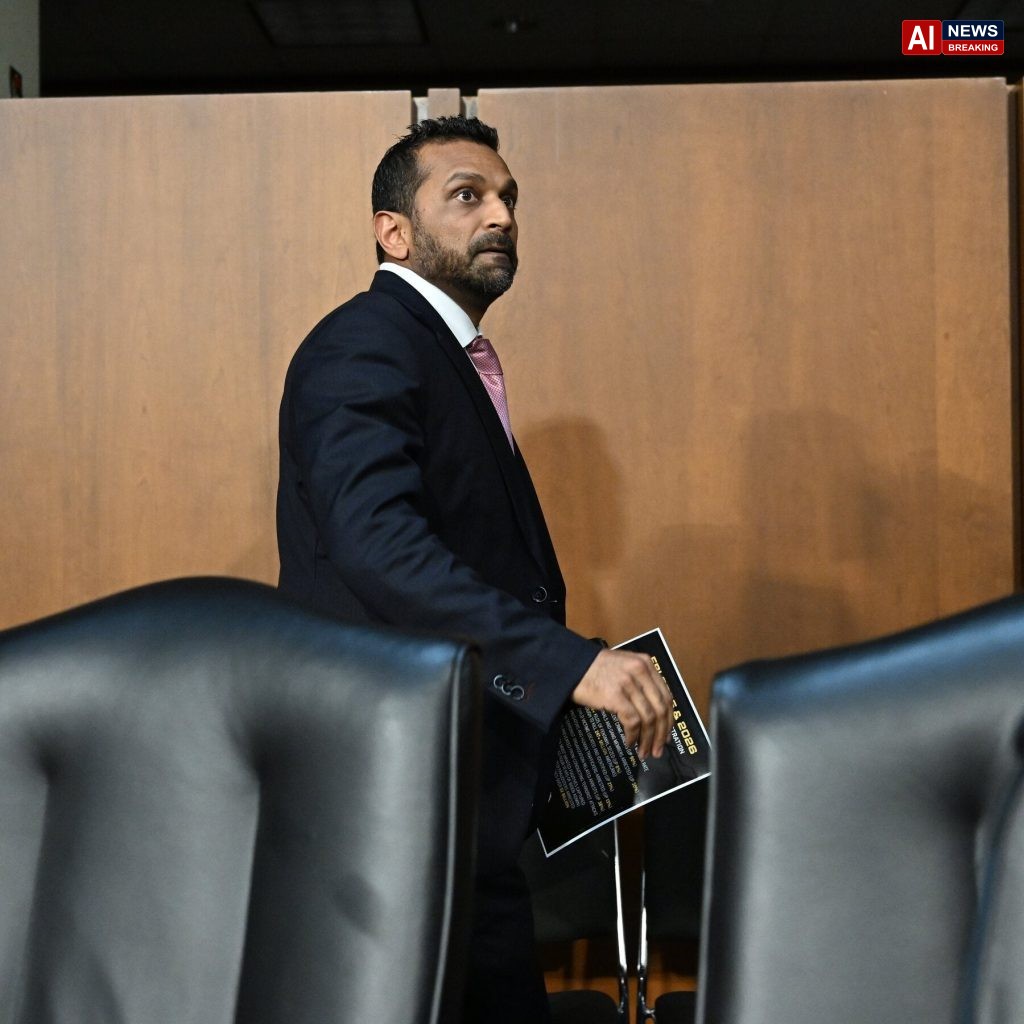
US Soldier Is Arrested in UK on Suspicion of Spying for Russia - AI News Breaking
soldier arrested suspicion spying:
A 41‑year‑old United States Army soldier has been taken into custody by British police after authorities alleged that he was engaged in activities on behalf of the Russian Federation. The arrest, made at a London hotel on Monday, follows a coordinated investigation involving the United Kingdom’s Metropolitan Police Service, the Federal Bureau of Investigation and the United States’ Defense Intelligence Agency. While the soldier’s name has not been released, officials confirmed that he is being held on suspicion of espionage and that further charges may be forthcoming pending the outcome of ongoing enquiries.The incident has revived concerns about the reach of Russian intelligence operations in Western militaries, an issue that has been under intense scrutiny since the 2016 interference in the United States presidential election..
According to a statement issued by the Metropolitan Police, the suspect is believed to have passed classified information concerning U.S. troop deployments, communications protocols and logistical planning to an unidentified Russian handler. The police declined to specify the exact nature of the material, citing the sensitivity of the investigation, but said the alleged disclosures could have compromised both American and allied operational security.Investigators say the suspect was recruited while stationed at a U.S..
base in Europe, taking advantage of personal vulnerabilities that included a recent divorce and significant debt. Sources familiar with the case told the BBC that the soldier had reportedly travelled to Moscow on several occasions under the pretext of visiting family, during which time he allegedly met with Russian intelligence officers. and the Defense Counterintelligence and Security Agency (DCSA) have been working closely with their British counterparts to monitor his movements and intercept communications that hinted at illicit activity.The arrest was the culmination of months of surveillance, wire‑taps and covert meetings between law‑enforcement agencies on both sides of the Atlantic..
In a joint press conference, Metropolitan Police Detective Superintendent Sarah Patel described the operation as “a testament to the strength of international cooperation in the face of a shared threat.” She added that the suspect was detained without incident and that a search of his hotel room yielded a laptop, encrypted storage devices and a number of handwritten notes that appeared to contain codenames and references to classified programs.Legal experts note that the soldier could face charges under both British and American law, depending on where the alleged offences are deemed to have occurred. In the United Kingdom, espionage is governed by the Official s Act 1989, which carries a maximum sentence of life imprisonment for the most serious breaches. In the United States, the Uniform Code of Military Justice (UCMJ) provides for similar penalties, including a dishonorable discharge, forfeiture of pay and confinement..
The dual jurisdiction complicates the legal pathway, as the soldier may be extradited to the United States after initial hearings in Britain.The broader diplomatic ramifications are also being weighed by officials in London and Washington. A senior White House official, speaking on condition of anonymity, said that the United States “takes any allegation of espionage very seriously” and that the case would be handled in accordance with both nations’ legal frameworks. The British Foreign Office, meanwhile, issued a brief statement reaffirming the United Kingdom’s “zero‑tolerance stance on foreign interference” and pledging continued collaboration with allied intelligence services to protect national security.The arrest has drawn attention to the ongoing challenge of safeguarding sensitive information within the armed forces..
Recent reports from the Department of Defense have highlighted a rise in insider threats, prompting a review of vetting procedures, financial monitoring and psychological support for service members. A spokesperson for the Army’s Criminal Investigation Command (CID) said that the service is “constantly evolving its counter‑intelligence capabilities” and that any individual found to have compromised security will be prosecuted to the full extent of the law.Political commentators in the United Kingdom have seized on the story to call for stricter oversight of foreign intelligence activities on British soil. Labour MP Sarah Jones, who sits on the Home Affairs Committee, urged the government to introduce legislation that would require foreign diplomats and intelligence officers to register any contacts with members of the armed forces..
“We cannot afford a situation where our allies become unwitting conduits for hostile powers,” she said in a recent interview. The Conservative opposition, while acknowledging the seriousness of the case, cautioned against hasty policy moves that could hamper legitimate diplomatic engagement.The soldier’s family has not been contacted for comment, and his legal representation has declined to comment on the allegations pending further details. Defence lawyers in the United Kingdom have warned that the presumption of innocence must be upheld, noting that “the courts will consider the evidence presented, not sensational headlines.” Nonetheless, the case is expected to attract significant media coverage, given the heightened public interest in espionage cases involving Russia and the ongoing geopolitical tensions in Eastern Europe.As the investigation proceeds, both British and American officials have reiterated their commitment to transparency while protecting operational details that could endanger national security..
A spokesperson for the Metropolitan Police indicated that updates will be provided as the legal process unfolds, and that the suspect will be afforded all rights under British law. Meanwhile, the United States Department of Defense has launched an internal review to assess whether any additional personnel may have been compromised, signalling that the ramifications of this arrest could extend beyond a single individual to broader concerns about the integrity of allied defence networks..
Updated: November 10, 2026
Insight: The arrest underscores how personal crises—like divorce and debt—can be weaponised by foreign intelligence, turning a routine soldier into a conduit for hostile agendas. It also signals that NATO’s internal vetting must evolve from paperwork to proactive, continuous monitoring, lest vulnerabilities become diplomatic liabilities.