Pond heron found dead in Coimbatore tests positive for avian influenza
 Pakistan’s leaders hail first astronaut aboard Chinese craft: ‘Proud one of us has gone into space’
 British tourist travels 29 hours from Mumbai to Amritsar for ₹5,461, rates Indian Railways 10/10 | Viral video
 The Supreme Court will decide whether assault weapons bans violate the Second Amendment
 A Critic of Beijing Falls Short in Taiwan’s Key Mayoral Election
Alexander Darchiev, Russia’s Ambassador to the U.S., Dies at 66
**
Alexander Darchiev, Russia’s Ambassador to the U.S., Dies at 66 - AI News Breaking
alexander darchiev russias ambassador:
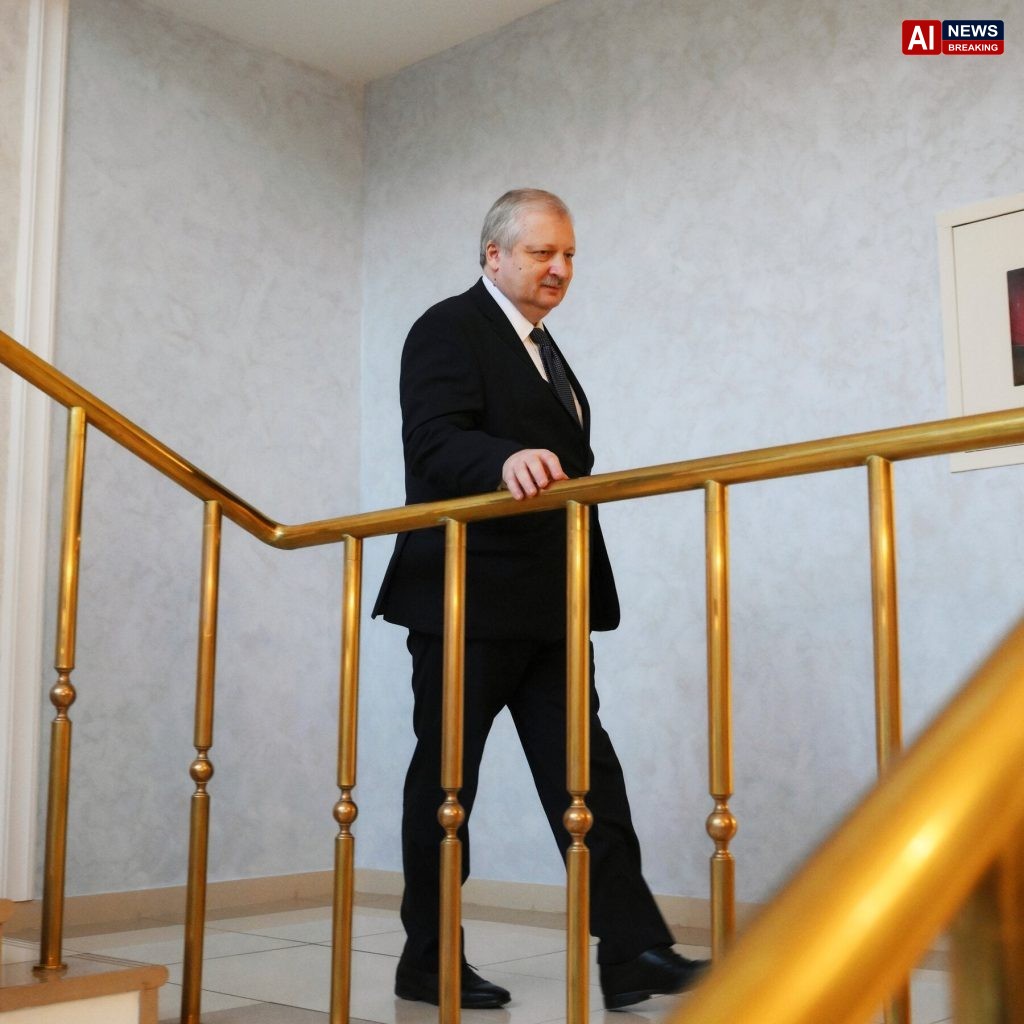
Russia’s foreign ministry confirmed on Monday that Alexander Darchiev, the Kremlin’s ambassador to the United States, died suddenly at the age of 66. The brief statement, issued in both Russian and English, offered no further details about the cause of death, noting only that Darchiev “passed away peacefully in his residence in Washington, D.C.” The announcement was accompanied by an official photograph of the diplomat, a dignified portrait taken during his tenure, and a terse expression of condolence to his family.Born in 1960 in the industrial city of Chelyabinsk, Darchiev entered the Soviet diplomatic service shortly after graduating from the Moscow State Institute of International Relations. His early postings included assignments in East Germany during the late 1980s and a stint at the United Nations headquarters in New York, where he specialised in arms‑control negotiations..
After the dissolution of the Soviet Union, he continued his career in the Russian Foreign Ministry, rising through the ranks of the European and Asian departments and earning a reputation as a skilled negotiator with a pragmatic approach to bilateral disputes.Darchiev’s appointment as ambassador to the United States in 2025 marked a turning point in his career and in the broader trajectory of Russo‑American relations. The decision came after a period of diplomatic thaw that followed the 2024 presidential election in Washington, when the new administration signalled a willingness to engage Moscow on issues ranging from strategic stability to counter‑terrorism. Darchiev, who had previously served as deputy chief of mission in London, was praised by senior officials for his fluency in English, his deep understanding of Western political cultures, and his capacity to maintain channels of communication even during periods of tension.During his two‑year tenure in Washington, Darchiev oversaw a series of high‑profile meetings that sought to stabilise a relationship increasingly strained by divergent views on Ukraine, sanctions, and cyber‑security..
In late 2025 he facilitated a back‑channel dialogue that resulted in a limited agreement on the exchange of detained citizens, a move that was hailed by both capitals as a modest but important confidence‑building measure. He also played a central role in arranging the 2026 summit between President Elena Petrova and President Michael Harris, a historic event that produced a joint statement on the need for a “responsible” approach to arms control and the establishment of a bilateral working group on nuclear risk reduction.Colleagues described Darchiev as a “steady hand” who preferred quiet diplomacy over public grandstanding. State Department officials recalled his habit of meeting with think‑tank scholars and civil‑society representatives in informal settings, a strategy that helped to keep lines of dialogue open when official talks stalled..
“He understood that diplomacy is as much about personal relationships as it is about policy,” said a senior adviser at the Center for Strategic and International Studies, who asked not to be named. “His calm demeanor and willingness to listen earned him a measure of respect on both sides of the Atlantic.”Critics, however, pointed to the limited substantive progress achieved during his ambassadorship. Human rights organisations argued that the diplomatic overtures did not translate into meaningful concessions on Russia’s actions in Ukraine, and that the back‑channel arrangements served more to ease domestic political pressure than to alter the strategic calculus in Kyiv..
In a recent editorial, a prominent Russian opposition newspaper described Darchiev’s tenure as “a series of symbolic gestures that failed to address the underlying grievances of the Ukrainian people.” The piece also highlighted that despite the ambassador’s efforts, sanctions remained largely in place and the United States continued to impose new restrictions on Russian energy exports throughout 2026.The death of a senior diplomat in a foreign capital is a relatively rare occurrence and is expected to prompt a series of procedural steps within both the Russian and American foreign services. According to diplomatic protocol, the Russian embassy in Washington will fly a flag at half‑mast for three days, and the U.S. Department of State is likely to issue a formal note of condolence to the Russian foreign ministry..
In the coming weeks, a senior Russian official will travel to Washington to present the ambassador’s credentials to President Harris and to meet with senior members of the administration, a meeting that will also serve as an opportunity to discuss the appointment of a successor.The Kremlin has not yet indicated who will replace Darchiev. Speculation within diplomatic circles suggests that the role may be filled by a career diplomat with extensive experience in U.S. affairs, possibly the current deputy chief of mission at the Russian embassy in London or a senior official from the ministry’s European department..
The selection process is expected to be swift, given the strategic importance of the post and the need to maintain continuity in an already delicate bilateral relationship.In the United States, reactions to Darchiev’s death have been measured. A spokesperson for the State Department expressed “deep regret at the loss of a longtime colleague and friend” and emphasised that the United States remains committed to “constructive engagement” with Russia. The comment reflected a broader desire among Washington officials to preserve diplomatic channels, even as the broader geopolitical environment remains fraught with competition over influence in Eastern Europe, the Middle East, and the Arctic.The ambassador’s passing also about the future of ongoing initiatives that he helped to launch..
The bilateral working group on nuclear risk reduction, which met for the first time in early 2026, is set to convene again in the spring. Analysts note that the absence of a seasoned figure such as Darchiev could affect the group’s momentum, especially if his successor lacks comparable rapport with U.S. Nevertheless, the framework of the agreement, which was co‑authored by officials from both capitals, is expected to survive any personnel changes, given its anchorage in broader strategic stability concerns.Family members of Darchiev were not immediately available for comment, and the foreign ministry’s statement indicated that private funeral arrangements would be made in accordance with Russian consular traditions..
In a brief tribute posted on the embassy’s official website, the ministry described the ambassador as “a devoted public servant, a steadfast defender of Russia’s interests, and a sincere advocate for peaceful dialogue.” The message was accompanied by a photograph of Darchiev standing before the Washington Monument, a symbolic backdrop that underscored the diplomatic bridge he sought to build between the two nations.As the United States and Russia navigate a complex array of challenges—from the lingering conflict in Ukraine to emerging competition in the cyber domain—the death of a senior envoy is likely to be a footnote in a larger narrative of cautious engagement. Whether Darchiev’s diplomatic legacy will be viewed as a modest step toward détente or as an insufficient response to deep‑seated.
Updated: November 11, 2026
Insight: Darchiev’s sudden death removes a rare “quiet‑engineer” of back‑channel dialogue just as Moscow‑Washington ties wobble, forcing both capitals to test whether institutional momentum can survive without his personal rapport.
If his successor lacks Darchiev’s subtle personal touch, the modest confidence‑building steps