
 Pond heron found dead in Coimbatore tests positive for avian influenza
 Pakistan’s leaders hail first astronaut aboard Chinese craft: ‘Proud one of us has gone into space’
 British tourist travels 29 hours from Mumbai to Amritsar for ₹5,461, rates Indian Railways 10/10 | Viral video
 The Supreme Court will decide whether assault weapons bans violate the Second Amendment
 A Critic of Beijing Falls Short in Taiwan’s Key Mayoral Election
Indonesia Vice-President Resigns Amid Degree Allegations
**
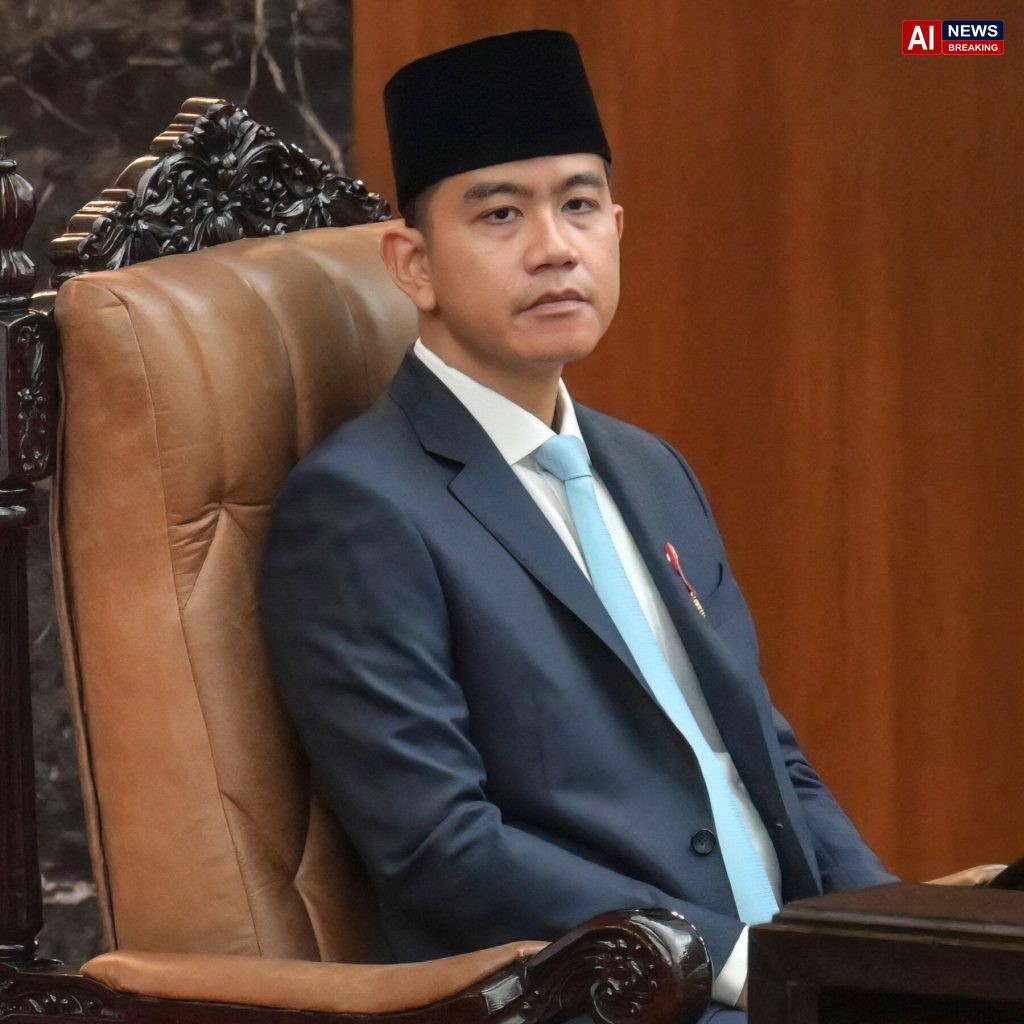
Indonesia’s Vice President, Gibran, Resigns - AI News Breaking
indonesia vicepresident resigns degree:
Indonesia’s vice‑president has tendered his resignation, ending a brief but highly publicised tenure that began in October 2024. Gibran Rakabuming Raka, the 32‑year‑old son of President Prabowo Subianto, stepped down after a flurry of allegations emerged concerning the authenticity of his university degrees. The episode has added a new layer of complexity to Indonesia’s political landscape, already marked by intense competition between the ruling coalition and the opposition, and raised questions about the role of political dynasties in the country’s democratic institutions.The resignation was submitted to President Prabowo in a handwritten note delivered to the presidential palace on Tuesday, citing “personal reasons” and a desire to “preserve the dignity of the office.” In a brief televised statement, Gibran expressed regret over the “unfortunate circumstances” that had led to the decision, while also acknowledging the intense public scrutiny that had accompanied his appointment..
He promised to continue supporting the administration’s policy agenda from outside the cabinet, a pledge that analysts say may be more symbolic than substantive given the depth of the controversy.The controversy began in late November when a Jakarta‑based investigative outlet published a report questioning the legitimacy of Gibran’s academic credentials. According to the report, the university in Surabaya where he claimed to have earned a bachelor’s degree in business administration could not verify his enrollment, and a separate document alleging a master’s qualification from a foreign institution was flagged as potentially forged. The allegations quickly spread on social media, prompting calls from civil‑society groups for a thorough investigation and fueling a broader debate about meritocracy versus nepotism in Indonesian politics.President Prabowo, who won the March 2024 election on a platform that blended nationalist rhetoric with promises of economic reform, had initially defended Gibran’s appointment as a move to “bring fresh perspectives” to the executive branch..
In his inaugural speech, he highlighted the vice‑president’s business experience and “deep understanding of the challenges facing ordinary Indonesians.” Critics, however, argued that the decision underscored the entrenched influence of family networks in a nation where political power often passes along dynastic lines. The vice‑presidency, a role traditionally seen as a stepping stone to higher office, had been vacant for several months before Gibran’s selection, making his rapid rise and equally swift exit all the more striking.Legal scholars note that the Indonesian Constitution does not explicitly prohibit a vice‑president from resigning, but the process is governed by a series of procedural steps that involve the People’s Consultative Assembly (MPR). According to the Constitution, the MPR must convene within a stipulated period to accept the resignation and, if necessary, appoint a replacement..
In a statement released by the MPR ariat, the assembly confirmed it had received Gibran’s resignation and would schedule a session to discuss the implications for the remainder of the presidential term, which ends in 2029.Political analysts see the resignation as a potential turning point for President Prabowo’s administration. Some suggest that the scandal could erode public confidence in a government that has already faced criticism over its handling of the economy and human‑rights issues. Others argue that the swift acceptance of the resignation may mitigate longer‑term damage, allowing the president to distance himself from the controversy and refocus on policy priorities such as infrastructure development and energy security..
“The real test will be how the administration manages the narrative moving forward,” said Dr. Siti Nurhaliza, a senior fellow at the Institute for Democratic Governance in Jakarta.Opposition parties have seized the moment to call for broader reforms aimed at increasing transparency in the appointment of high‑level officials. In a joint press conference, leaders of the Democratic Party and the Indonesian Democratic Party of Struggle (PDI‑P) demanded that the government introduce stricter vetting procedures for vice‑presidential candidates, emphasizing the need for “clear, verifiable credentials” and an “independent oversight mechanism.” They also urged the MPR to consider amending the constitution to require a parliamentary confirmation vote for the vice‑president, a proposal that has gained limited traction in recent years but now appears to be gaining renewed attention.Public reaction has been mixed..
While many Indonesians expressed disappointment and a sense of betrayal, particularly among younger voters who had initially welcomed Gibran as a symbol of generational change, others viewed the resignation as an inevitable correction in a system they perceive as overly reliant on personal connections. A poll conducted by the national research institute LIPI in early December showed that 42 percent of respondents believed the scandal would have a “significant impact” on the president’s approval rating, while 35 percent thought it would be a “temporary setback.” The remaining 23 percent were unsure or felt the issue was being overstated by the media.International observers have noted the episode as a test of Indonesia’s democratic resilience. The United States’ Embassy in Jakarta issued a brief statement emphasizing the importance of “transparent and accountable governance,” while the European Union’s delegation highlighted the need for “robust institutional checks and balances.” Both comments were made without direct reference to the specific allegations, reflecting a diplomatic approach that respects Indonesia’s sovereignty while encouraging adherence to democratic norms.As the MPR prepares to convene, the focus now shifts to who might fill the vacancy..
Constitutionally, the president may nominate a new vice‑president, who must then be approved by a majority vote of the assembly. Speculation abounds about potential candidates, ranging from seasoned politicians with cabinet experience to technocrats with expertise in finance or public health. Some insiders suggest that the president may opt for a figure with a lower public profile, aiming to defuse further controversy and restore stability to the executive branch.The resignation of Gibran Rakabuming Raka marks a rare instance in Indonesian politics where a vice‑presidential term has been cut short not by health concerns or political upheaval, but by questions surrounding personal credentials..
Whether this episode will lead to substantive reforms or simply fade from public memory remains to be seen. For now, it serves as a reminder of the fragile balance between political ambition, familial ties, and the expectations of an increasingly vigilant electorate..
Updated: November 12, 2026
Indonesia’s vice‑president Gibran Rakabuming Raka quit after a flurry of doubts over his academic credentials, sending a handwritten resignation to President Prabowo. The move has amplified calls for tougher vetting of top officials and could reshape the administration’s political calculus ahead of the 2029 term.





