
 Pond heron found dead in Coimbatore tests positive for avian influenza
 Pakistan’s leaders hail first astronaut aboard Chinese craft: ‘Proud one of us has gone into space’
 British tourist travels 29 hours from Mumbai to Amritsar for ₹5,461, rates Indian Railways 10/10 | Viral video
 The Supreme Court will decide whether assault weapons bans violate the Second Amendment
 A Critic of Beijing Falls Short in Taiwan’s Key Mayoral Election
Tourists Brave a Muddy Jungle Trek to See a Famed World War II Wreck
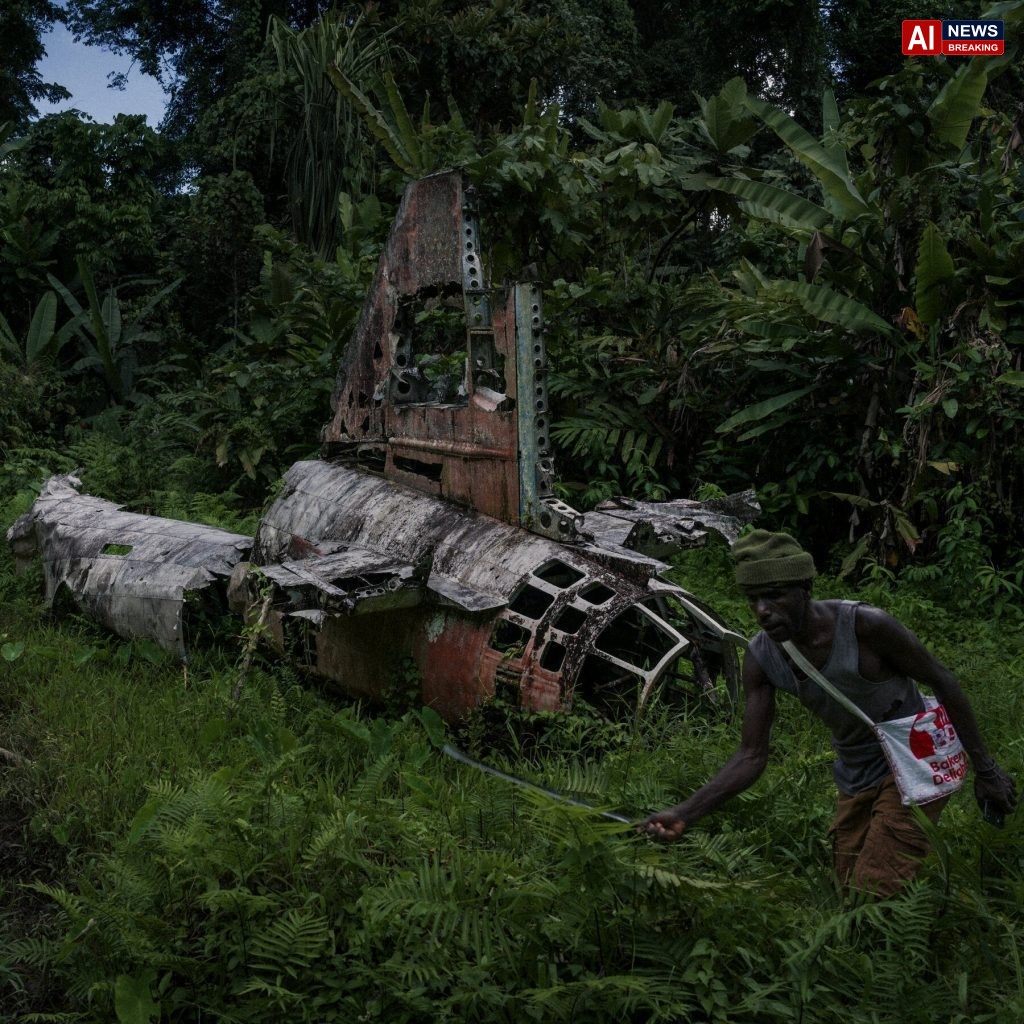
Tourists Brave a Muddy Jungle Trek to See a Famed World War II Wreck - AI News Breaking
tourists brave muddy jungle:
Seven Chinese visitors, a dozen local residents and a handful of journalists undertook a treacherous trek through the jungle to reach the wreckage of the Japanese aircraft that brought Admiral Isoroku Yamamoto to his death in 1943. The flight, which was part of a covert operation to deliver the commander’s body back to Japan, crashed into the sea off the coast of Taiwan. Its remains now lie buried beneath layers of sediment and tropical growth, a relic of the war that has attracted curious tourists for decades.The group, who arrived early on a humid Tuesday morning, set off from the nearest village with nothing more than machetes, ropes and a sense of adventure..
“We know the route is risky, but the story is too important to ignore,” said Liu Wei, a 34‑year‑old blogger from Guangzhou. He is one of five Chinese nationals who made the journey, all of them drawn by the historical significance of the site.Local guides, who have been leading expeditions for years, explained that the path to the crash site is fraught with hazards. “The terrain is uneven, and the water is often swollen after rain,” said Chen Yao, a 56‑year‑old guide from the nearby community of Taoyuan..
“The only way to reach the wreck is by wading through streams and cutting through dense vegetation.” Chen’s group, which includes several elderly residents who have lived in the area all their lives, has become intimately familiar with the forest’s shifting trails.The wreck itself lies beneath a shallow lagoon, its steel frame partially buried in silt. The plane, a Mitsubishi G3M, was destroyed by a single B-17 bomber during its final approach to the Japanese naval base. For decades, the remains have been a focal point for history enthusiasts, and more recently, for tourists seeking to connect with the wartime past..
“It’s not just about the plane,” said Liu. “It’s about remembering the lives lost and the events that shaped the region.”The expedition was organized by the National Museum of the Republic of China, which has been working to preserve the wreck and its surrounding environment. The museum’s director, Dr..
Lin Yu, said the tour was part of a broader educational initiative aimed at providing visitors with a tangible connection to the war’s history. “We want people to understand the gravity of the conflict and the sacrifices made,” she said. “Visiting the site in person offers an experience that books alone cannot deliver.”Despite the potential dangers, the group was well prepared..
Each participant carried a first aid kit and a waterproof bag containing maps and a satellite phone. The guides had been trained in basic emergency procedures, and a small team of medical staff accompanied them in case of injury. The jungle’s humidity and the presence of insects added another layer of difficulty, requiring constant vigilance to avoid bites and infections.As the group pushed deeper into the forest, the canopy thickened and the sound of water grew louder..
A sudden downpour turned a dry stream into a torrent, forcing the tourists to adjust their pace. One of the journalists, a 27‑year‑old photo‑journalist from the BBC, captured the moment the team reached a shallow ford. “The water was waist‑deep and the current was strong,” he reported..
“We had to rely on our machetes and teamwork to cross safely.”Upon arriving at the lagoon, the group was met with a surreal scene: a rusted, partially submerged aircraft frame, half buried in mud and surrounded by mangrove roots. The sight of the wreck prompted a mixture of reverence and awe. “Seeing it in person is almost like being transported back to that moment in 1943,” said Liu..
The group spent several minutes photographing the wreck before carefully inspecting the area for any artifacts that might still be recoverable.While the wreck remains largely intact, the surrounding environment has been significantly altered by both natural forces and human activity. The local community has long debated how best to balance tourism with preservation. Lin emphasized that the museum’s efforts include regular clean‑up campaigns and educational workshops for visitors..
“We want to ensure that the site is respected and protected for future generations,” she said.The day’s trek not only offered a historical lesson but also highlighted the resilience of the local community. The guides, who are often the first to warn about sudden changes in weather or terrain, showcased their deep knowledge of the jungle’s rhythms. Their stories of previous expeditions and the many visitors who have come to see the wreck over the years added a layer of continuity to the experience.As the group prepared to leave, Liu reflected on the significance of the journey..
“The forest is full of memories, and the wreck is a testament to a pivotal moment in history,” he said. “By visiting, we honour those who served and remind ourselves of the importance of peace.”The expedition concluded with the participants returning to the village, their faces reflecting both the physical toll and the emotional impact of the trip. The National Museum of the Republic of China plans to release a detailed report on the site’s current condition, as part of its ongoing commitment to preserving the heritage of the region..
The wreck of Admiral Yamamoto’s aircraft will continue to stand as a silent witness to a war that shaped the modern world, its story now more vivid thanks to the brave and determined trekkers who sought to bring it back to light..
Updated: November 12, 2026
Insight: This development highlights evolving dynamics and may have broader implications in the near term.






